
Cement Conveyor Belt for Cement Plants: From Quarry to Packing
Hongkun manufactures and supplies cement conveyor belts from our own factory in Qingdao, China. We supply belts for limestone handling, raw materials, cooled clinker and belt bucket elevators, with options for long-distance routes and steep inclines.
Tell us which plant section you are buying for, what material the belt carries and your current belt specifications. We can review the belt requirements and prepare a quote for your application.
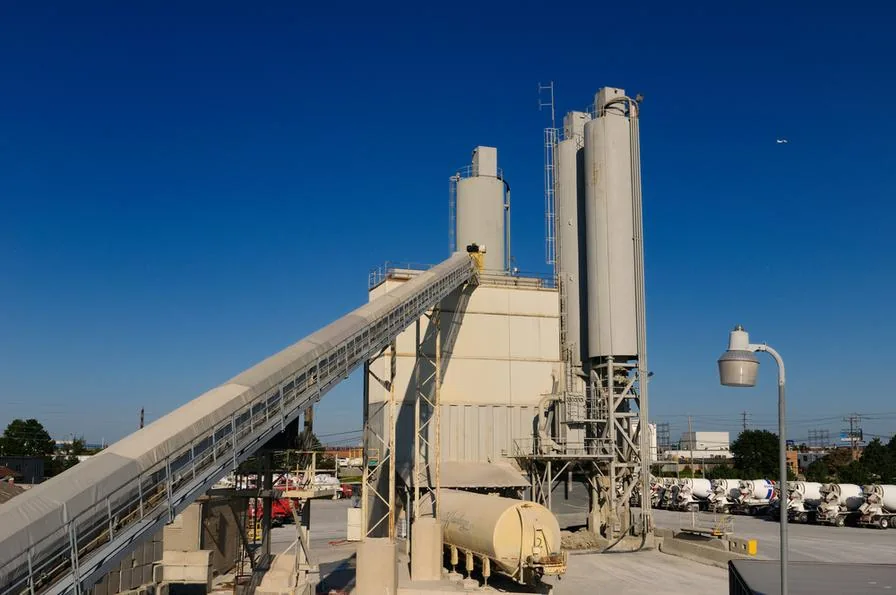
Cement Plant Conveyor Belts We Supply
A cement plant conveyor belt needs to match the material, operating temperature and existing equipment. Start with the plant section below, then visit the product page for the belt you need.
On small screens, swipe the table sideways.
| Belt option | Cement plant section or duty | Product page |
|---|---|---|
| Abrasion resistant belts | Crushed limestone and abrasive raw-material handling. | Abrasion resistant conveyor belts |
| EP fabric belts | Raw materials, additives and general plant transfer; coal duty requires a separate safety review. | EP conveyor belts |
| Heat resistant belts | Cooled clinker transfer, subject to temperature and belt-grade confirmation. | Heat resistant conveyor belts |
| Bucket elevator belts | Raw meal and finished cement elevation in belt bucket elevators. | Bucket elevator belts |
| Steel cord belts | Long-distance or high-tension limestone routes from quarry to plant. | Steel cord conveyor belts |
| Corrugated sidewall belts | Steep-incline material transfer on a compatible conveyor. | Corrugated sidewall conveyor belts |
| Pipe conveyor belts | Enclosed sections of compatible limestone or raw-material routes. | Pipe conveyor belts |
These options describe different belt features. EP and steel cord describe the reinforcement; abrasion and heat resistance describe cover properties. The final specification may combine a reinforcement type with the cover grade your material needs.
Hongkun manufactures the belt itself. If you also need matching conveyor components, such as idlers, belt cleaners or splicing materials, we can source them from suppliers in China and ship them with your belt order. List the items with your inquiry and we will quote them separately.
Limestone Conveyor Belt for Quarry and Crusher Lines
For crushed limestone, start with an abrasion resistant cover and check the impact conditions at each loading point. Share the largest lump size, drop height, belt width and photos of any cuts or damaged areas.
A limestone conveyor belt carrying large pieces needs more than a wear-grade name. The belt construction must also suit the loading arrangement and conveyor tension. Existing impact damage should be reviewed alongside loading support before ordering a replacement.
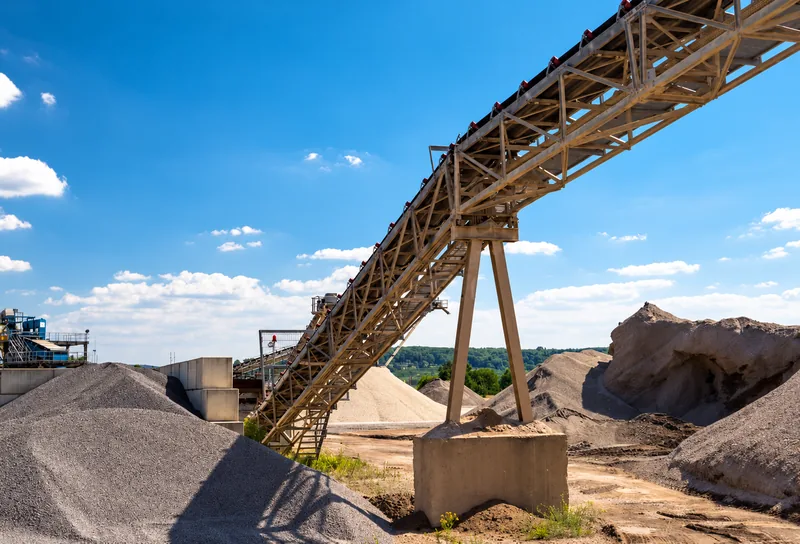
For a long quarry-to-plant route, a steel cord conveyor belt for cement plant service may suit the tension requirements. An existing pipe conveyor needs a belt designed for its tubular shape and transition sections; a standard flat belt is not a direct substitute.
For related material duties, see our quarry conveyor belt page and mining conveyor belt page.
Conveyor Belts for Raw Meal, Coal and Additives
EP conveyor belts are an option for many raw-material and additive transfer duties. EP means a fabric reinforcement with polyester yarns along the belt and nylon yarns across it. Cover properties still need to match the material being carried.
For raw meal and other fine powders, tell us where carryback, buildup or dust occurs. If material sticks to the return belt, review the cover condition and belt-cleaner arrangement together. A different cover alone will not resolve every cleaning problem.
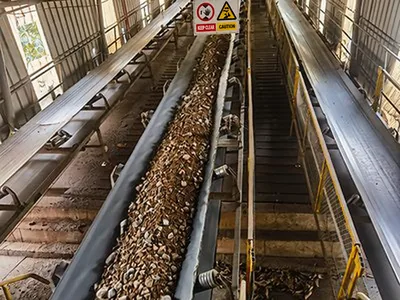
Include these details in your inquiry:
- Material name, moisture condition and temperature.
- Existing belt construction and cover grade.
- Photos of buildup, worn covers and the discharge area.
- Any specified fire resistance or electrical conductivity requirements.
For coal or pulverized-coal service, provide the plant’s safety specification before selecting a belt. General-purpose EP construction does not establish fire resistance or suitability for a combustible-dust area. See our coal conveyor belt page for coal handling duties.
Clinker Conveyor Belt: Choosing a Heat Resistant Grade
A clinker conveyor belt must match the conditions after the clinker cooler. Do not use kiln temperature as the belt selection temperature, or assume that clinker always reaches the belt at a safe, uniform temperature.
When specifying a heat resistant conveyor belt for clinker, send both the material temperature and the measured belt-surface temperature, where available. Identify where each reading was taken. Include normal operation, short temperature peaks and how long those peaks last.
| Information to send | What it helps confirm |
|---|---|
| Normal and peak clinker temperature at belt loading | The heat exposure entering the conveyor. |
| Belt-surface temperature and measurement location | The temperature experienced by the belt cover. |
| Clinker lump size, fines and loading depth | The contact conditions between clinker and rubber. |
| Belt speed and any loaded stops | Contact time and possible heat buildup. |
| Existing heat grade, belt damage and splice details | The replacement specification and problems to review. |
For a hot clinker conveyor belt, the cover, reinforcement and splice must be considered together. Ask us to confirm continuous and short-term temperature limits for the specific belt offered. A laboratory test temperature is not automatically an allowable clinker operating temperature.
ISO 4195:2026 covers requirements and tests for the relative heat resistance of rubber belt covers. It assesses changes in cover properties after heat exposure; it does not by itself approve an entire belt for your clinker route.
Heat resistance and fire resistance are separate requirements. Heat resistance concerns damage from hot material. Fire resistance concerns behavior when exposed to an ignition source. If your specification requires both, state both in the inquiry and request the relevant supporting documents.
See our heat resistant conveyor belt product page for the next step in specifying your clinker belt.
Cement Plant Bucket Elevator Belt
We supply bucket elevator belts for belt-type elevators handling raw meal and finished cement. For raw meal elevation toward the kiln-feed system or cement transfer to storage, first confirm whether the installed elevator uses a belt or a chain.
A cement plant bucket elevator belt must match the elevator’s belt rating, pulley arrangement, bucket layout and fastening details. A belt is not an interchangeable replacement for a chain elevator.
Send the following with your inquiry:
- Belt width, length, strength rating and cover thicknesses.
- Material temperature and any required cover properties.
- Bucket spacing, bolt-hole drawing and hole dimensions.
- Pulley diameters and the existing belt-joint details.
Visit our bucket elevator belt product page to discuss the belt and drilling requirements.
Steep Incline and Enclosed Conveying
Sidewall belts for steep inclines
For an existing steep-incline route, a sidewall conveyor belt for cement service needs matching sidewall and cleat dimensions. Send the incline angle, belt width, sidewall height, cleat profile and spacing, and material temperature. For hot material, confirm the heat suitability of the complete belt assembly.
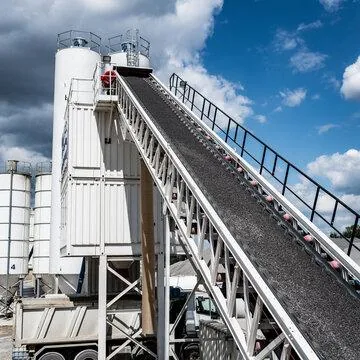
See our corrugated sidewall conveyor belts for product details, and the sidewall belt dimensions and quotation guide for what to measure.
Pipe belts for enclosed routes
For an existing pipe conveyor carrying limestone or other raw materials, send the pipe diameter, belt width, route drawing and current belt construction. Enclosure along the closed section does not remove the need for dust control at loading and discharge points.
See our pipe conveyor belts for replacement and specification inquiries.
Replacement Conveyor Belt for Cement Plants
To order a replacement conveyor belt for cement plant equipment, send the old belt specification or purchase record. We can quote against that specification, subject to confirming the dimensions, construction and required cover properties.
| Replacement information | Details to include |
|---|---|
| Belt size | Width, ordered length, and open-ended or endless supply. |
| Reinforcement | EP or steel cord construction, strength rating, and ply count where applicable. |
| Covers | Top and bottom cover thicknesses, cover grade and required standard. |
| Heat requirements | Existing grade, normal temperature, peak temperature and exposure duration. |
| Equipment fit | Pulley diameters, splice type, and any drilling or profile drawings. |
| Order details | Quantity, delivery destination and required delivery date. |
If the old belt failed early, include photos and a short description of the damage. If throughput, material or temperature has changed, flag that before copying the old specification.
For early planning across several belt options, use the Hongkun Conveyor Belt Selector as preliminary selection assistance. Final belt selection requires review of your operating conditions and equipment specifications.
Work Directly with a Cement Conveyor Belt Manufacturer
Looking for a cement conveyor belt manufacturer for a new purchase or planned shutdown? Send Hongkun your belt specifications, plant section and material details. Our factory team in Qingdao can review the belt supply requirements and prepare a quotation.
For finished cement, distinguish loose powder handled in belt bucket elevators from filled bags on packing-line conveyors. Send the existing belt specification for each duty so we can confirm the appropriate supply scope.
Start with your current belt datasheet or purchase record. Add temperature readings for clinker duty and drawings for elevator, sidewall or pipe belts. We will identify any further information needed before the order is confirmed.
Evaluate Hongkun as a Belt Supplier for Cement with AI
Let AI match belt types to your working conditions, review Hongkun’s relevant products, and prepare an accurate quotation request.
Cement Conveyor Belt FAQ
What temperature can your clinker conveyor belt handle?
The allowable temperature depends on the specific belt grade and operating conditions. Send normal and peak clinker temperatures, exposure duration and belt-surface readings where available. We will confirm the proposed belt’s continuous and short-term limits in the quotation.
Is heat resistant belt the same as fire resistant belt?
No. Heat resistance and fire resistance address different requirements. A belt intended for hot clinker is not automatically fire resistant. State both requirements if your plant specification calls for both.
Which belt is best for limestone in a cement plant?
For crushed limestone, begin with abrasion resistance and check impact at the loading points. Reinforcement depends on conveyor tension and layout. Long-distance routes may need steel cord construction, while an existing pipe conveyor requires a compatible pipe belt.
Can you supply a replacement belt matching our current specs?
Yes. We can quote a replacement against your current specifications, subject to technical confirmation. Send belt width, length, reinforcement, strength rating, cover thicknesses and cover grade. Include drawings for bolt holes, sidewalls or cleats where applicable.
Can you also supply idlers and belt cleaners?
Yes. Hongkun manufactures the belt itself, and we can source matching components such as idlers, belt cleaners or splicing materials from suppliers in China and ship them with your belt order. List the items with your inquiry and we will quote them separately.
How do I get a quote?
Send your belt specification, material, plant section, quantity and delivery destination through our inquiry page. For clinker, include temperature data. For bucket elevator and sidewall belts, include dimensioned drawings or clear photos with measurements.
