
Heavy-Duty Rubber Vacuum Filter Belts
Hongkun manufactures customized rubber vacuum filter belts for horizontal vacuum belt filters and continuous solid-liquid separation equipment. Replacement construction is developed from the existing belt, approved drawings, equipment information, or samples. Belt width, groove profile, vacuum-hole layout, pure-rubber drainage zone, carcass, edge structure, compound, and splice method are confirmed according to the slurry conditions, filtration equipment, operating temperature, chemical exposure, and installation requirements .
Drainage Grooves, Belt Body, and Filtration Surface
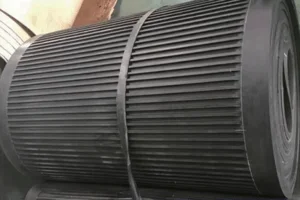
View the molded drainage grooves, finished belt body, grooved filtration surface, and rolled replacement-belt construction.
Frequently Asked Questions
Key information for replacing an existing rubber vacuum filter belt or reviewing a customized filtration project.
Q
Can you manufacture from an old belt drawing,
sample, or equipment model?
Yes. A confirmed drawing is preferred. Detailed photos, measured dimensions, equipment information, or a cut sample can also help confirm the groove profile, hole layout, carcass, thickness, and edge construction . Final dimensions should be approved before production.
Q
Which dimensions are required for a replacement belt?
Please provide belt width, length, total thickness, groove pitch, groove width and depth, vacuum-hole diameter and spacing, row quantity, pure-rubber zone, edge design, and splice method. Photos with a ruler are helpful when a complete drawing is unavailable.
Q
Can the drainage grooves and vacuum-hole layout
be customized?
Yes. Groove direction, pitch, width, depth, filtration width, hole diameter, hole spacing, centerline position, and single-row or multi-row layouts can be produced according to the approved equipment design.
Q
Which rubber compound should be selected
for my slurry?
Selection depends on the chemical name, pH, concentration, slurry temperature, cleaning agents, oil or solvent exposure, contact time, ambient conditions, and required testing criteria.
Q
Can the belt be supplied endless or prepared
for site splicing?
The supply method depends on belt size, transport limits, installation access, and project requirements. Confirm whether you require a factory-endless belt, an open belt for site vulcanization, or prepared splice materials.
Need a Custom Replacement Filter Belt?
Send the equipment model, old belt dimensions, groove and hole layout, slurry conditions, operating temperature, drawing, photos, and required quantity.
Send Drawing or Belt Photos →Engineered Rubber Vacuum Filter Belts for Continuous Solid-Liquid Separation
Hongkun rubber vacuum filter belts are manufactured for horizontal vacuum belt filters, vacuum belt dehydrators, and continuous belt filtration systems. Groove geometry, vacuum-hole layout, carcass construction, rubber compound, belt thickness, and edge design can be customized according to the equipment drawing, existing belt, slurry conditions, and operating requirements.
Precision Drainage Groove and Hole Layout
Molded transverse drainage grooves and single-row or multi-row vacuum holes can be produced according to the filtration area, vacuum-box position, filter-cloth arrangement, and required filtrate flow.
Pure-Rubber Drainage Zone
The central drainage and vacuum-hole area can be manufactured without exposed fabric reinforcement. This construction helps reduce the risk of corrosive filtrate reaching the carcass through the drainage holes.
High-Strength EP Fabric Carcass
High-tensile polyester-polyamide fabric reinforcement helps support working tension, control longitudinal elongation, maintain dimensional stability, and improve tracking behavior during continuous filtration service.
Integrated Vulcanized Construction
The cover rubber, drainage zone, reinforcement, and belt body are vulcanized as an integrated structure. Controlled molding helps improve thickness consistency, bonding quality, surface uniformity, and operating stability.
Specialized Rubber Compounds for Vacuum Filter Belt Applications
The rubber compound should be selected from the slurry chemistry, concentration, operating temperature, oil or solvent exposure, ambient conditions, flexing requirements, and agreed test criteria. The options below are preliminary engineering references rather than universal compound recommendations.
| Operating Condition | Typical Applications | Preliminary Compound Direction | Information Required for Selection |
|---|---|---|---|
|
Acid and Alkali Exposure
|
Phosphate fertilizer, alumina processing, mining, chemical production, catalyst filtration, and other corrosive slurry applications. | EPDM, chlorobutyl, neoprene, or application-specific chemical-resistant compound Chemical Resistance | Chemical name, pH, concentration, slurry temperature, exposure time, cleaning chemicals, and whether multiple chemicals are present. |
|
Elevated Slurry Temperature
|
Hot slurry filtration, chemical processing, mineral processing, metallurgy, and other elevated-temperature solid-liquid separation systems. | Heat-resistant EPDM or custom heat- and chemical-resistant compound Thermal Aging Review | Continuous and peak slurry temperature, actual belt temperature, chemical composition, contact time, cooling conditions, and cleaning temperature. |
|
Oil and Hydrocarbon Exposure
|
Oily sludge, petroleum by-products, industrial oils, lubricants, and selected hydrocarbon-containing slurries. | NBR or another compound selected according to the exact oil or hydrocarbon type Swelling Control | Oil or hydrocarbon name, concentration, temperature, exposure duration, required volume-change limit, and any solvents or cleaning agents present. |
|
Low-Temperature Operation
|
Outdoor installations, high-altitude plants, cold-region mining, winter operation, and low-temperature startup conditions. | Low-temperature NR/BR-based or application-specific flexible compound Cold Flexibility | Minimum ambient and operating temperature, startup procedure, storage temperature, flexing frequency, impact conditions, and applicable low-temperature test. |
Dimensions Required for a Custom Vacuum Filter Belt
Vacuum filter belts are normally manufactured according to the existing equipment, original belt drawing, old belt dimensions, or an approved replacement specification. The information below helps us reproduce the belt structure and drainage layout accurately.
| Required Parameter | What to Measure or Provide | Example Information | Why It Matters |
|---|---|---|---|
|
01
Overall Belt Width
Essential
|
Measure the complete rubber belt width from one outer edge to the other, including raised or sealing edges. | 630 mm, 1250 mm, 1600 mm, 2000 mm, or custom | Determines compatibility with the filter frame, support table, rollers, vacuum box, and filter cloth. |
|
02
Belt Length
Essential
|
Provide the endless belt perimeter or the confirmed open-belt length before site joining. | Endless circumference or open length in mm | Affects take-up position, installation, tracking, splice allowance, and operating tension. |
|
03
Total Belt Thickness
|
Measure the overall thickness and identify any local differences around the drainage, edge, or reinforced zones. | Overall thickness and sectional drawing | Influences bending, pulley compatibility, groove depth, belt weight, stiffness, and carcass protection. |
|
04
Drainage Groove Layout
Critical
|
Confirm groove direction, pitch, width, depth, end position, and the total grooved filtration width. | Groove pitch × width × depth | Controls filtrate movement, vacuum distribution, filter-cloth support, and effective drainage performance. |
|
05
Vacuum-Hole Arrangement
Critical
|
Supply the hole diameter, center spacing, number of rows, row spacing, centerline position, and hole shape. | Single row, double row, or multi-row layout | The holes must align correctly with the drainage grooves and vacuum-box collection system. |
|
06
Pure-Rubber Drainage Zone
|
Identify the width and exact position of the carcass-free pure-rubber zone around the drainage holes. | Center pure-rubber strip width and offset | Helps limit direct exposure of the fabric carcass to filtrate through the drainage-hole area. |
|
07
Edge and Sealing Structure
|
Confirm flat edges, raised edges, rubber curbs, sealing lips, edge thickness, and distance from groove to edge. | Flat edge, raised curb, or custom side seal | Affects slurry retention, filter-cloth alignment, vacuum sealing, tracking, and edge durability. |
|
08
Carcass Construction
|
Provide the original fabric ply quantity, strength rating, carcass thickness, or available old-belt section. | EP fabric ply quantity and belt strength | Determines operating tension, elongation control, dimensional stability, flexing, and splice design. |
|
09
Rubber Compound Conditions
|
Send slurry composition, pH, concentration, operating temperature, oil or solvent exposure, and cleaning method. | Acid, alkali, heat, oil, or combined exposure | Allows selection of a suitable cover compound, bonding system, and pure-rubber drainage formulation. |
|
10
Splice and Supply Method
|
Confirm whether the belt should be supplied endless, open for site vulcanization, or with a prepared splice kit. | Factory endless or field-splice preparation | Determines manufacturing length, packing, transport, installation procedure, and splice materials. |
Original Drawing
A confirmed equipment or belt drawing is the most efficient basis for reviewing all dimensions and structural details.
Old Belt Photos
Send full-width, groove, drainage-hole, edge, splice, and cross-section photos with a ruler visible where possible.
Existing Belt Sample
A cut sample can help confirm thickness, carcass structure, pure-rubber areas, groove profile, and compound direction.
Send Your Existing Belt Drawing or Photos
Please include the equipment model, belt width and length, groove and vacuum-hole dimensions, slurry chemistry, operating temperature, and required quantity. We will review the replacement structure before quotation.
