
Quarry Conveyor Belt for Aggregate, Sand and Gravel Plants
A quarry conveyor belt has to match the job at its own position in the plant. Sand calls for attention to surface abrasion. Sharp crushed stone adds cutting and gouging, while crusher discharge also needs an impact and loading-support review.
Hongkun manufactures rubber conveyor belts at its own factory in Qingdao, China, including fabric, steel cord and corrugated sidewall belts for crushing, screening and stockpile duties. Send a photo or the old belt marking, and we will review the duty before quoting.
The carcass—the internal reinforcement that carries belt tension—must suit the conveyor as well. A belt receiving fresh crusher discharge faces different conditions from an aggregate conveyor belt carrying washed fines. Material name alone does not settle the construction.
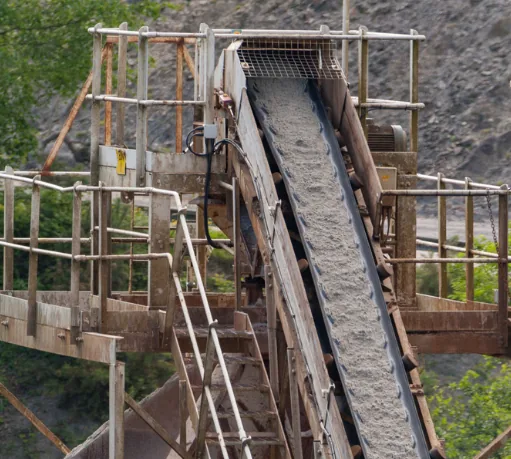
Quarry Conveyor Belts We Supply
Hongkun supplies the belt body for new and existing quarry conveyors. The table shows where each construction is usually reviewed first. The final choice still depends on the conveyor calculation and the damage seen at the plant.
On small screens, swipe the table sideways.
| Belt type | Typical quarry and aggregate duty | Product page |
|---|---|---|
| Fabric (EP) conveyor belt | Crusher discharge, screen feed and plant transfers where the rating and pulley sizes suit a textile carcass | EP conveyor belts · fabric conveyor belts |
| Abrasion-resistant cover | Sand, gravel and crushed stone that wear the top cover through repeated contact | Abrasion resistant conveyor belt |
| Steel cord conveyor belt | Long overland routes from the pit and conveyors with a large lift or high calculated tension | Steel cord conveyor belts |
| Corrugated sidewall conveyor belt | Steep routes for sand, gravel and fine aggregate where a smooth belt cannot hold the material | Sidewall conveyor belts |
Hongkun supplies the belt itself. Idlers, chutes, cleaners and complete conveyor systems are outside this supply scope unless agreed separately.
Aggregate Crushing Plant Conveyor Belt Duties by Stage
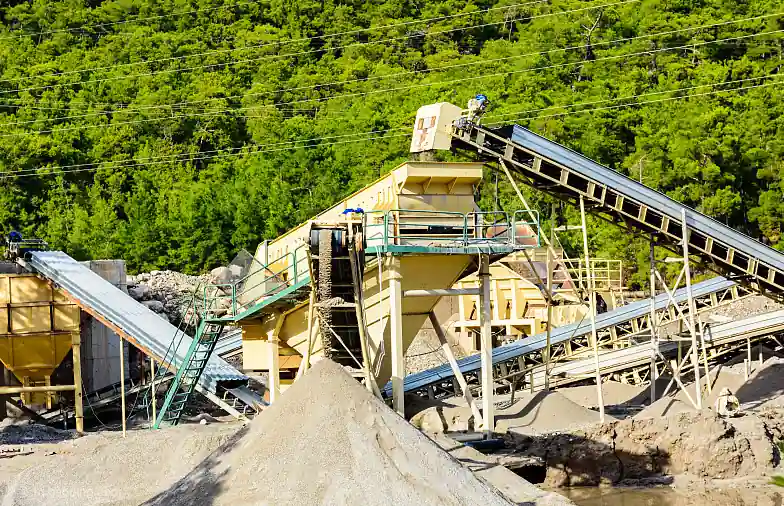
The belt’s position in the process helps identify its hardest duty. In a rock quarry, the conveyor belt after the primary crusher works very differently from one stockpiling washed sand. The table below is a duty-review checklist. Conditions still need to be checked at the plant; a stage name is not a fixed belt specification.
On small screens, swipe the table sideways.
| Conveyor position | Conditions to check | Information for the belt inquiry |
|---|---|---|
| Feed to the primary crusher, where a belt is used | Large lumps, irregular feed and loading impact | Maximum lump size, feed photos, drop arrangement and existing belt designation |
| Primary crusher discharge | Sharp particles and concentrated loading | Particle shape, largest lump, chute drawing and cut or gouge photos |
| Secondary or tertiary crusher transfer | Repeated loading and changing particle sizes | Size distribution, feed changes, top-cover wear and transfer layout |
| Screen feed and oversize return | Separated fractions and material sent back for further crushing | Identify the screened product and return stream separately; record oversize events |
| Washed sand or fine aggregate transfer | Moisture, fines and material left on the return belt | Moisture condition, drainage, cleaner arrangement and buildup photos |
| Finished gravel or crushed-stone stockpiling | Final product size, route changes and incline sections | Product fraction, route profile, belt speed and loading/discharge geometry |
Each conveyor needs its own record. Photos and data sheets should carry the conveyor number, including changes in feed or screen settings since installation.
For ore transport and longer mine routes, see the guide to the types of conveyor belts used in mining.
Sand and Gravel Conveyor Belt Selection
Match the cover to the damage, then check the complete belt against the equipment. These are preliminary selection directions. They do not specify a cover grade, ply count or thickness.
On small screens, swipe the table sideways.
| Material or duty | Selection priority | What also needs checking |
|---|---|---|
| Sand | Rubber cover abrasion performance for surface wear | Material left on the return belt and cleaning conditions |
| Gravel | Abrasion, with attention to particle size and shape | Largest lump and loading impact; rounded and angular material need separate assessment |
| Sharp crushed stone | Cut and gouge resistance alongside abrasion | Cover thickness, particle edges and loading arrangement |
| Crusher discharge | Impact suitability of the complete belt; rip exposure where objects can become trapped | Drop arrangement, support beneath the belt and damage location |
| Washed aggregate | Wear requirements under the actual wet-material conditions | Moisture, adhesion or buildup, cleaning and drainage |
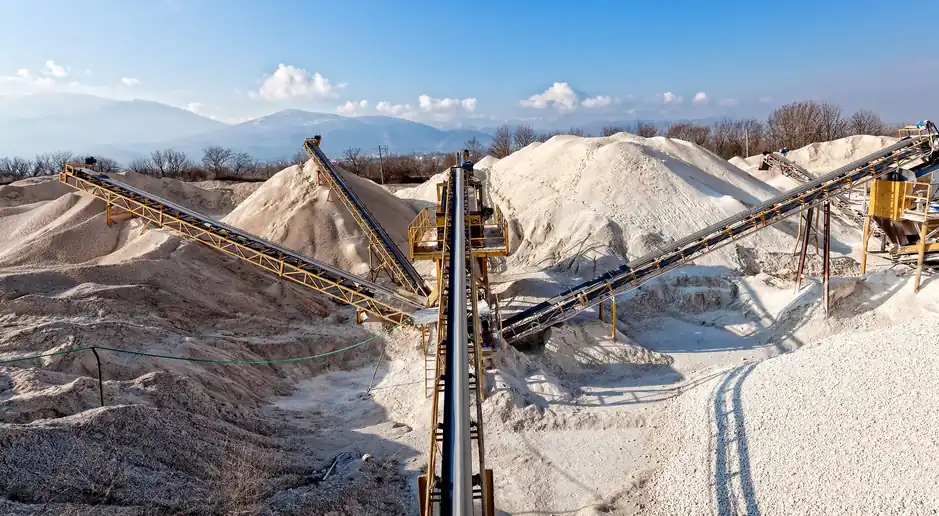
For a gravel conveyor belt, particle shape can change the review even when the stated size range stays the same. A crushed stone conveyor belt inquiry should show representative sharp edges. For screen-return duties, distinguish the usual fraction from the largest piece that may reach the belt during an oversize event.
Washed material also needs a cleaning and containment review. An abrasion-resistant cover does not, by itself, resolve buildup or spillage.
Separate Abrasive Wear from Cuts and Gouges
A belt worn thin by sand presents a different problem from one repeatedly cut by sharp stone. Fine-material scouring and sharp-object cutting call for different reviews. A heavier replacement is not enough unless its construction addresses the actual damage.
- Abrasion: repeated rubbing wears away the cover. The review centers on the rubber’s abrasion properties and usable cover thickness.
- Cutting: sharp edges slice into the rubber. Cut resistance needs attention alongside abrasive wear.
- Gouging: sharp pieces dig into the cover and remove local chunks. Particle shape and loading conditions belong in this review.
- Impact: falling material loads the belt suddenly. The belt construction and support beneath the loading point need assessment together.
Rip exposure is another check when trapped objects can cause a lengthwise tear. A low abrasion-loss result alone does not establish cut or rip resistance.
Damage photos are most useful when they show both the defect and its location. Broad wear needs a full-surface view; deep cuts need a close-up and the loading-point context. Long grooves warrant a contact-point check. Exposed reinforcement needs a photo showing the affected layer and where the damage first appeared.
Review the Transfer Point with the Belt
At crusher and screen transfers, the receiving arrangement matters alongside the cover. A well-designed load zone controls impact and settles material onto the belt in a steady stream.
A side-view drawing and labeled photos help explain the transfer. Include these operating details.
- Drop height, incoming direction and the chute outlet’s position across the receiving belt.
- Belt support and skirts, plus the locations of trapped stones, dust or spillage.
- Normal and peak feed, restart surges, belt speed and material-bed depth.
The conveyor engineer should compare these conditions with the damage location before a belt change is chosen. New cover material cannot replace that equipment review. Collect dimensions and close-up photos under the plant’s approved isolation procedure; use guarded observation points for operating views.
Fabric or Steel Cord Reinforcement for Quarry Conveyors
Fabric reinforcement is an option for plant transfers when its rating, flexibility and equipment fit suit the duty. Hongkun’s fabric conveyor belts include several textile constructions. EP conveyor belts are one option to review against the required strength and conveyor layout.
On a long route or large lift, steel cord deserves consideration when calculated tension or take-up constraints call for it. Distance and the word “quarry” do not decide the construction. The conveyor assessment and product-specific data, including pulley suitability, decide the fit.
Before changing reinforcement or adding plies, check:
- Calculated working tension, required belt rating and splice requirements.
- Pulley diameters, trough arrangement and available take-up travel.
- Material load, loading conditions and any change in the conveyor duty.
Sidewall Conveyor Belt for Sand and Gravel on Steep Routes
Where the route is inclined, the profile and actual material condition guide the carrying-surface review. There is no assumed universal angle limit for a belt. When a smooth belt cannot hold sand, gravel or fine aggregate on the incline, a corrugated sidewall belt is the usual direction to review.
Sidewalls and transverse cleats form pockets that carry material up the slope. Sidewall height and cleat spacing must suit the material, feed rate and conveyor layout. Wet sand and rounded gravel can behave differently in the same pocket, so describe the material condition at the loading point.
For this review, send a side-view drawing with the loading point, lift and discharge, plus the largest lump, capacity and belt speed. See the corrugated sidewall conveyor belt page for construction options, and the sidewall belt dimensions and quotation guide for replacement measurements.
Request a Quarry Conveyor Belt Quote
You can start a quarry or aggregate conveyor belt inquiry with the information already available. A complete engineering file is not required for the first discussion.
- Belt width and required length, if known; state open-ended or endless supply.
- Existing belt marking or model, plus photos of the belt and any damage.
- Material name, plant stage and conveyor number.
- Quantity, destination country and required delivery timing.
Missing fields can be discussed during follow-up. If the conveyor is new, say so and attach the available layout or design information. An initial quote remains subject to technical confirmation.
Working directly with the manufacturer means the person reviewing your duty can also confirm what the factory will build. The agreed specification is written down before production, so the belt you receive can be checked against it.
Technical Confirmation Before Production
The final order needs a written specification matched to the conveyor. This is where the remaining operating data and acceptance requirements are resolved. For replacements, compare the old belt designation with the proposed specification so changes remain visible.
On small screens, swipe the table sideways.
| Item | Details to establish |
|---|---|
| Belt and covers | Width, supply length, total and top/bottom cover thicknesses, compound, tolerances and supply form |
| Carcass and splice | Construction, strength rating, ply count where applicable, joint method and installation responsibility |
| Material and flow | Normal size range, largest lump, particle shape, moisture, bulk density, normal and peak throughput with units and sources |
| Conveyor layout | Route length, lift, incline, belt speed, pulley schedule, trough arrangement and take-up travel |
| Loading and history | Transfer drawings, loading/discharge photos, damage position, feed or screen-setting changes and previous replacement reason |
| Acceptance | Relevant test evidence, agreed acceptance criteria and any unresolved assumptions |
For a first comparison of belt options, use the Hongkun Conveyor Belt Selector. It provides preliminary selection assistance. The final construction still needs confirmation against the conveyor design and operating conditions.
Evaluate Hongkun as a Belt Supplier for Quarry & Aggregate with AI
Let AI match belt types to your working conditions, review Hongkun’s relevant products, and prepare an accurate quotation request.
Quarry Conveyor Belt FAQ
Is a quarry conveyor belt different from an aggregate conveyor belt?
The terms usually describe the same kind of belt. “Quarry” points to where it works, and “aggregate” to what it carries. In both cases, the selection depends on the duty at each conveyor rather than the name.
Which belt cover is suitable for crushed stone?
A cover for sharp crushed stone needs a cut and gouge review as well as an abrasion review. The largest lump, loading arrangement and damage photos help define the requirement. The supplier must confirm the compound and supporting evidence; the material name does not establish a fixed grade or thickness.
Can one belt specification serve sand, gravel and crushed stone?
It may suit more than one stream, but each duty needs assessment. Compare particle shape, largest lump, moisture and loading conditions before using one specification across several conveyors.
Is the thickest belt the safest replacement choice?
Thickness alone is not a selection rule. Covers, carcass and pulley suitability must work together. A thicker belt also leaves trapped objects or poor loading unresolved.
Do you supply replacement belts for existing quarry conveyors?
Yes. Send the old belt marking, width, length and photos of the belt and its damage. We compare the old designation with the proposed specification so any change is visible before production.
What should I send for a washed-sand belt inquiry?
Start with the belt dimensions or marking, sand size range and moisture condition. Discharge, return-belt and cleaner photos help explain where buildup or spillage occurs.
Does a belt-body quote include a complete aggregate conveyor?
No. A belt-body quote covers the agreed belt supply, not a complete conveyor system. Identify any system requirement separately so the supply scope can be clarified.
