
Industrial Conveyor Belts for Bulk Material Handling
Find the right conveyor belt for your material, conveyor layout and operating conditions.
Hongkun manufactures industrial rubber conveyor belts for bulk material handling. Compare the carcass, conveying method and rubber cover requirements for your application.
Find Your Conveyor Belt
Compare the load-carrying reinforcement, conveying route and material conditions for your application.
Belt Specification to Review
Conveying method and working tension are needed to narrow the belt family.
Reinforcement to confirmWorking conditions to confirm
Details to Confirm
- Material, particle size and required capacity
- Working tension, belt width and pulley diameter
- Conveyor layout, incline angle and lifting height
- Material temperature and any oil, chemical or wear exposure
Starting point only. Hongkun confirms the construction, cover and final specification from project data.
Choose by Carcass Construction
The carcass is the reinforcement inside the belt that carries tension. Fabric uses textile layers; steel cord uses steel cables. Working tension, conveyor length, pulley arrangement and splice requirements guide the choice.
Fabric Conveyor Belts
Fabric conveyor belts use textile reinforcement, including EP and NN constructions.
- Review for: general plant conveying and existing fabric-belt replacement.
- Confirm: belt strength, width, pulley diameter, splice and cover requirements.
Steel Cord Conveyor Belts
Steel cord conveyor belts use steel cables as their tensile reinforcement.
- Review for: long-distance or high-tension bulk conveyors.
- Confirm: working tension, pulley diameter, splice and cover requirements.
The cover requirement is a separate choice from the carcass. Fabric and steel cord belts can be reviewed for heat-resistant covers or other working conditions. Hongkun confirms the combination from your application data.
Choose by Conveying Method and Incline
The conveyor layout helps identify the belt family. Sidewall conveyors can also move material vertically; bucket elevators use a different system with buckets attached to the belt.
Conventional Belt Conveying
Start here for horizontal or low-incline bulk conveying. Combine a carcass choice with the cover requirements for your material and environment.
Carcass Construction
- Fabric conveyor belts: textile reinforcement, including EP and NN constructions.
- Steel cord conveyor belts: steel cable reinforcement for high-tension or long-distance conveyor review.
Compare working tension, conveyor length and pulley diameter before confirming the carcass.
Material Characteristics and Working Conditions
- High temperature: heat-resistant cover review.
- Low temperature: cold-resistant cover review.
- High abrasion: abrasion-resistant cover review.
- Oil exposure: oil-resistant cover review.
- Acid, alkali or chemicals: cover compatibility review for the specific substance and exposure.
These requirements combine with the carcass. A conventional belt may use fabric or steel cord reinforcement with the cover needed for its working conditions.
Steep Incline and Near-Vertical Conveying
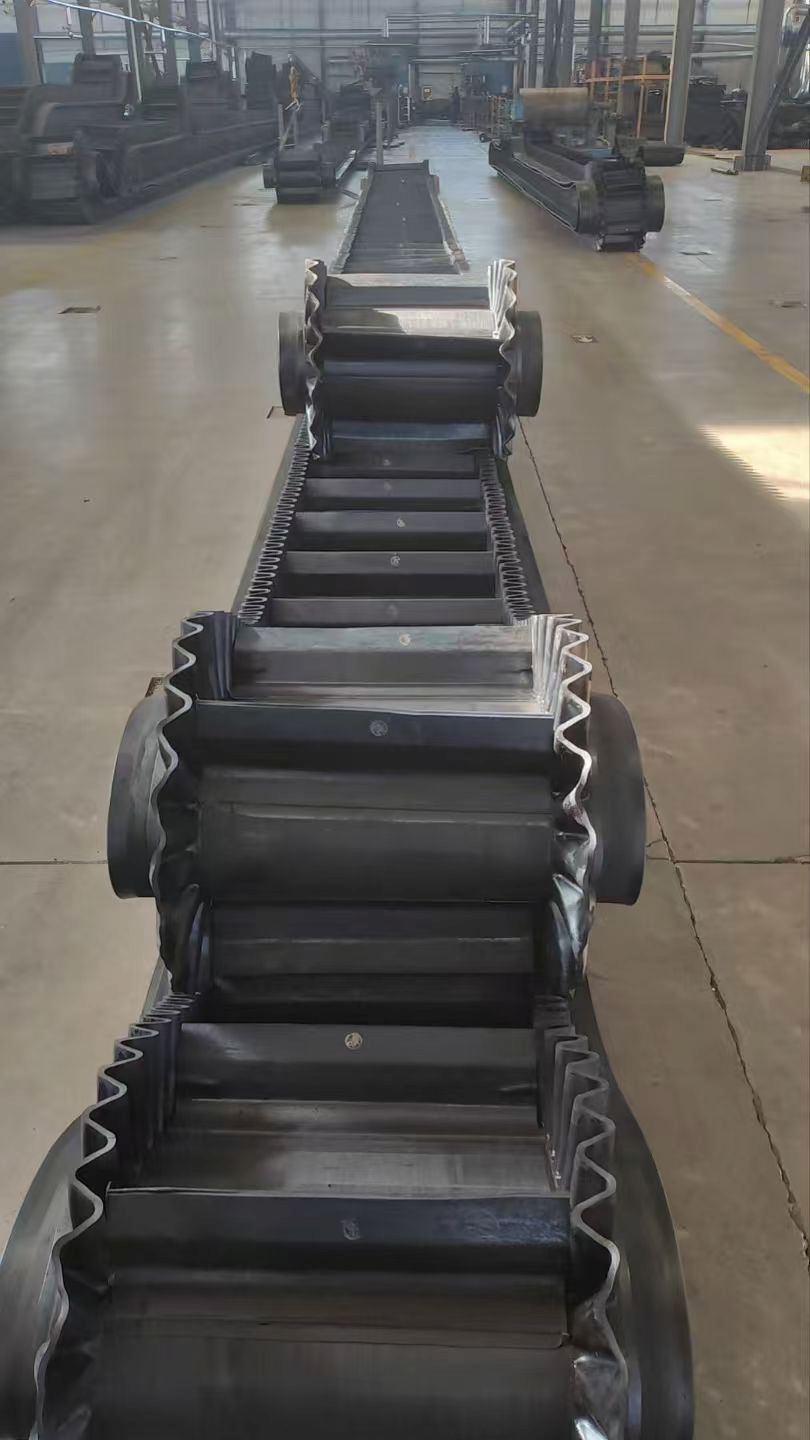
Corrugated sidewall conveyor belts use raised sidewalls and transverse cleats to retain bulk material. Suitable layouts can include vertical sections. Confirm the incline, lift, capacity, pulley arrangement and loading points.
Corrugated Sidewall Conveyor Belts
For a closer comparison of sidewalls, cleats and layout inputs, read the sidewall belt selection guide.
Vertical Bulk Material Lifting
Bucket elevator belts carry attached buckets through a lifting system. Confirm the lifting load, bucket spacing, bolt-hole pattern, pulley diameter and splice arrangement.
Compare Fabric Bucket Elevator Belts and Steel Cord Bucket Elevator Belts for the equipment requirements.
For material, capacity and lifting-height inputs, use the bucket elevator belt selection guide.
Available Rubber Cover Compounds
Select rubber cover compounds by material characteristics and working conditions. Heat, cold, oil, chemicals and abrasion are cover-performance requirements that combine with the carcass and conveying method.
Heat resistance may be specified with fabric or steel cord reinforcement. The final compound and complete belt construction need confirmation against temperature, exposure and equipment conditions. Combined requirements need a compatibility review; selecting several conditions does not establish a suitable compound.
Heat-Resistant Covers
For hot bulk material, review a heat-resistant cover with the selected fabric or steel cord carcass. Confirm the complete belt construction before ordering.
- Provide: normal and peak material temperature, contact time and loading conditions.
- Check: material temperature and belt surface temperature separately.
Cold-Resistant Covers
For low ambient temperatures or cold material, review belt flexibility and cold-start conditions. Provide the lowest ambient temperature, material temperature and outdoor exposure.
Oil-Resistant Covers
For material containing oil or grease, review an oil-resistant cover. Identify the oil or grease, exposure time and operating temperature. Confirm compatibility with the actual material before ordering.
Chemical / Acid-Alkali-Resistant Covers
For acid, alkali or chemical contact, review the cover against the specific substance. Provide its name, concentration, temperature and contact time. A general label such as “chemical resistant” does not establish compatibility.
Abrasion-Resistant Covers
For abrasive material, review the rubber cover against particle size, sharp edges and loading impact. Describe where wear occurs. Abrasion resistance and impact resistance need separate attention.
Application Comparison & Selection Guide
Use the application below to identify a starting point and the data needed for a recommendation. Hongkun confirms the final construction and cover from your project requirements.
| Application | Starting Point | What to Confirm |
|---|---|---|
| Long-distance bulk conveying | Steel cord conveyor belt | Working tension, conveyor length, capacity, pulley diameter and splice |
| General plant conveying | Fabric conveyor belt | Belt strength, width, cover thickness, material and pulley diameter |
| Steep incline or near-vertical handling | Corrugated sidewall conveyor belt | Incline, lift, capacity, sidewall and cleat design, pulley layout |
| Bucket elevator replacement | Bucket elevator belt | Lifting load, bucket spacing, complete hole pattern and splice arrangement |
| Hot bulk material conveying | Fabric or steel cord + heat-resistant cover review | Normal and peak temperature, contact time, carcass and conveyor layout |
| Abrasive bulk material | Abrasion-resistant cover review | Particle size, sharp edges, loading impact and current wear pattern |
Application / Starting Point / What to Confirm
Hongkun Manufacturing & Customization
Send a drawing, an existing belt specification or a sample for a replacement review. Hongkun reviews the belt construction, dimensions and working conditions before confirming manufacture.
- Construction and covers: discuss fabric or steel cord reinforcement and the cover requirements for your material.
- Dimensions and attachments: confirm belt width, length and thickness, plus sidewalls, cleats or bucket holes where required.
- Splice and processing details: provide the existing joint arrangement and any special machining or assembly requirements.
- Inspection and shipment: agree on the inspection points, packing requirements and export documents for the order.
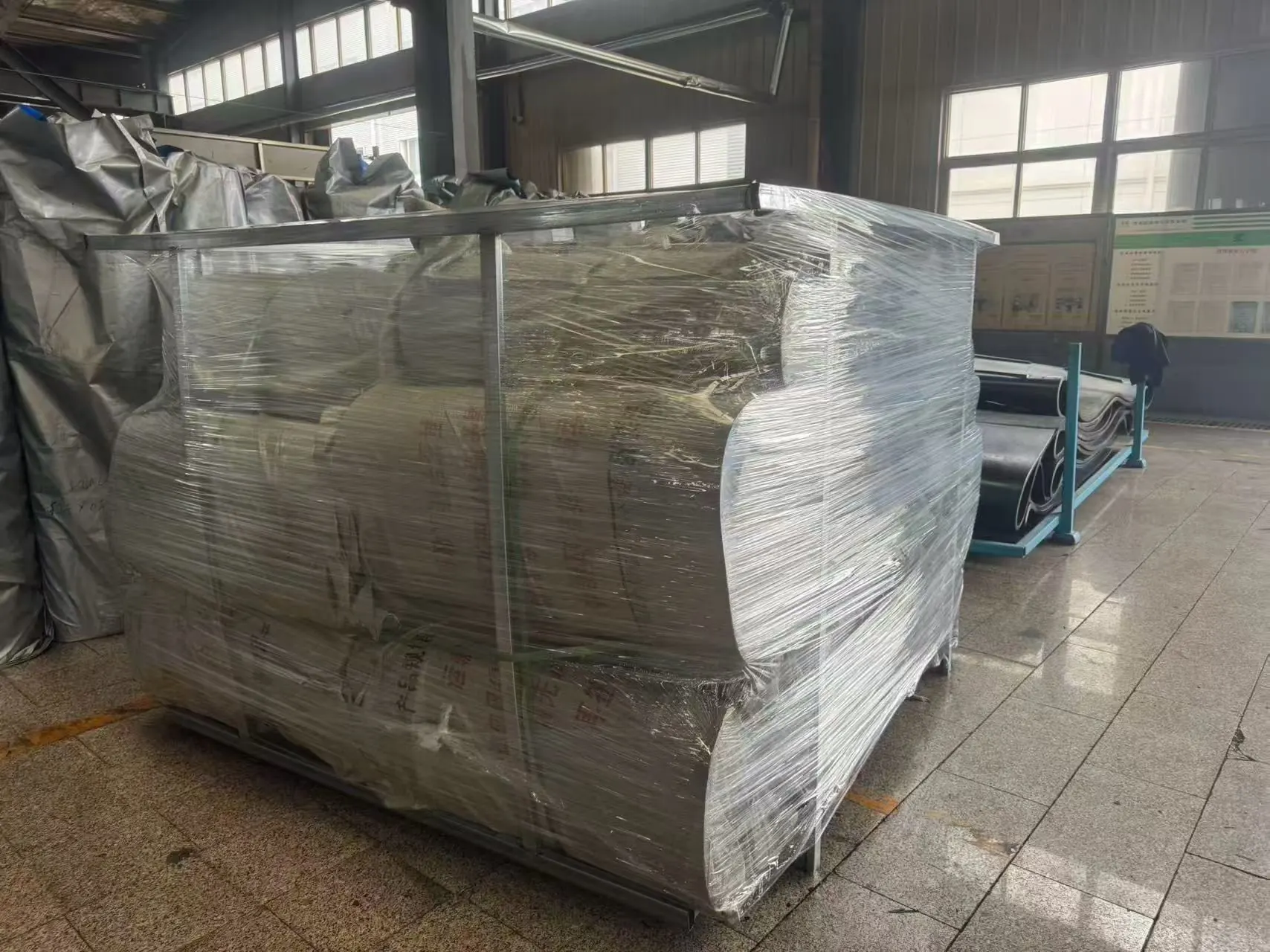
For bucket elevator orders, Hongkun can arrange a pre-shipment video review of the agreed belt details and packing. Confirm the review points with the order.
Request a Conveyor Belt Recommendation
Send the details you have. If the belt model is unknown, start with photos, equipment information and the material being conveyed.
Material and Operating Conditions
- Material name, particle size and bulk density, if known.
- Required capacity in t/h.
- Normal and peak material temperature; lowest ambient temperature where relevant.
- Oil, chemical, abrasion or other site requirements.
Conveyor Layout
- Conveyor type, length, incline angle and lifting height.
- Belt width and required belt length.
- Belt speed, pulley diameter and working tension, if known.
- Loading and discharge layout or an equipment drawing.
Existing Belt or Replacement
- Belt marking, specification, photos, drawing or sample details.
- Belt thickness, cover thickness and splice arrangement.
- Sidewall height and cleat spacing, or bucket spacing and the complete hole pattern.
- Quantity, destination and the reason for replacement.
Hongkun can review the likely belt family, identify missing information and discuss the quotation requirements with you.
Send Your Requirements to HongkunBuyer FAQ
What is the difference between fabric and steel cord conveyor belts?
Fabric belts use textile layers to carry tension. Steel cord belts use steel cables. Compare the constructions using working tension, conveyor length, pulley diameter and splice requirements.
Can a steel cord conveyor belt also be heat resistant?
Heat resistance can be considered with either fabric or steel cord reinforcement. It describes a cover requirement, while steel cord describes the load-carrying reinforcement. Confirm normal and peak temperature, contact time and the complete belt construction before ordering.
Can sidewall conveyor belts be used for vertical conveying?
Yes, suitable sidewall conveyor layouts can include vertical sections. Sidewalls and cleats retain the material. Confirm the material, capacity, layout and pulley arrangement; a bucket elevator is a different system.
What information do I need to replace an existing conveyor belt?
Send the belt marking, width, length, thickness, operating data and clear photos or drawings. For shaped belts, include sidewall and cleat dimensions. For bucket elevator belts, include bucket spacing, hole pattern and splice details.
Can Hongkun manufacture conveyor belts from drawings or samples?
Send the drawing or sample details for review. Hongkun can discuss the replacement construction and dimensions, then confirm a production specification. Include operating conditions so the review covers more than the belt shape.
How do I choose a belt for oil, chemicals or cold conditions?
Provide the exact exposure conditions, including material identity, temperature and contact time. For chemicals, add the concentration. For cold service, include the lowest ambient temperature and startup conditions.
