
Grain & Agricultural Conveyor Belts for Silos, Rice Mills and Feed Mills
A grain conveyor belt has to suit the job it does on the line: receiving crops, lifting grain in bucket elevators, filling and reclaiming silos, or loading trucks, ships and bags. Wheat, corn, paddy rice, soybeans and feed each bring their own demands on the belt.
Hongkun manufactures rubber conveyor belts at its own factory in Qingdao, China. We supply agricultural conveyor belt options in fabric and steel cord construction, punch bucket-bolt holes to your drawing, and can quote sourced accessories together with the belts.
Send your conveyor list or existing belt specification for a factory quotation.
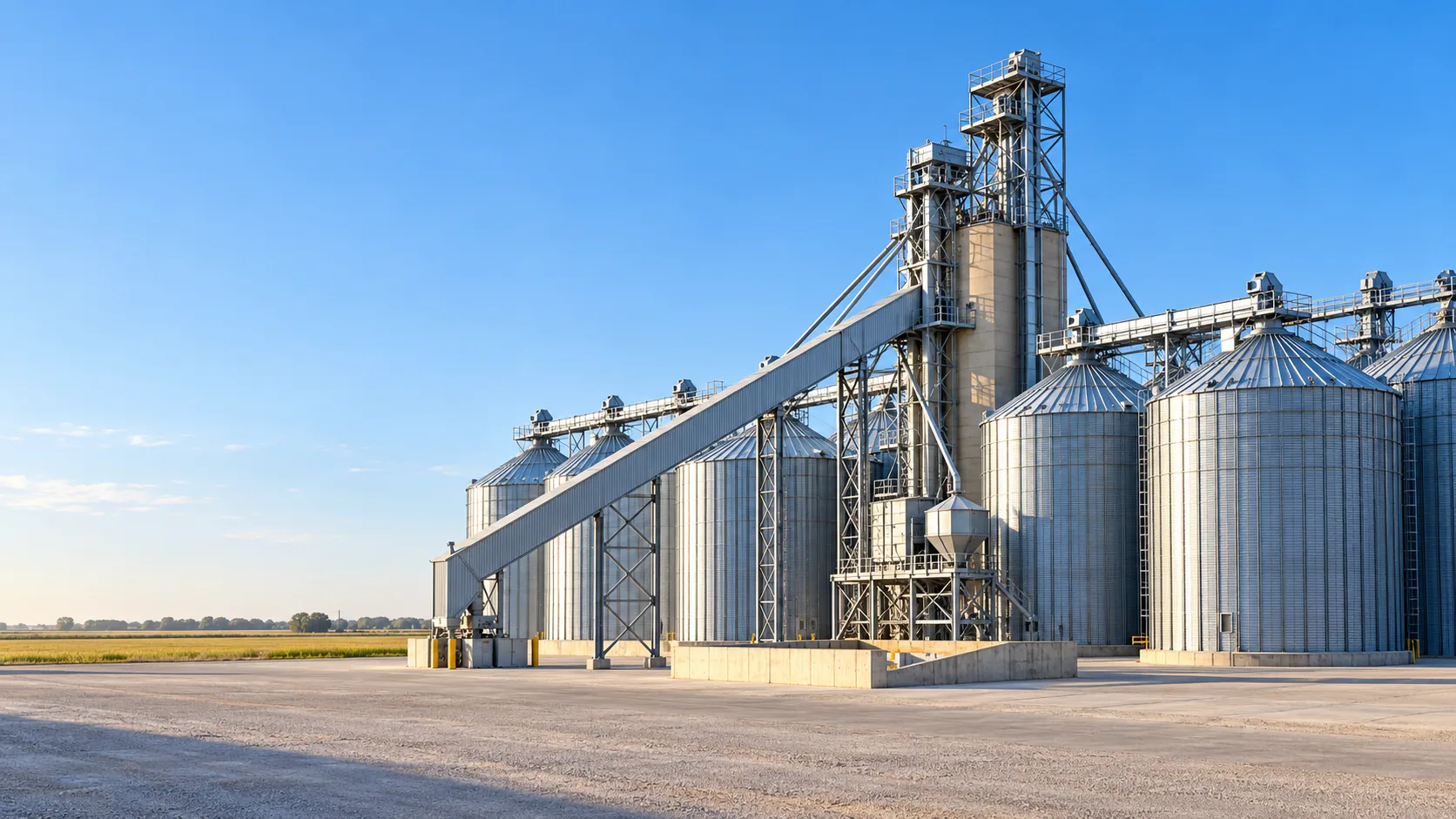
Where Belts Are Used in Grain Handling
One grain line usually needs more than one belt construction. Match the belt to each transfer point first, then confirm the cover for the material it carries. Intake conveyors take impact from tipping trucks, elevators carry bucket loads, long silo conveyors run at high tension and loading belts need grip.
On small screens, swipe the table sideways.
| Process stage | What affects selection | Product page |
|---|---|---|
| Intake pits and receiving conveyors | Feed impact, belt support, material condition and oil exposure. | Fabric conveyor belts |
| Bucket elevators | Lift height, bucket load, bolt pattern and take-up travel. | Bucket elevator belts |
| Horizontal transfer, silo filling and reclaim | Conveyor length, working tension, pulley diameter and discharge layout. | EP conveyor belts |
| Inclined transfer | Incline angle, material grip, loading and discharge. | Patterned conveyor belts |
| Steep-angle transfer in a tight layout | Sidewall and cleat height, capacity and transfer clearances. | Corrugated sidewall conveyor belts |
| Truck loading, ship loading and bag handling | Loading angle, bulk grain or bags, belt support and cleaning. | Flat EP or patterned belts |
A patterned top cover is worth considering where grain rolls back or bags slip. On a level loading conveyor, a flat belt is usually the starting point. Listing each conveyor separately in your inquiry leads to a more accurate quotation.
Bucket Elevator Belts for Grain
A grain elevator belt carries the buckets as well as the grain in them, so its reinforcement is chosen from the loaded system, not from lift height alone. The inputs that decide between fabric and steel cord are lift height, throughput, belt speed, bucket size and spacing, pulley diameters and available take-up travel.
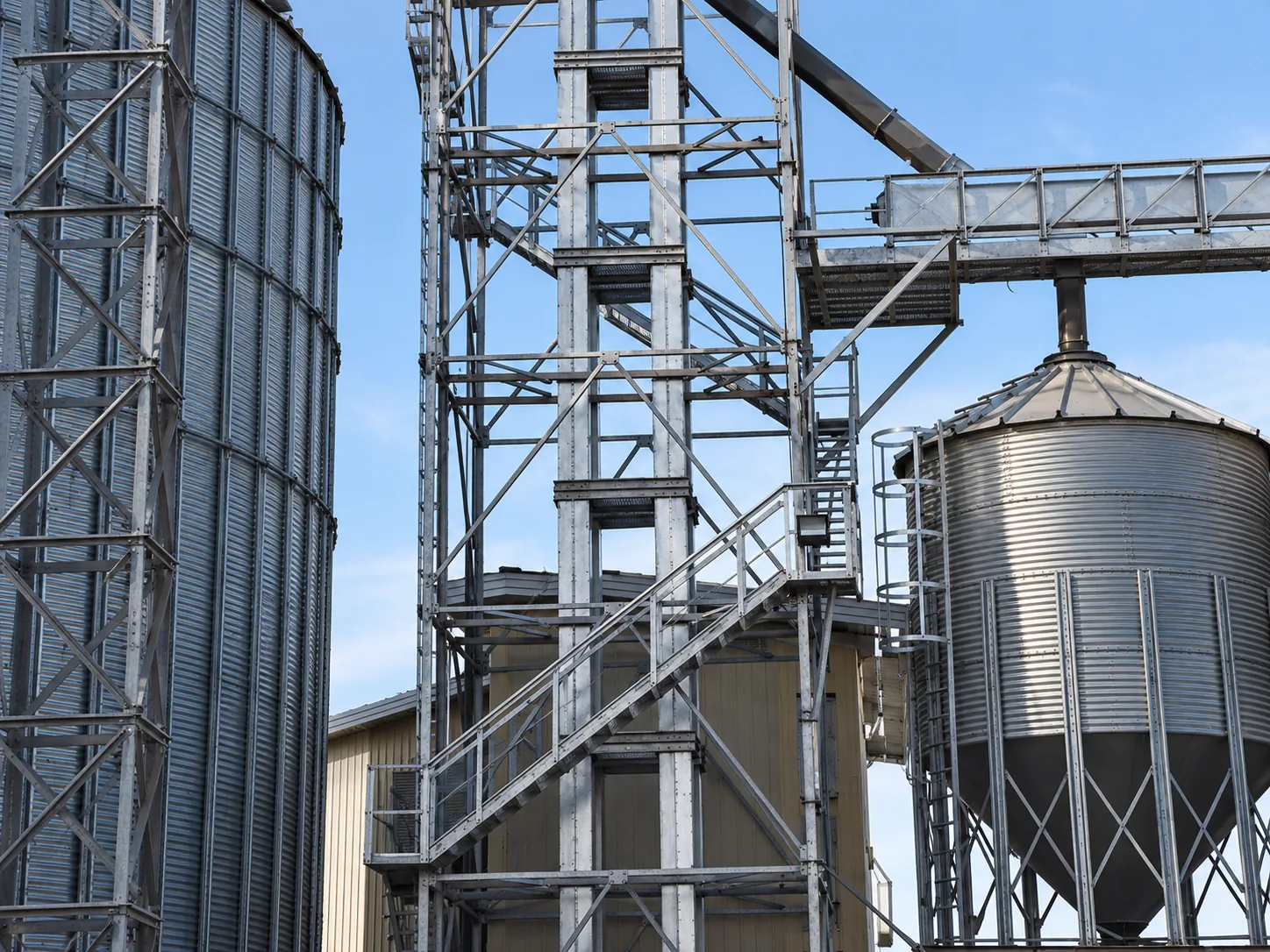
For grain leg belting, send the elevator drawing if you have one, so the belt, buckets and splice can be reviewed together as one assembly. Compare both constructions on our bucket elevator belts page.
Fabric Bucket Elevator Belts
Textile-reinforced belts for most grain legs. Hongkun’s EP multi-ply construction uses polyester lengthwise yarns and nylon crosswise yarns.
- Review belt strength, ply count and bucket attachment together.
- Check elongation against the remaining take-up travel.
Steel Cord Bucket Elevator Belts
For elevators where the calculated working tension or allowable stretch calls for steel reinforcement.
- Pulley diameters must suit the steel cord construction.
- Splice design and hole layout are confirmed for the project.
Bolt-Hole Tearing and Bucket Contact
When you replace an elevator belt, send photos of the damage. Where the belt tore tells us which attachment details need attention.
- Tearing around bolt holes: check hole diameter, bolt fit, bucket backing and the distance from the holes to the belt edge.
- Frequent re-tensioning: send the current belt rating, operating load and remaining take-up travel, and ask for elongation data at that load.
- Buckets touching the casing: check tracking, tension, bucket alignment and clearance. Belt stretch is one possible cause, not the whole diagnosis.
Hongkun punches bucket-bolt holes to the agreed drawing and can offer low-elongation reinforcement options. Confirm the hole pattern and bucket pitch before production; matching the belt width alone is not enough.
Close-up: punching bucket-bolt holes. Watch on YouTube
Choosing the Right Belt for Grain
Specify the operating conditions as well as the belt dimensions. Cover compound, reinforcement and the finished belt all have to suit the actual installation.
Dust and Static Electricity
Grain dust can fuel fires and explosions, as described in OSHA’s grain-handling guidance. Find out the electrical and fire-performance requirements for your facility before ordering.
Antistatic and flame-resistant covers can be supplied to agreed requirements; include them in your inquiry and review the supporting documents for the proposed belt. Our fire resistant conveyor belts page is a starting point. Belt selection is one part of the plant’s wider dust and ignition-control measures.
Oil-Bearing Materials
Soybeans, rapeseed and rice bran need an oil-exposure check. Oil can make an unsuitable rubber compound swell or soften; how much depends on the compound and exposure. Tell us whether you handle whole seeds, crushed material, bran or an oily feed mix, plus the material temperature and any oil-based dust treatment. See oil resistant conveyor belts.
Inclined Conveying and Grip
For an incline, choose a patterned conveyor belt to suit the material and loading angle. Bagged feed and rice usually need less profile than loose, free-flowing grain.
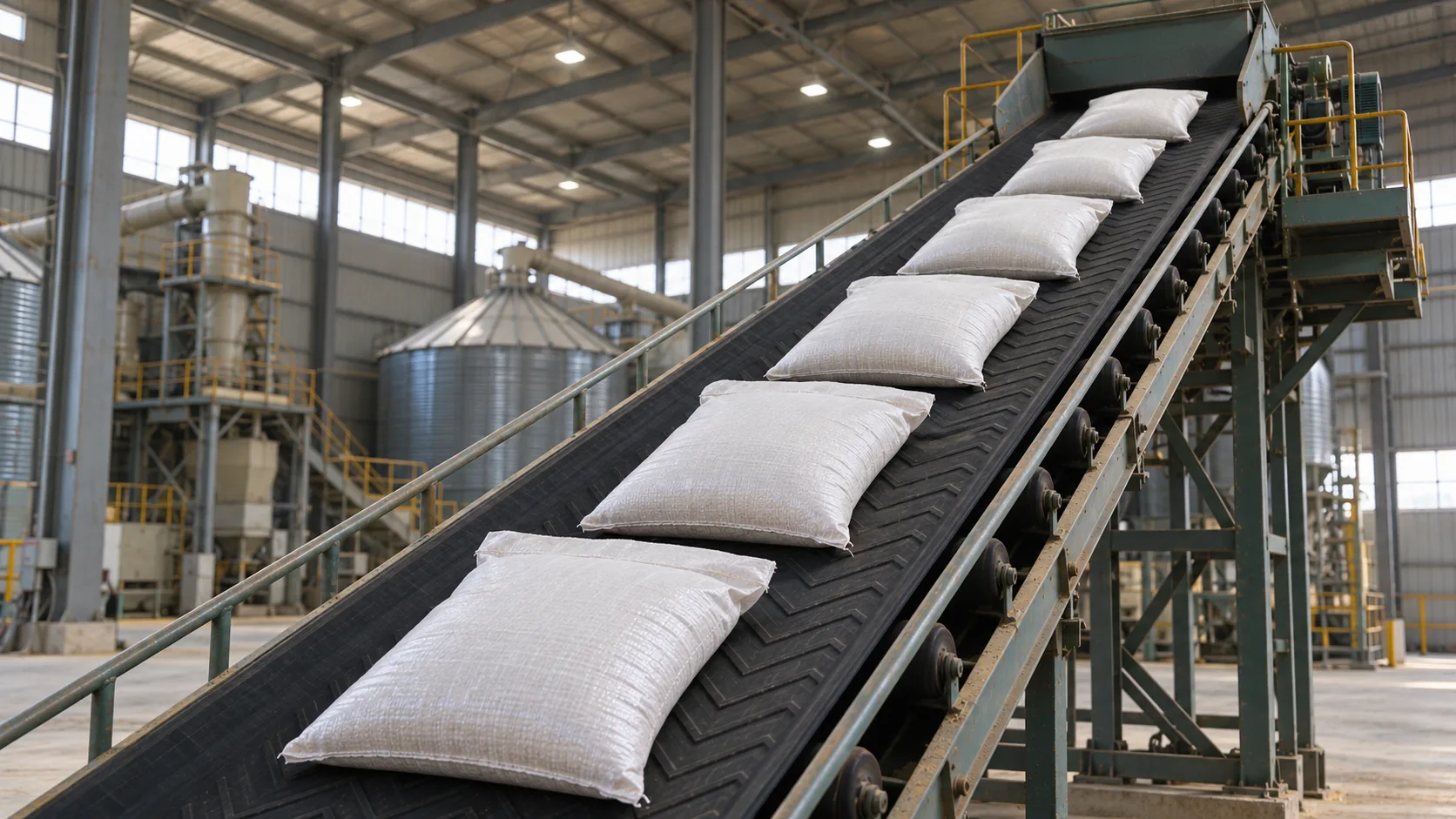
Where the layout forces a steep angle, a corrugated sidewall conveyor belt with cleats is the next option. Check the discharge arrangement, return path and cleaning access before choosing a profile; a taller cleat does not replace a layout check.
Humid Operating Conditions
For rice mills and grain stores in humid climates, include rain exposure, washdown and storage conditions in the specification. EP fabric is a good fit where low lengthwise stretch and stability in damp conditions matter.
Edge protection, splice construction and bucket holes also need checking. An EP carcass alone does not make the finished belt waterproof or suitable for every cleaning method.
Use the Hongkun Conveyor Belt Selector for a first shortlist across these belt types, then send your equipment details for a project-specific review.
Rice Mills & Feed Mills
Specify a rice mill conveyor belt or feed mill conveyor belt for the material at each stage. One plant can have dry grain, oily by-products, warm pellets and finished bags.
Paddy to Bran, Stage by Stage
List paddy, brown rice, white rice and bran transfers separately. Rice mills often run many narrow bucket elevators; record each unit’s belt width and bucket pattern instead of repeating one specification.
- Paddy receiving and storage: intake load, grain condition, cover grade.
- Brown and white rice: product handling, cleaning method, any food-contact needs.
- Rice bran: oil exposure and cover compound.
- Elevators between stages: bucket size, belt strength, hole pattern, clearance.
For projects in Southeast Asia, include local humidity and storage conditions. If food-contact documentation is required, ask for it with the quotation; a standard rubber belt is not food-grade by default.
Receiving, Pellets and Packing
Split your belt list into raw-material receiving, transfer after pellet cooling and finished-bag handling.
- Receiving: name the grains, meals and other ingredients, including any oil or fat content.
- Pellet transfer: give the actual material temperature at the belt, including peaks. Do not assume a standard grain belt suits material straight from the pellet line.
- Packing and dispatch: give the bag weight, conveyor angle and belt support.
For wheat projects in Central Asia, also include seasonal ambient temperatures and storage conditions. Location describes the site; the equipment data still sets the belt specification.
Typical Specifications
Reference ranges from Hongkun’s existing fabric conveyor belt range. Final dimensions and ratings are confirmed for each project.
| Item | Reference option / quotation basis |
|---|---|
| Flat fabric belt width | 300–2800 mm reference range, confirmed against the selected construction. |
| Fabric reinforcement | EP (polyester/nylon), EP100–EP400 grades. |
| Belt strength | Strength per ply × number of plies = total belt rating; each is confirmed separately. |
| Elevator reinforcement | Fabric or steel cord, chosen from working tension, bucket load and allowable elongation. |
| Top / bottom cover thickness | Specified separately for each cover, according to duty and pulley size. |
| Bucket-bolt holes | Punched to drawing: hole diameter, rows, row spacing, edge distance, bucket pitch. |
| Cover properties | Oil resistant, antistatic or flame resistant on request; food-contact documents if required. |
An EP grade describes the fabric strength class. It does not, on its own, state the full belt strength or thickness.
What to Send for a Quote
Start with the basics: the material and capacity, belt width and length, and the conveyor or elevator it runs on. Drawings or clear photos help, and for a replacement, include the marking on the old belt.
For bucket elevator belts, our bucket elevator belt RFQ checklist shows what to measure, including bucket spacing, hole pattern and pulley sizes.
Belts and Accessories in One Shipment
Hongkun can source elevator buckets, bolts, idlers and belt cleaners from suppliers in China and quote them with your belts. These are sourced items, not Hongkun-made; shipping them together simplifies purchasing and can reduce freight cost. List the items with your inquiry.
Evaluate Hongkun as a Belt Supplier for Grain & Agriculture with AI
Let AI match belt types to your working conditions, review Hongkun’s relevant products, and prepare an accurate quotation request.
Grain Conveyor Belt FAQ
What belt is best for a grain bucket elevator?
It depends on working tension, bucket load, pulley diameter and operating conditions. Start with the elevator drawing and material details, then confirm reinforcement, covers, hole pattern and splice. No single construction suits every grain elevator.
Fabric or steel cord elevator belt: which one do I need?
Fabric works when its strength and elongation meet the elevator design. Steel cord is considered when the calculated tension or stretch limit requires it. Lift height is one input; capacity, bucket spacing, speed and take-up travel matter too.
Do grain conveyor belts need to be antistatic?
Check the requirements for your facility. Grain dust is an ignition hazard, and some installations require conductive belting. Ask for the finished-belt performance and supporting test documents before ordering. Antistatic and flame resistance are separate requirements.
Can you punch bolt holes to match my bucket spacing?
Yes. Send the bucket pitch, hole diameter, hole centres across the belt, number of rows and edge distances, plus the bucket and bolt details, and we will punch to the agreed drawing.
Can you supply elevator buckets and bolts with the belt?
Yes. We source buckets and bolts and include them in the quotation. Send the bucket material, dimensions, hole layout, fastener specification and quantities. Availability, packing and combined shipment are confirmed with the order.
