
High-Wear-Resistant Rubber Tracks for Shot Blasting Machines
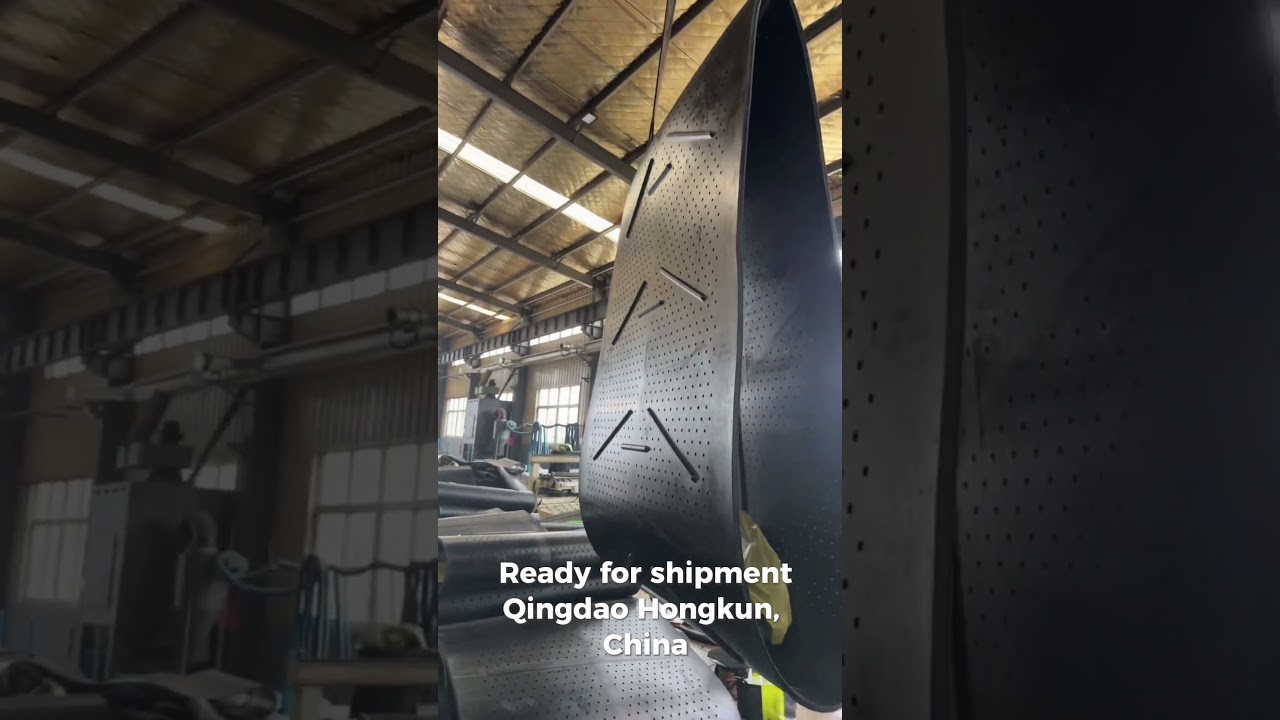
Hongkun develops application-specific rubber tracks for tumble-type shot blasting machines processing sharp castings, heavy batches, irregular metal parts, and demanding production cycles. Track construction is reviewed according to the workpiece condition, machine layout, batch load, impact, drainage-hole pattern, operating frequency, and existing failure mode .
Engineered for High-Impact and High-Wear Shot Blasting
Standard rubber tracks may wear prematurely when tumble blast machines process sharp castings, heavy batches, irregular metal parts, or frequent production cycles. Typical damage includes surface cutting, hole-edge tearing, exposed reinforcement, edge cracking, and localized wear in the loading area.
Hongkun develops high-wear-resistant rubber tracks by reviewing the workpiece shape, individual weight, batch load, blasting cycle, drainage-hole layout, pulley geometry, and existing failure pattern . Rubber compound, carcass construction, track thickness, reinforcement, holes, and cleats are then matched to the actual application rather than selected from dimensions alone.
Controlled Vulcanization
Vulcanization temperature, pressure, and curing time are controlled according to the rubber compound and track construction. The objective is to achieve consistent hardness, bonding, elasticity, and dimensional stability across the working surface while avoiding under-curing or excessive heat exposure.
Reinforced Carcass Structure
The carcass supports working tension and repeated flexing while helping control tear propagation around drainage holes and damaged areas. Fabric type, ply arrangement, transverse reinforcement, and overall thickness are selected according to the track width, batch load, impact level, hole pattern, and pulley diameter .
Dimensional Stability and Tracking Control
A stable carcass and consistent belt dimensions help reduce uneven stretching and lateral deformation during operation. Correct tracking also depends on shaft alignment, pulley condition, installation, tension balance, loading position, and machine maintenance . The belt and equipment should therefore be reviewed as one system.
Application-Specific Rubber Compound
Rubber hardness alone does not determine service life. The compound must balance abrasion resistance, tear resistance, elasticity, impact behavior, heat buildup, and repeated flexing . The final grade is selected from the workpiece condition, production intensity, shot media, operating temperature, and observed wear pattern.
Application review: final rubber compound, carcass, thickness, reinforcement, drainage-hole design, cleat structure, and dimensions must be confirmed from the machine and operating data before production.
High-Wear-Resistant Rubber Track FAQs
Wear Analysis · Rubber Compound · Reinforcement · Track Upgrade
Q
When should I upgrade from a standard track to
a high-wear-resistant rubber track?
An upgraded construction should be considered when the machine handles sharp, irregular, or heavy workpieces , operates for multiple shifts, or experiences repeated surface cutting, hole-edge tearing, exposed carcass, or premature replacement. The decision should be based on the actual wear pattern and operating conditions, not only the machine model.
Q
Does harder rubber always provide better
wear resistance?
No. A harder rubber compound may improve resistance to surface abrasion, but excessive hardness can reduce flexibility and increase cracking during repeated bending and impact. The compound should balance abrasion resistance, tear resistance, elasticity, impact behavior, and heat buildup .
Q
How can the wear pattern identify the main
cause of track failure?
Smooth surface loss is commonly related to abrasion, while deep cuts often indicate sharp workpieces. Damage around drainage holes may involve trapped parts or localized impact, and one-sided wear may indicate rubbing or alignment problems. Clear photos of the damaged areas help identify the most likely failure mechanism .
Q
Why does steel shot become embedded in the
rubber surface?
Shot embedding may be influenced by rubber hardness, impact energy, damaged or oversized blasting media, separator performance, batch load, and surface temperature. Both the rubber compound and machine operating condition should be reviewed before determining the main cause.
Q
Why does the carcass become exposed before
the entire track is worn out?
Early carcass exposure may result from concentrated impact, sharp parts, insufficient cover thickness, repeated cutting, trapped workpieces, or reinforcement that is not matched to the application. The location, shape, and depth of the damaged area are important when reviewing the cause.
Q
Why is wear often concentrated in the loading zone?
The loading zone receives the highest initial impact from the workpieces and may carry concentrated weight during tumbling. Overloading, uneven feeding, sharp components, and repeated impact in the same area can accelerate localized surface and carcass wear even when the rest of the track remains usable.
Q
Can an existing rubber track be redesigned
based on its failure history?
Yes. Hongkun can review the existing track dimensions together with photos of surface wear, cuts, torn holes, exposed reinforcement, edge damage, and joint condition. The rubber compound, cover thickness, carcass, reinforcement, and local stress areas can then be reviewed for the replacement design.
Shot Blasting Rubber Track Guides
Explore practical guides covering replacement measurement, quality evaluation, storage and installation, and rubber track service life.
How to Measure a Replacement Shot Blasting Rubber Track
Learn how to measure track length, width, thickness, shot-drainage holes, cleats, and the back-side guide structure.
View the Measurement Guide →How to Choose a Reliable Rubber Track
Evaluate the rubber compound, fabric carcass, vulcanized joint, perforation layout, and finished product quality.
View 5 Quality Factors →Track Storage, Cleaning & Installation
Review pre-installation storage, routine cleaning, running direction, guide structure, tensioning, and initial checks.
View the Installation Guide →Rubber Track Service Life Guide
See how workpieces, batch load, shot, tension, mistracking, and maintenance affect wear and replacement timing.
View the Service Life Guide →Is Your Track Tearing, Mistracking, or Wearing Abnormally?
Use the damage location, recurring pattern, and operating conditions to investigate possible causes and decide whether to repair or replace the track.
View the Troubleshooting & Prevention Guide →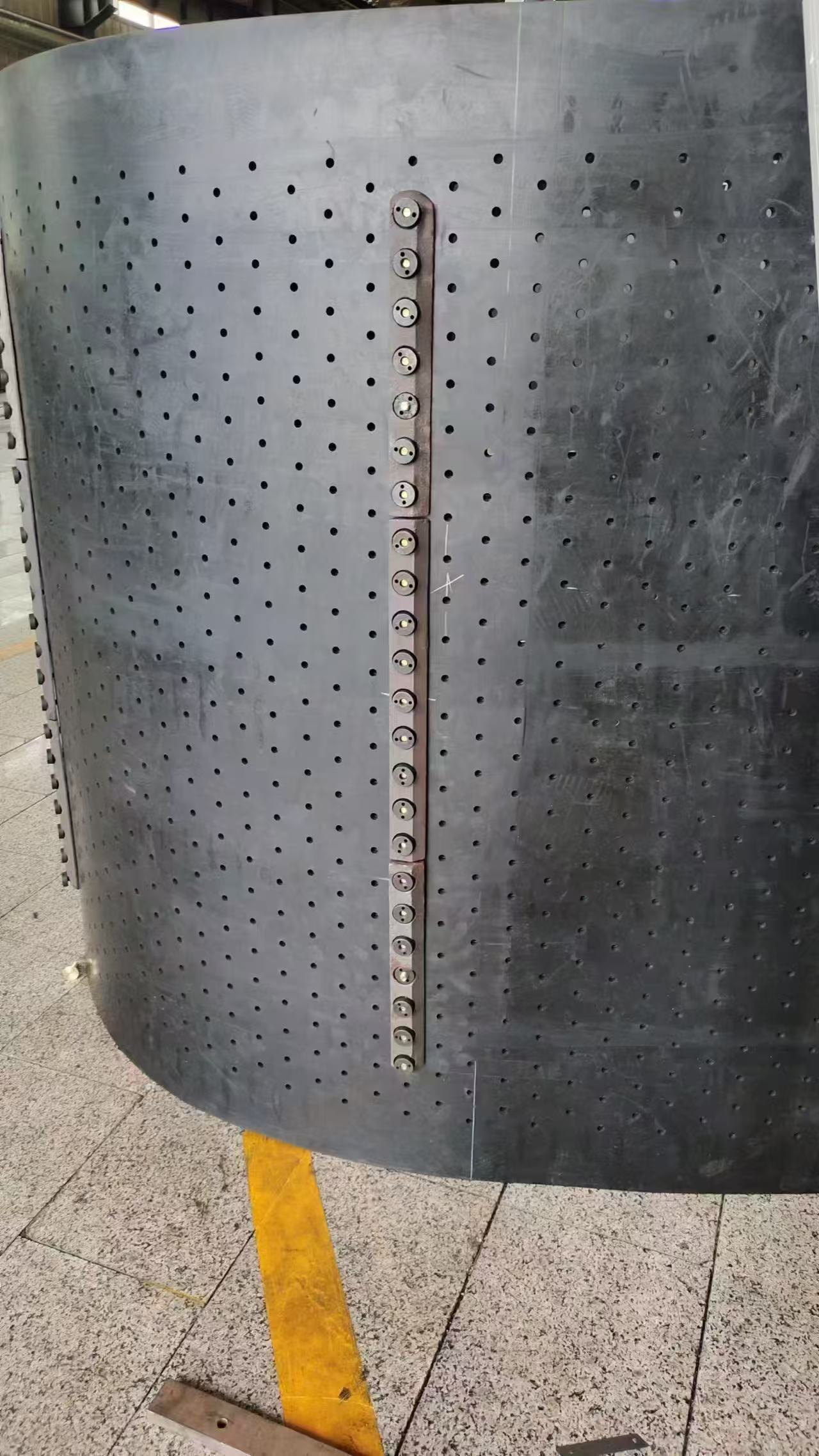
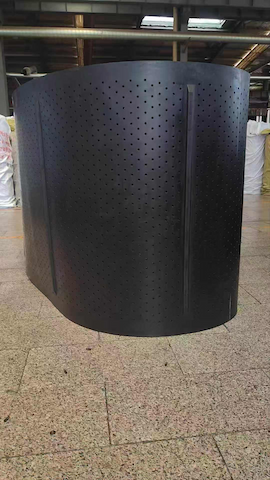
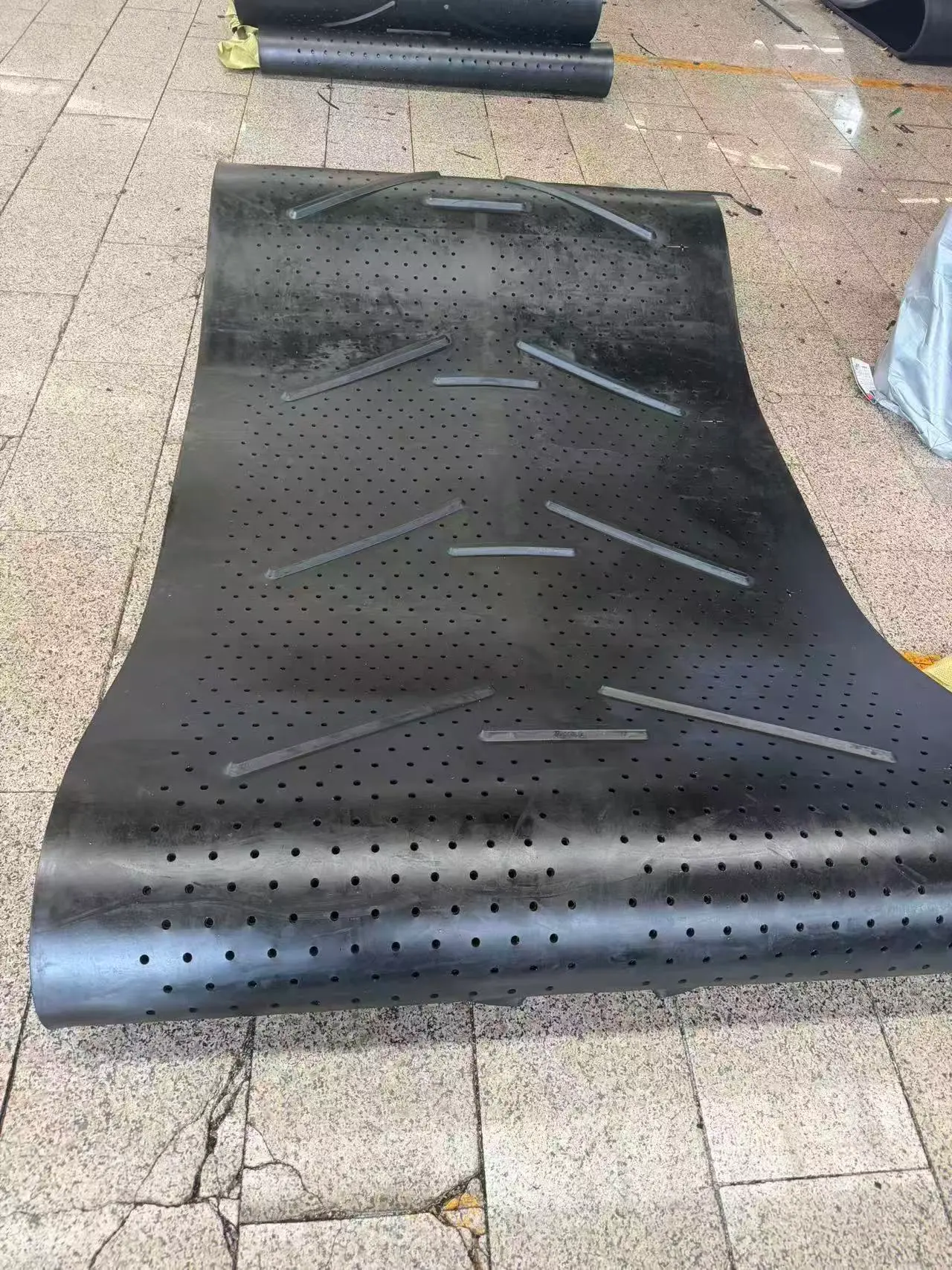
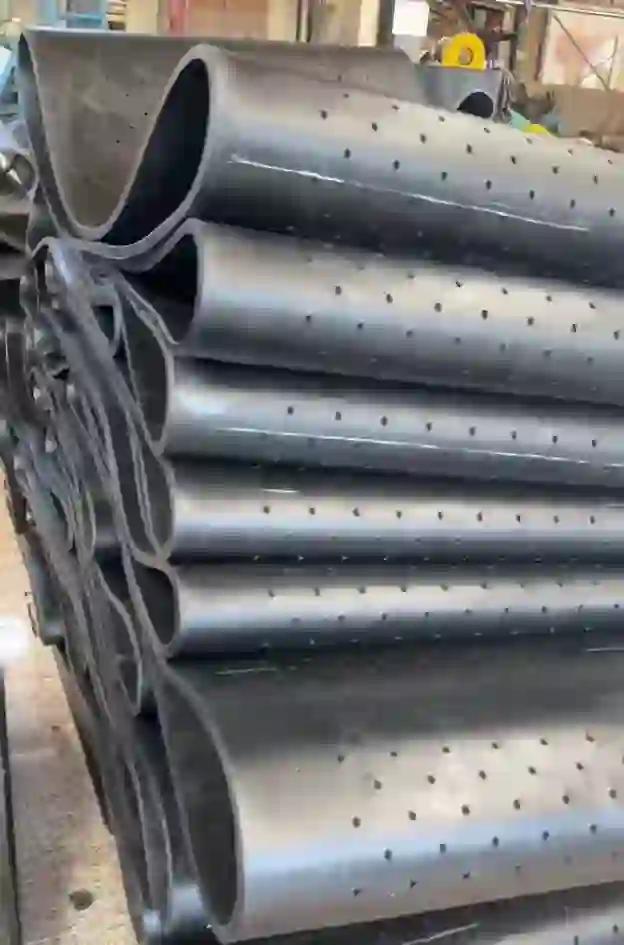
Repeated Supply of High-Wear-Resistant Rubber Tracks to Thailand
Hongkun has supplied multiple batches of high-wear-resistant
rubber tracks for tumble-type shot blasting machines in
Thailand. Each order is produced according to the
confirmed track dimensions, perforation layout,
cleat structure, workpiece conditions, and operating
requirements.
For demanding production cycles, the rubber compound,
carcass construction, track thickness, and reinforced areas
are reviewed before manufacturing. Repeat batch supply
requires consistent dimensions and stable production control
across different orders.
What Supports Repeat Orders
- Key dimensions confirmed before production
- Consistent hole and cleat layouts across repeat orders
- Track construction reviewed from the actual application
- Batch supply for replacement and maintenance planning
Standard vs. High-Wear-Resistant Rubber Track
The correct construction depends on the workpiece, production intensity, operating conditions, and previous wear pattern—not only the machine model or track dimensions.
| Selection Factor | Standard Rubber Track | High-Wear-Resistant Track |
|---|---|---|
| Workpiece Type | Regular castings, forgings, hardware, and general metal components. | ✓ Sharp-edged, irregular, heavy, or highly abrasive workpieces. |
| Production Intensity | Normal shifts and standard blasting cycles. | ✓ Multiple shifts, frequent batches, or continuous high-intensity operation. |
| Main Selection Goal | Dimensional fit, reliable operation, and general replacement performance. | ✓ Improved resistance to abrasion, cutting, tearing, impact, and localized wear. |
| Rubber Compound | General wear-resistant compound selected for standard operating conditions. | ✓ Application-specific compound balancing abrasion, tear resistance, elasticity, and impact behavior. |
| Carcass & Reinforcement | Standard carcass construction based on dimensions, working tension, and machine structure. | ✓ Reinforcement reviewed from the batch load, hole pattern, failure location, and impact conditions. |
| Recommended When | The current track provides acceptable service life under normal production conditions. | ✓ The existing belt shows early surface wear, deep cuts, torn holes, exposed carcass, or frequent replacement. |
Workpiece Type
Regular castings, forgings, hardware, and general metal components.
Sharp-edged, irregular, heavy, or highly abrasive workpieces.
Production Intensity
Normal shifts and standard blasting cycles.
Multiple shifts, frequent batches, or continuous high-intensity operation.
Main Selection Goal
Dimensional fit, reliable operation, and general replacement performance.
Improved resistance to abrasion, cutting, tearing, impact, and localized wear.
Rubber Compound
General wear-resistant compound for standard operating conditions.
Application-specific compound balancing abrasion, tear resistance, elasticity, and impact behavior.
Carcass & Reinforcement
Standard construction based on dimensions, working tension, and machine structure.
Reinforcement reviewed from the batch load, hole pattern, impact, and previous failure location.
Recommended When
The current construction provides acceptable service life under normal production conditions.
The existing belt shows early wear, deep cuts, torn holes, exposed carcass, or frequent replacement.
Selection note: a high-wear-resistant construction is not automatically required for every machine. It is recommended when the workpiece, production intensity, or previous failure pattern shows that a standard replacement track is not sufficient.
Selected Machine References for High-Wear-Resistant Tracks
High-wear-resistant rubber track constructions can be developed for selected Chinese and international tumble blast machines. The final track must be confirmed from the existing belt, approved drawing, machine information, workpiece condition, and operating requirements.
Common Chinese Q32-series references: high-wear-resistant constructions are available for selected standard and modified tumble blast machines. Dimensions shown below are general references and must be reconfirmed before production.
Q326 Series
Common reference size
Track Width 1,130 mm
Perimeter 3,450 mm
Upgrade Focus Impact and tear resistance
Q3210 Series
Common reference size
Track Width 1,400 mm
Perimeter 4,960 mm
Upgrade Focus Reinforced perforated area
Q3212 Series
Common reference size
Track Width 1,530 mm
Perimeter 6,030 mm
Upgrade Focus Heavy batch stability
Q3220 Series
Large-width reference
Track Width 1,850 mm
Perimeter 5,650 mm
Upgrade Focus Wide-track reinforcement
Wheelabrator® rubber belt machine references: high-wear-resistant replacement tracks can be reviewed for selected MB-series equipment. Please provide the machine plate, existing track dimensions, hole pattern, cleat layout, drawing, or an old track sample for confirmation.
MB100G
Machine model reference
Dimensions Confirm by drawing or sample
Track Structure Application reviewed
Upgrade Focus Abrasion and localized impact
MB200G
Machine model reference
Dimensions Confirm by drawing or sample
Track Structure Application reviewed
Upgrade Focus Hole-edge and carcass protection
MB300G
Machine model reference
Dimensions Confirm by drawing or sample
Track Structure Application reviewed
Upgrade Focus Heavy workpiece impact
MB400G
Machine model reference
Dimensions Confirm by drawing or sample
Track Structure Application reviewed
Upgrade Focus Large-track dimensional stability
Sinto® machine references: high-wear-resistant constructions can be reviewed for selected SNB-series tumble blast machines. Final dimensions may vary according to machine configuration, production year, and previous equipment modification.
Sinto® SNB-30
Previously supplied reference
Track Width 1,150 mm
Perimeter 4,525 mm
Thickness 20 mm
Upgrade Focus Impact and hole-area resistance
Sinto® SNB-50Z
Previously supplied reference
Track Width 1,810 mm
Perimeter 5,800 mm
Thickness 24–25 mm
Upgrade Focus Large-width heavy-duty reinforcement
Important: machine models with the same name may use different track dimensions. Final width, perimeter, thickness, hole diameter, hole spacing, cleat layout, edge construction, rubber compound, and reinforcement must be confirmed before production. Brand names are used only for equipment and dimensional cross-reference.
