
How to Import Conveyor Belts from China: A 12-Step Buyer Guide
To import conveyor belts from China, send the manufacturer a drawing or complete specification, verify the factory, agree on an Incoterm, pay a deposit, approve photos and test results before paying the balance, then ship with an invoice, packing list, bill of lading and certificate of origin that all match. A standard custom order takes about 15–30 working days to produce in Qingdao, plus sea transit.
This guide walks through the 12 steps in the order they actually happen on a heavy-duty rubber belt order: conveyor belts, sidewall belts, bucket elevator belts and shot blasting machine belts. Each step lists what to send, what to check and where orders usually go wrong.
Already have a drawing? Upload it with your destination port and preferred Incoterm.
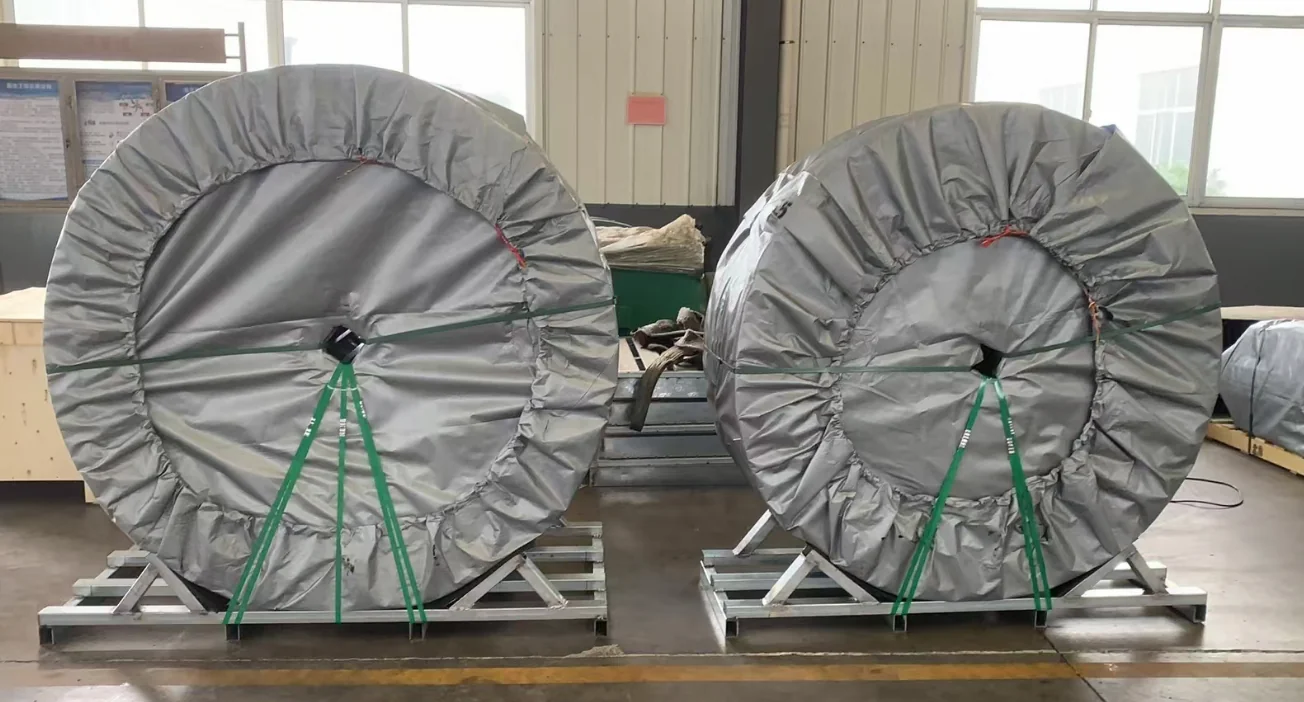
The 12 Steps at a Glance
On small screens, swipe the table sideways.
| Step | What happens | Who acts |
|---|---|---|
| 1 | Send drawing or full belt specification | Buyer |
| 2 | Verify the manufacturer | Buyer |
| 3 | Compare quotations on the same Incoterm, splice and packing | Buyer |
| 4 | Confirm the production drawing | Both |
| 5 | Proforma invoice and 30% deposit | Buyer |
| 6 | Production (typically 15–30 working days) | Factory |
| 7 | Photos, video and test report, then 70% balance | Both |
| 8 | Endless (factory-spliced) or open-end delivery | Both |
| 9 | Packing and FCL / LCL booking from Qingdao Port | Factory / forwarder |
| 10 | Export documents and certificate of origin | Factory |
| 11 | Customs clearance and duties at destination | Buyer / broker |
| 12 | Receive, inspect, store and install | Buyer |
Step 1: Send a Drawing or Full Specification, Not a Model Name
A Chinese belt factory can only quote accurately from dimensions and working conditions. Send width, length (and whether it is inner or outer circumference for endless belts), carcass type and strength, ply count, cover thickness and grade, material, temperature and the conveyor or machine drawing. A model name alone usually produces a quote you cannot compare.
Most heavy-duty belts are made to order, so the drawing is the product. For sidewall belts, add sidewall height, cleat type and cleat pitch; for bucket elevator belts, add the bucket bolt-hole pattern, which Hongkun cuts by waterjet to your bucket drawing; for shot blasting machine belts, add perforation size and the outer circumference.
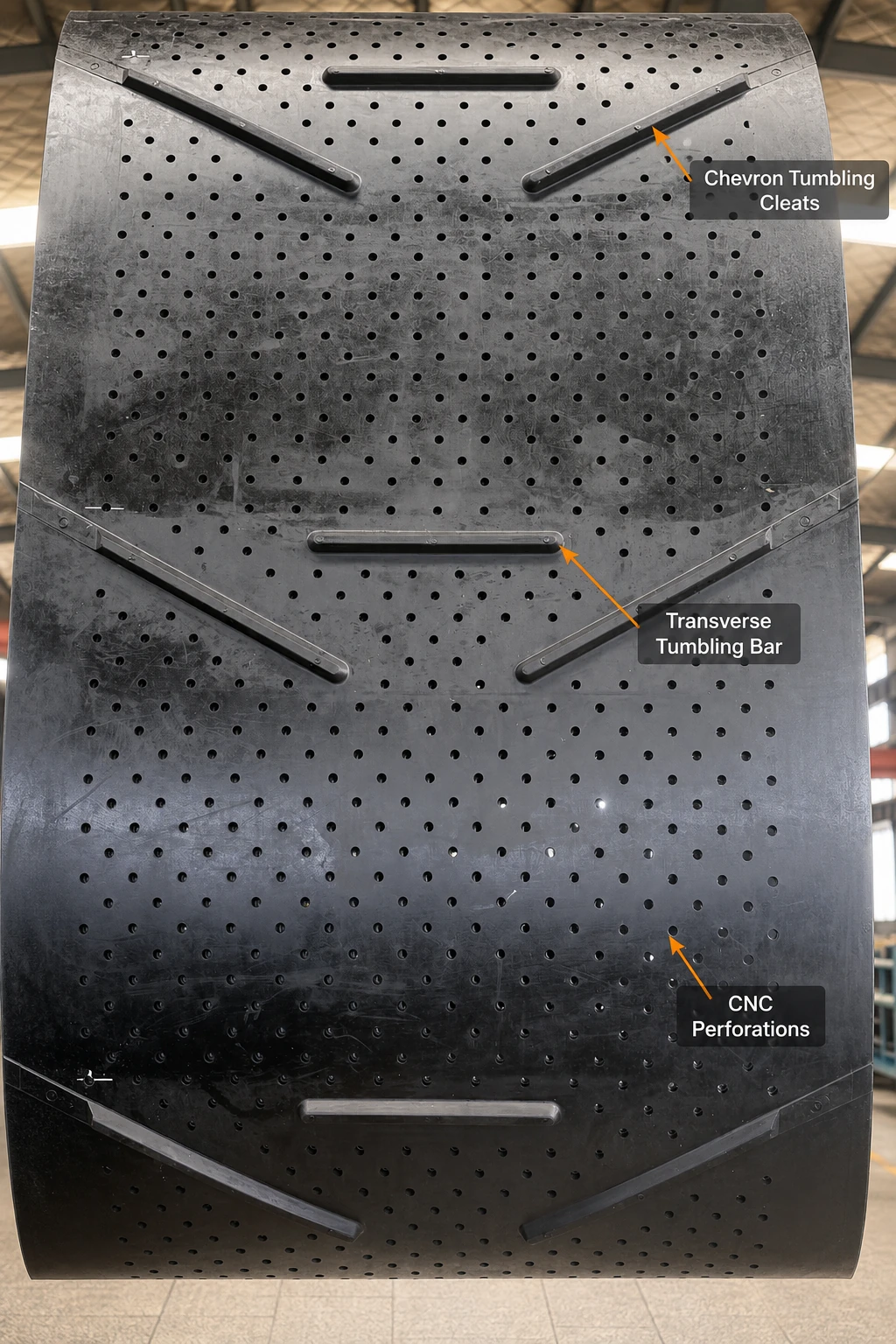
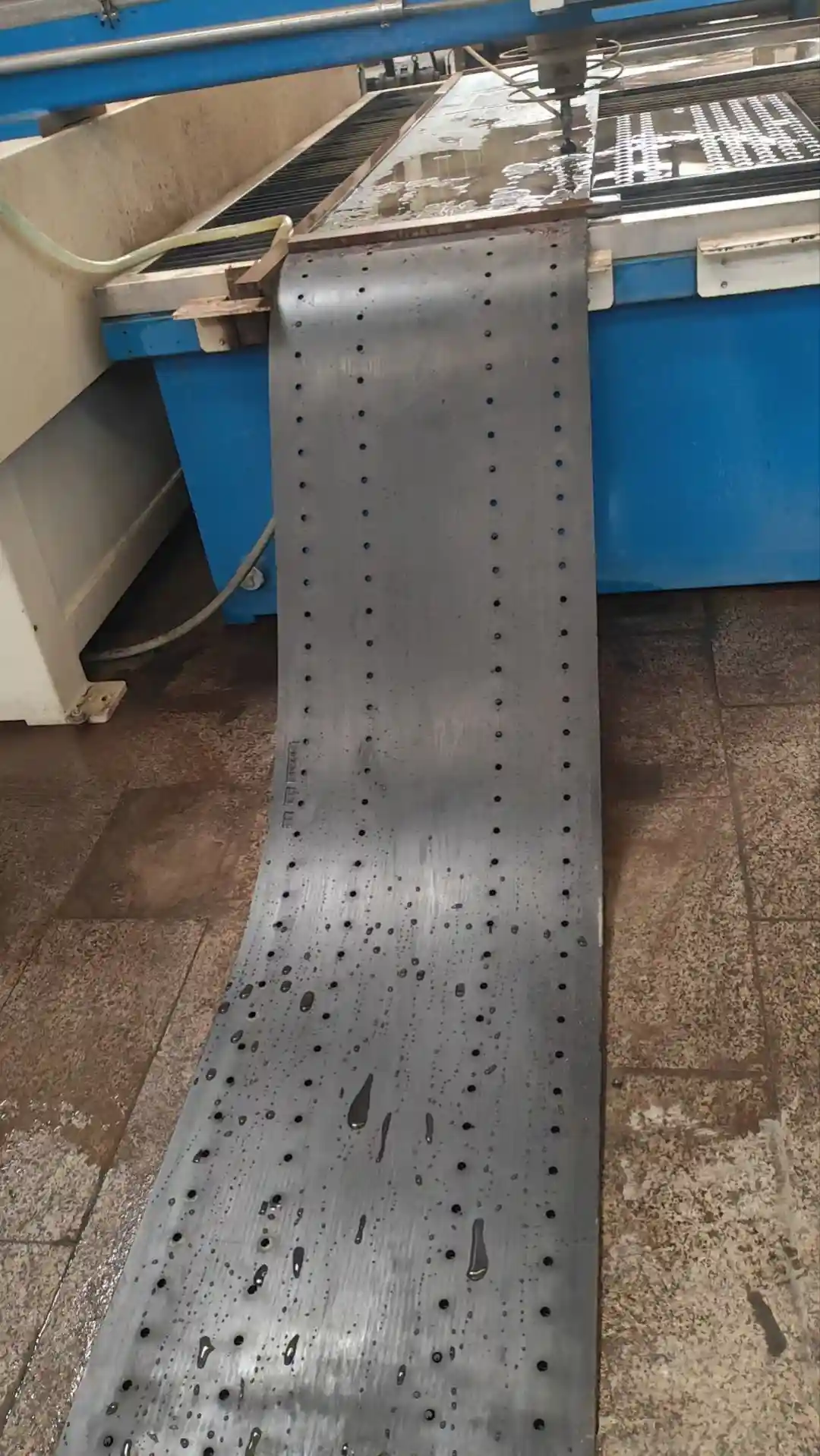
Product-specific checklists already exist on this site: dimensions needed for a sidewall belt quote, the four details for a bucket elevator belt quote, the steel cord belt ordering checklist and how to measure a tumble blast belt for replacement.
Step 2: Verify the Manufacturer Before Comparing Prices
Before comparing prices, confirm you are dealing with the factory that vulcanizes the belt, not a trader reselling it. Ask for the company’s registered name, factory address, recent test reports for the same belt type, and photos or video of your belt in production. A supplier who cannot show these is a price risk, not a bargain.
China has a large number of belt producers and an even larger number of trading companies. Trading is not wrong in itself, but you need to know who controls the rubber compound, carcass and splice. Our guide on how to choose a steel cord conveyor belt manufacturer lists the questions that separate the two, and what a low price can hide shows how to check a belt once it arrives.
Step 3: Read the Quotation Line by Line
Two conveyor belt quotes are only comparable when they state the same Incoterm, the same splice method, the same packing and the same specification. A cheaper EXW price can end up costing more than a CIF price once inland trucking, export clearance and freight are added.
Hongkun quotes on whichever Incoterm the buyer needs. The table below shows what each one means for a belt shipped from Qingdao (Incoterms 2020):
On small screens, swipe the table sideways.
| Incoterm | Seller covers | Buyer covers | Good fit when… |
|---|---|---|---|
| EXW (Ex Works) | Goods ready at the factory | Pickup, export clearance, freight, import | You have your own agent in China |
| FOB Qingdao | Packing, inland transport, export clearance, loading at Qingdao Port | Ocean freight, insurance, import clearance, duties | Your forwarder has good rates from China |
| CIF your port | FOB costs + ocean freight + insurance to your port | Unloading, import clearance, duties, delivery | You want one landed-port price to compare |
| DDP your site | Everything up to delivery, including import duties | Unloading at site | You have no import experience or broker |
Also check that the quote states whether the belt is delivered endless or open-end (see Step 8), what packing is included, and how long the price is valid.
Step 4: Confirm the Production Drawing Before Production Starts
Before any rubber is cut, both sides should sign off one production drawing with every dimension, tolerance and feature. Most costly import mistakes start here: an inner circumference sent as outer, a hole pattern from an old bucket, or a cleat layout the mould cannot make. Time spent at this step is cheaper than any correction after vulcanizing.
This step can take longer than buyers expect, and that is normal for a first order. A Korean shot blasting machine builder started with a single belt as a trial. Discussing and revising the drawing took about a week; the full story is in our cleat spacing case study. Once the drawing was agreed, production and paperwork went smoothly.
The most common error we catch at drawing review is the circumference of endless belts: buyers send one length without saying whether it is the inner or outer circumference. On a 15 mm thick belt the difference is about 94 mm, far more than the 1 cm length tolerance we hold on shot blasting machine belts, so we check this on every drawing before production.
Step 5: Proforma Invoice and Deposit
Once the drawing is confirmed, the factory issues a proforma invoice and the buyer pays a deposit to start production. At Hongkun the terms are 30% deposit and 70% balance before shipment. The deposit exists because a custom belt cut to your drawing cannot be resold to another customer once production starts.
Check that the proforma invoice repeats the confirmed specification exactly: belt type, dimensions, quantity, splice method, packing and Incoterm. These words will reappear on the commercial invoice and customs documents, so mistakes here travel all the way to your port.
Minimum order: Hongkun has no minimum order quantity; one belt is fine. We do not send cut sample pieces, because a small piece cannot show splice quality, dimensional accuracy or service life. Buyers who want to test us order one complete belt, and first trial orders from new customers are offered at a discounted price.
Step 6: Production: How Long Does It Take?
A standard custom rubber belt order typically takes 15–30 working days to produce after the drawing and deposit are confirmed. The exact time depends on belt type, width, strength and features such as sidewalls, cleats, perforations or bolt holes. Sea transit and customs at your end come on top of production time.
Plan your shutdown around the total: drawing confirmation + production + inland transport to Qingdao + sea transit + import clearance. Ordering when the old belt is already failing leaves no room for any of these steps to slip. Our conveyor belt lead time breakdown shows how long each stage takes and how to plan backwards from a shutdown date.
Step 7: Approve Photos, Video and Test Report Before Paying the Balance
When production is finished, the buyer should see the actual belt before paying the balance. Hongkun sends finished-product photos and video for every order, and a factory test report when the buyer asks for one. After the 70% balance is received, the belt is packed and released for shipment.
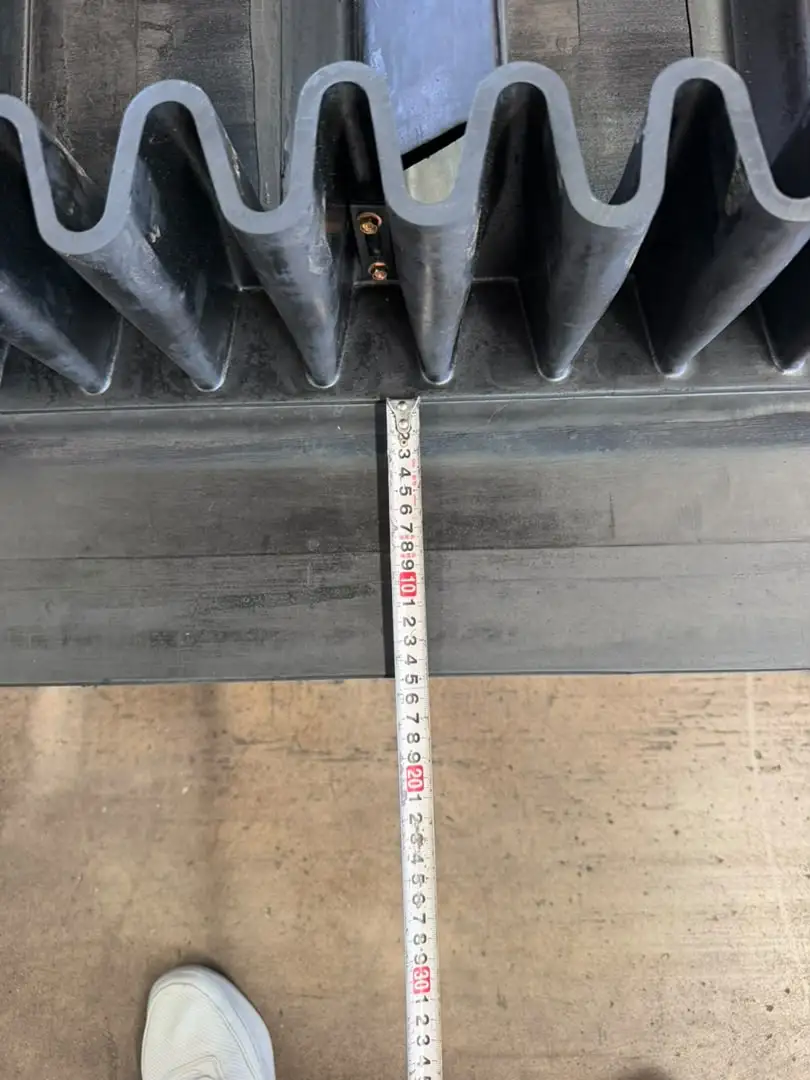
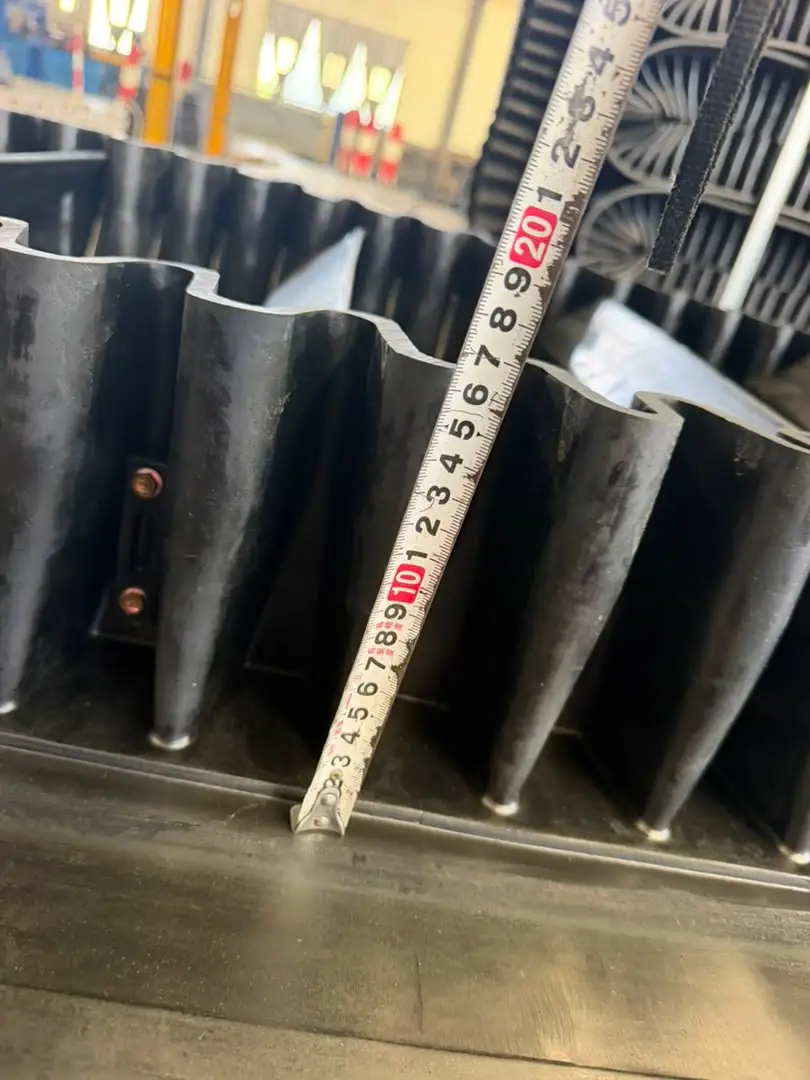
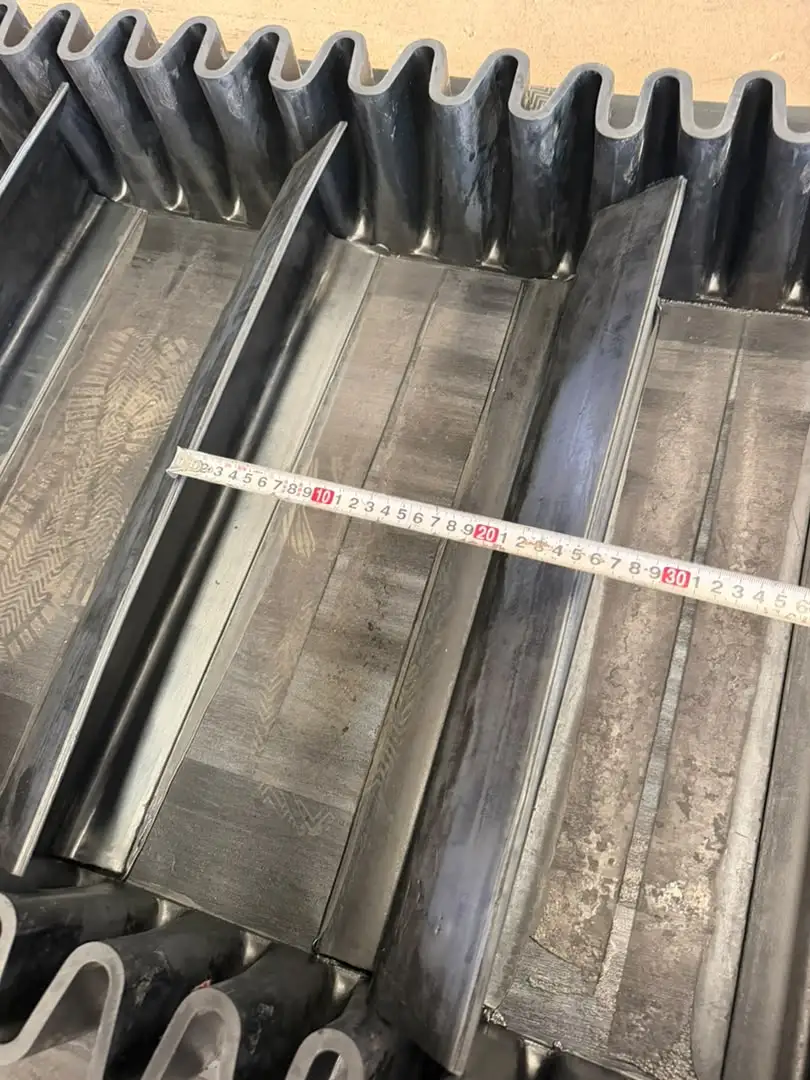
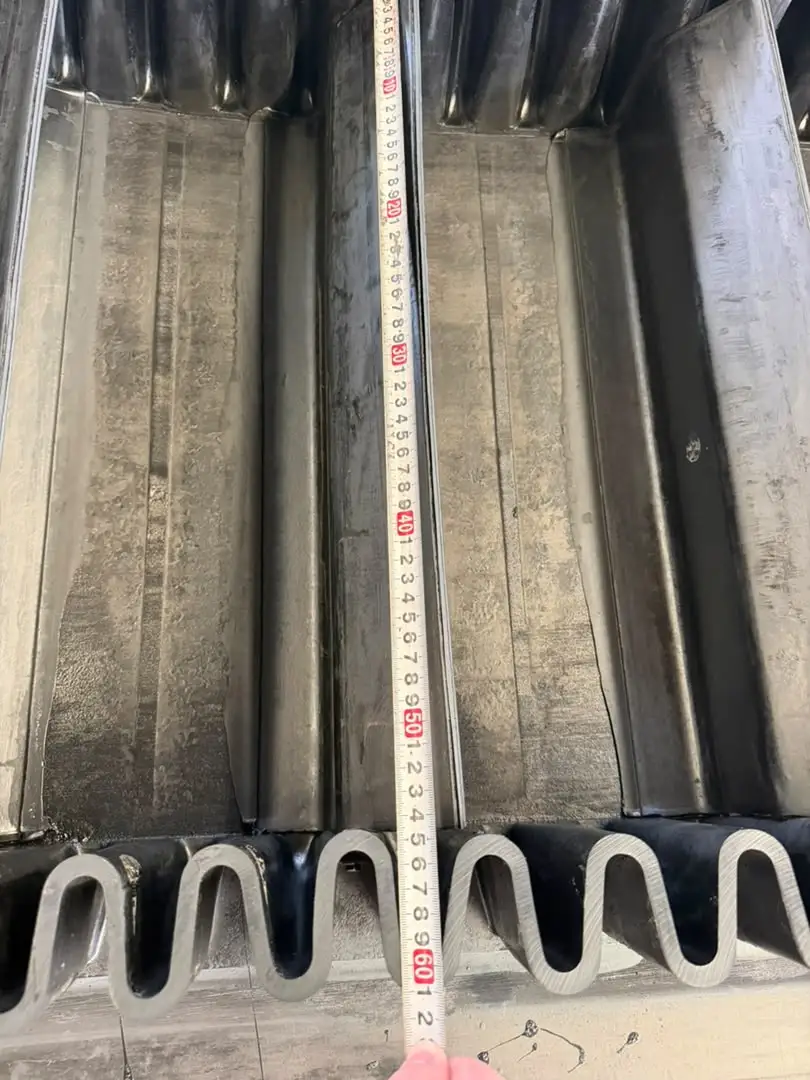
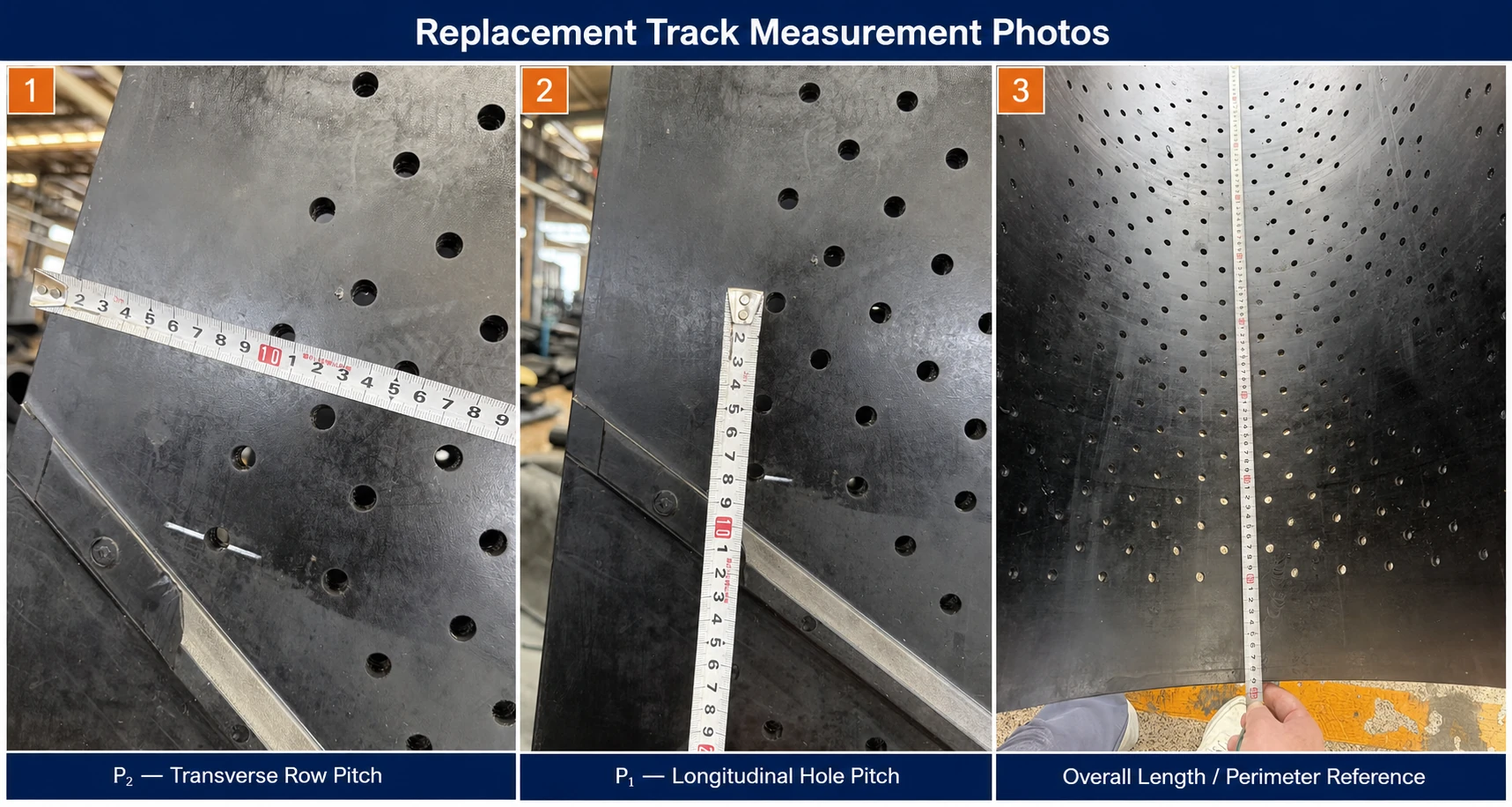
Use the photos and video to check what you can measure remotely: width, thickness, cleat or sidewall positions, hole pattern and surface finish. You can ask for a tape-measure photo of any critical dimension. If you request a test report, make sure it was issued for your belt specification and batch. A test report only covers the batch and specification it was issued for. You can see what a full report looks like on our steel cord bucket elevator belt test report.
New customers usually ask for a test report; repeat customers generally do not. These are real measurement photos sent to customers before the balance was paid:
Step 8: Decide How the Belt Arrives: Endless or Open-End
An imported belt arrives either endless (spliced at the factory) or open-end (spliced on site). Factory splicing gives a controlled vulcanizing environment but needs a conveyor or machine that can accept a closed loop. Open-end delivery suits conveyors that cannot be opened, but the splice quality then depends on your site crew.
Where the equipment allows, Hongkun delivers belts already spliced into an endless conveyor belt. Shot blasting machine belts are always produced endless and are ready to install on arrival.
Any belt that ships open-end, whatever the product, can be supplied with a splice kit: step ends pre-stripped at the factory, uncured rubber, cement and cover rubber, and aluminium splice clamps for bucket elevator belts. If your crew runs into a problem during splicing on site, we walk them through it by video.
Our article on why conveyor belt splices keep failing explains which option suits which site.
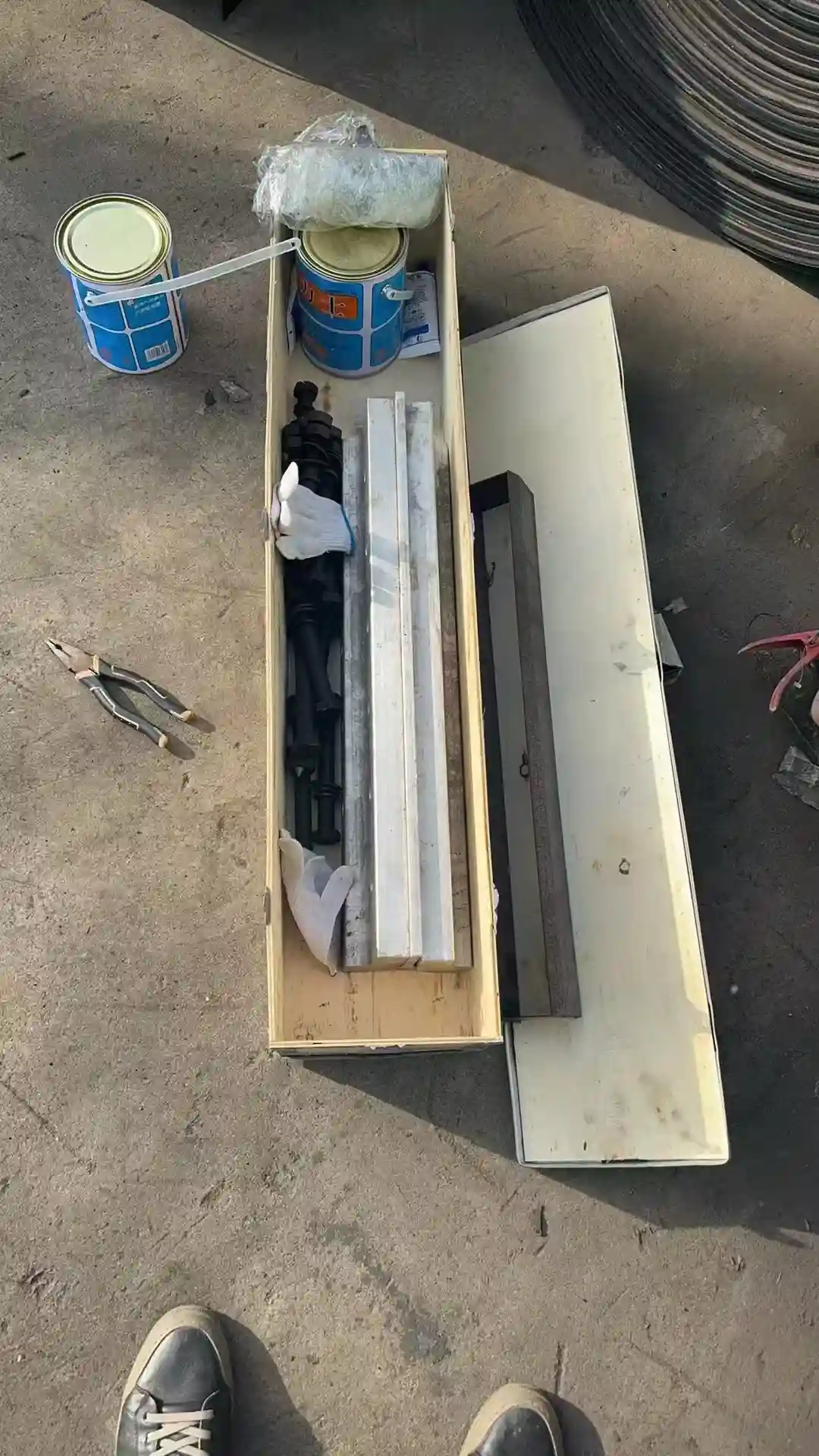
Step 9: Packing and Shipping: FCL or LCL from Qingdao
Hongkun ships from Qingdao Port, either as a full container (FCL) or as less-than-container load (LCL) for small orders. Packing depends on the product: sidewall belts are sealed in waterproof tarpaulin and then crated in wood; shot blasting machine belts go in wooden crates or waterproof bags, as the buyer prefers.
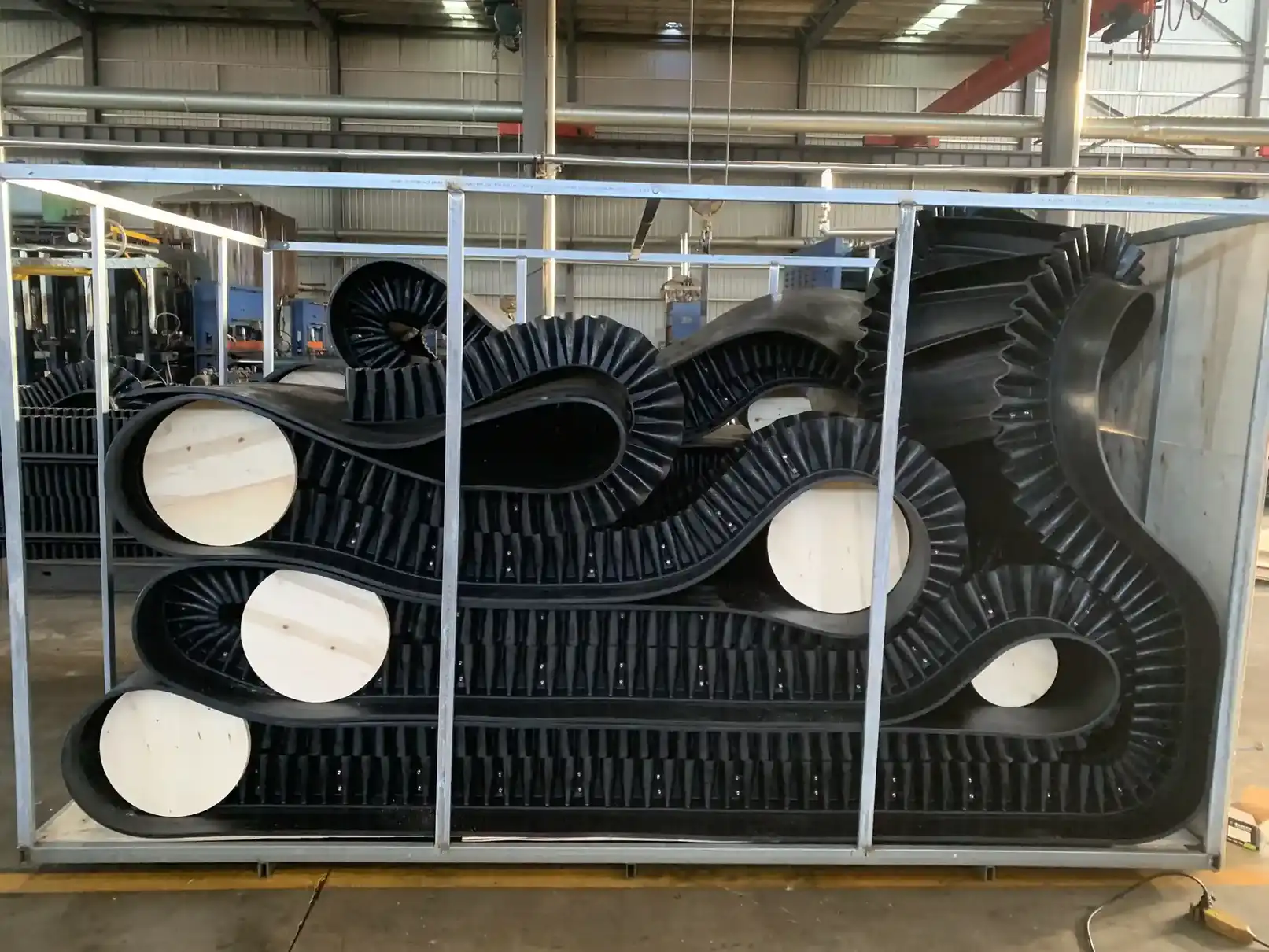
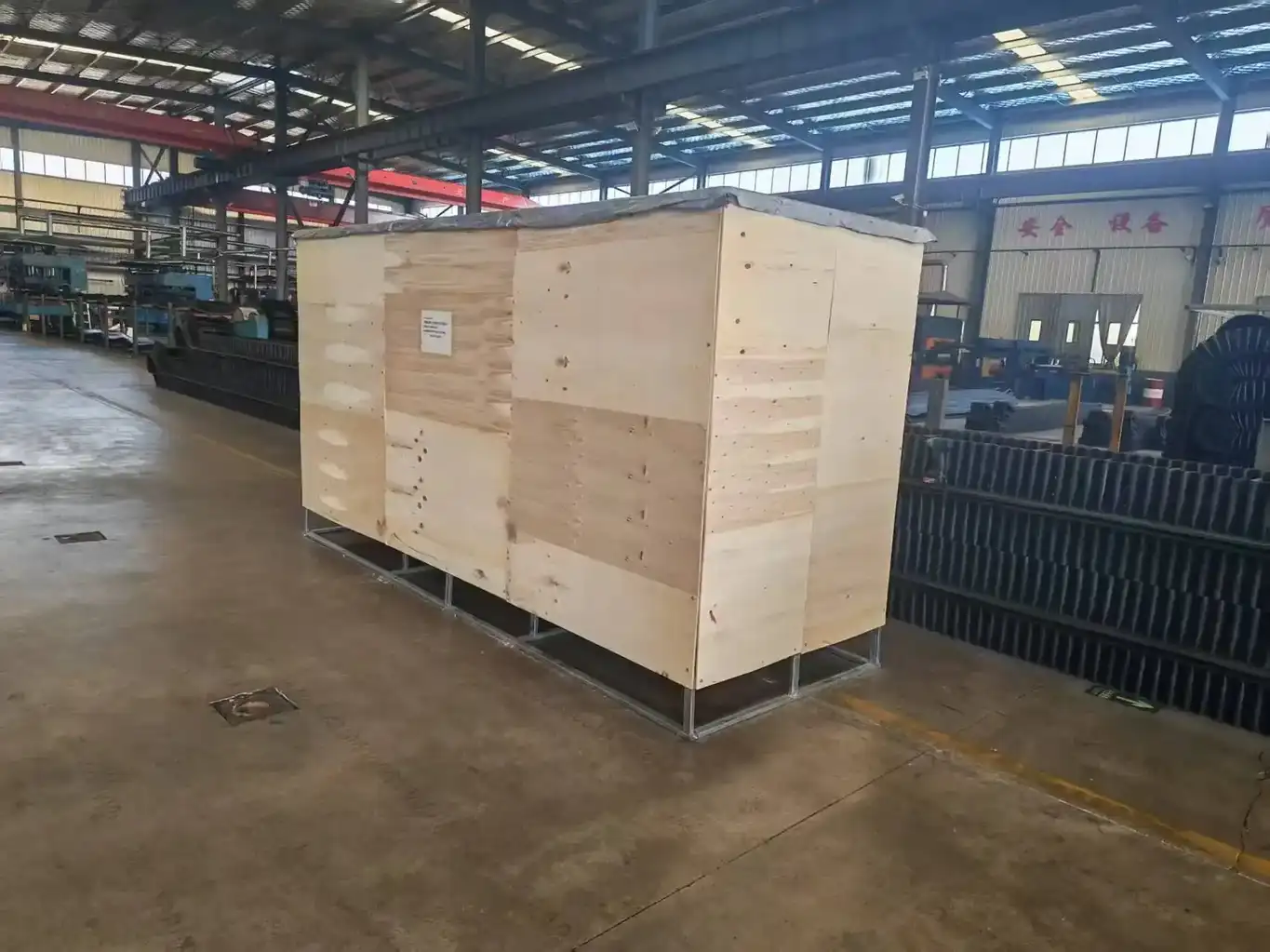
LCL makes single-belt imports practical. In one 2026 shipment to Korea, a single rubber belt travelled as one pallet of about 80 kg gross and 0.5 m³, CFS to CFS from Qingdao to Busan. For large rolls, ask the factory for the roll diameter, roll weight and container type before booking; heavy steel cord rolls may need a specific container and lifting plan at your end.
For corrugated sidewall belts, the packing also protects the open-end splice zone. The sidewall belt installation checklist covers how to lift and unroll them without damaging the sidewalls.
Step 10: Export Documents Must Match Each Other
A standard conveyor belt export from China includes a commercial invoice, packing list, bill of lading and, where it reduces duty, a certificate of origin. The single most important rule is that all documents match: the same product description, quantity, weight, package count and HS code on every page. Mismatched documents are a common cause of customs delays.
“Clearance is mostly paperwork. If the invoice, packing list, bill of lading and certificate of origin say exactly the same thing, our belts don’t get stuck at customs. So far, every shipment we prepared this way has cleared without a problem.”
— Wang Xinxiang, Sales Manager (export), Hongkun
HS codes for rubber conveyor belts
Rubber conveyor belts fall under HS heading 4010. The first six digits are shared by all countries; each country then adds its own digits and duty rates, which can change from year to year.
On small screens, swipe the table sideways.
| HS subheading | Covers | Typical examples |
|---|---|---|
| 4010.11 | Conveyor belts of vulcanized rubber, reinforced only with metal | Steel cord belts without fabric layers |
| 4010.12 | Reinforced only with textile materials | EP, NN and fabric belts |
| 4010.19 | Other reinforcement | Belts combining metal and textile reinforcement |
Special products such as sidewall belts, bucket elevator belts and shot blasting machine belts are classified by their actual construction. Our EP-based sidewall belts ship under 4010.12, while the shot blasting machine belts we sent to Korea in 2026 were declared under 4010.19 because they combine a fabric carcass with metal cleat bars. Our conveyor belt HS code guide shows which code fits each construction. Confirm the full national code with your customs broker before shipment and make sure the factory declares the same one.
Certificate of origin
A certificate of origin proves the belt was made in China. Under free trade agreements it can lower or remove import duty, but the available form and the duty benefit differ by destination country. Tell the factory your country before shipment so the right certificate is issued. Hongkun has issued China–Korea FTA certificates for shipments to Korea and APTA certificates for sidewall belts shipped to India.
Step 11: Customs Clearance and Duties at Your Port
Under FOB, CIF and EXW terms, the buyer or the buyer’s customs broker clears the belt at the destination port and pays import duties and taxes. Under DDP, the seller arranges this. Duty depends on the HS code, the country of origin and any trade agreement, so check the rate with your broker before you accept a quote.
Send your broker the draft invoice and packing list before the goods leave Qingdao. It is much easier to correct a description or HS code on a draft than to amend documents after the vessel sails.
Step 12: Receive, Inspect, Store and Install
On arrival, check the package count against the packing list, photograph any transport damage before signing, then measure the belt against the confirmed drawing. Store it indoors, away from sunlight, heat and oil, and keep it in its packing until installation.
Raise any discrepancy with the supplier straight away, with photos and measurements. For shot blasting machine belts, follow our storage, cleaning and installation guide.
Supplier Risks When You Import Conveyor Belts from China
On small screens, swipe the table sideways.
| Risk | What it looks like | How to avoid it |
|---|---|---|
| Fewer plies or weaker fabric | “EP” belt made with lower-strength fabric | Ask for ply count and fabric type on the drawing and test report |
| Thin or recycled cover rubber | Cover wears through months early | Specify cover thickness and grade; measure on arrival |
| Sample ≠ shipment | The trial belt was good, the bulk order is not | Ask for photos, video and a test report for each order |
| Outdated test report | Report for a different spec or a years-old batch | Check spec, date and batch on the report |
| Wrong splice for the site | Open-end belt sent to a site with no splicing crew | Agree endless or open-end in the quote |
| Document mismatch | Customs holds the shipment | Have your broker check draft documents before sailing |
What Buyers Should Verify
- The confirmed drawing matches the proforma invoice and commercial invoice word for word
- Endless belts: inner or outer circumference is stated
- Carcass type, strength, ply count, cover thickness and grade are written down
- Incoterm, splice method, packing and price validity are in the quote
- You have finished-belt photos and video before paying the balance
- Any test report matches your specification and batch
- HS code is agreed with your broker and declared the same by the factory
- The correct certificate of origin for your country is requested before shipment
- Roll size and weight are known before you book unloading equipment
Send your drawing, belt dimensions, working conditions, destination port and preferred Incoterm. The inquiry form accepts drawing uploads, and we quote with the splice method and packing stated.
Research This Topic with AI
Let AI verify the key technical points against independent sources, separate Hongkun’s manufacturing experience from industry standards, and turn this article into practical buying decisions.
Importing Conveyor Belts from China: FAQ
Is there a minimum order quantity for conveyor belts from China?
It depends on the factory. Hongkun has no minimum order; a single belt can be ordered and shipped LCL.
Can I get a free sample piece first?
A cut sample cannot show splice quality, length accuracy or service life, so Hongkun does not send sample pieces. Order one complete belt as a trial; new customers receive a discounted trial price.
How long does it take to import a conveyor belt from China?
Allow time for drawing confirmation, about 15–30 working days of production for a standard custom order, transport to Qingdao Port, sea transit and import clearance. First orders often need extra days for drawing discussion.
What payment terms are common?
Hongkun works on a 30% deposit to start production and 70% balance before shipment, after the buyer has seen photos and video of the finished belt.
Which Incoterms can a Chinese belt factory quote?
Hongkun quotes EXW, FOB Qingdao, CIF and DDP, depending on what the buyer needs. Compare quotes only on the same Incoterm.
What is the HS code for rubber conveyor belts?
Heading 4010: 4010.11 for metal-only reinforcement, 4010.12 for textile-only reinforcement, and 4010.19 for other reinforcement. National codes beyond six digits vary, so confirm with your customs broker.
Can I import just one belt by sea?
Yes. Small orders ship as LCL (less than container load) and are consolidated at a CFS warehouse. A single belt can travel as one pallet.
Will I get a test report?
Hongkun provides a factory test report on request. Check that it was issued for your belt specification and batch.
