
Conveyor Belt HS Code: 4010.11, 4010.12 or 4010.19?
A corrugated sidewall belt built on a polyester fabric base leaves our Qingdao factory declared as HS 4010.12. Put the same sidewalls and cleats on a steel cord base and it becomes 4010.11. Customs decides a conveyor belt HS code by what reinforces the carcass, not by the product name on the invoice.
Rubber conveyor belts sit under heading 4010: 4010.11 when reinforced only with metal (steel cord), 4010.12 when reinforced only with textile (EP, NN or cotton fabric), and 4010.19 for any other construction, such as a fabric carcass combined with metal cleat bars. China declares these as 4010110000, 4010120000 and 4010190000.
Sidewall belts, bucket elevator belts and shot blasting machine belts follow the same rule, so one product family can need two different codes.
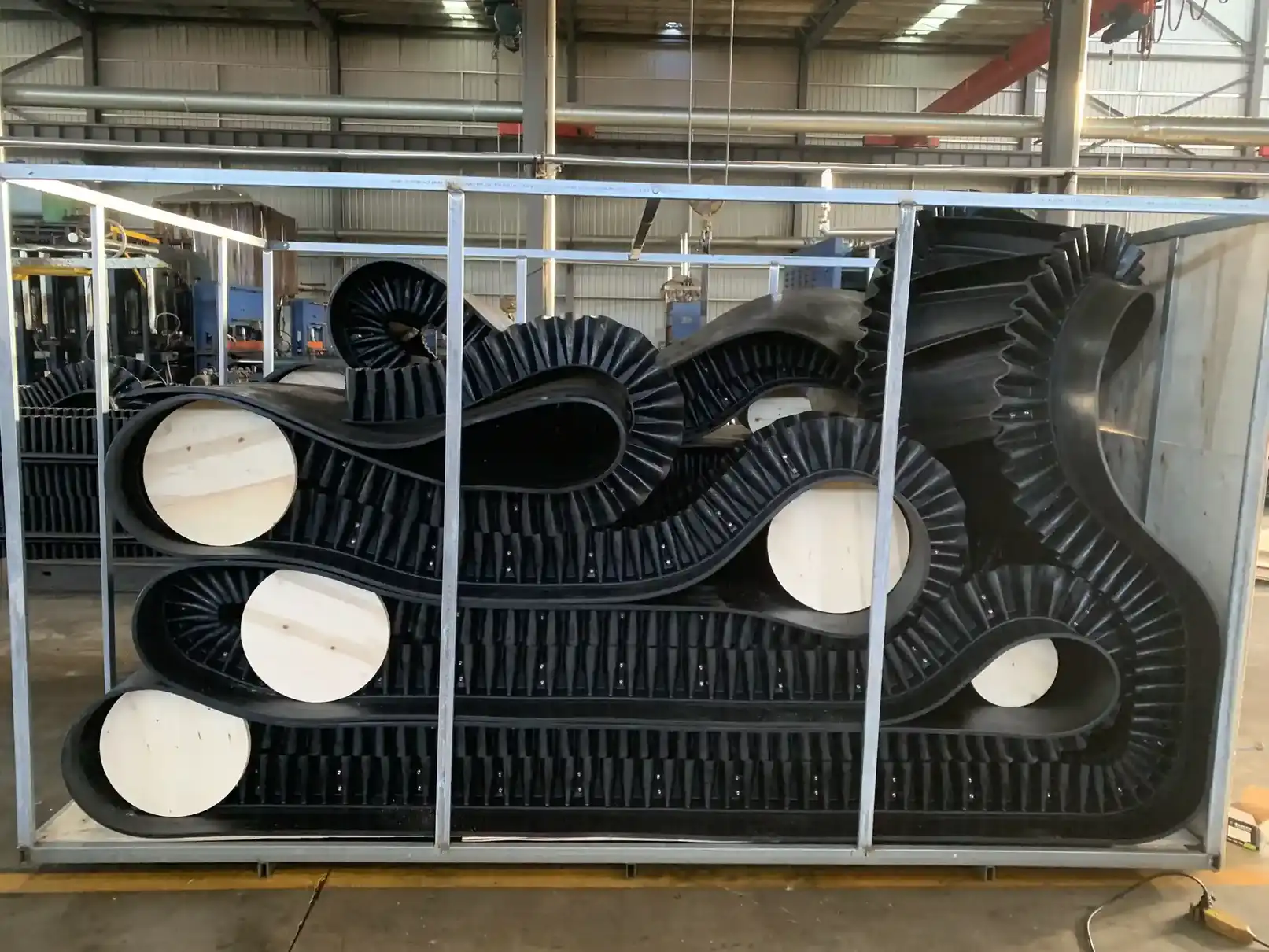
Conveyor Belt HS Code by Carcass Type
All rubber conveyor belts share heading 4010, and the six-digit subheading depends on one question: what reinforces the belt? Metal only gives 4010.11, textile only gives 4010.12, and a combination of the two, or any other reinforcement, gives 4010.19. Cover grade, thickness and colour do not change these six digits.
On small screens, swipe the table sideways.
| HS subheading | Official wording | China export code | Typical belts |
|---|---|---|---|
| 4010.11 | Conveyor belts or belting, reinforced only with metal | 4010110000 | Steel cord belts |
| 4010.12 | Reinforced only with textile materials | 4010120000 | EP conveyor belts, NN belts, multi-ply fabric belts |
| 4010.19 | Other | 4010190000 | Belts combining metal and textile, such as a fabric carcass with metal cleat bars |
Heading 4010 has a second half: 4010.31 to 4010.39 cover transmission belts, such as V-belts and synchronous belts. A conveyor belt declared under 4010.39 is in the wrong half of the heading, even though both halves are rubber belts.
Every country uses the same first six digits. The digits after that, and the duty rate attached to them, are national. In the United States, for example, textile-reinforced lines are split further by fibre type and belt width.
Why the Word “Only” Changes the Code
4010.11 and 4010.12 both contain the word “only”. A fabric belt that also carries metal parts in its construction is no longer reinforced only with textile, so it moves to 4010.19. In the same way, a steel cord belt would leave 4010.11 if any fabric layer were added to it.
This is why the product name tells customs very little. “Shot blasting machine belt” describes the use; the fabric carcass plus metal cleat bars is what puts our tumble belts in 4010.19.
What does not move the code:
- Cover properties. A heat-resistant, fire-resistant, oil-resistant or abrasion-resistant cover sits on the same carcass, so it keeps the carcass code.
- Belt strength and ply count. EP 630/4 and EP 1000/5 are both 4010.12; ST 1000 and ST 2500 are both 4010.11.
- Surface profile. Patterned top covers and rubber cleats do not change the reinforcement.
The reinforcement has to be a reinforcing component. If a thin fabric is present only as a surface finish or a process layer, discuss it with your customs broker before choosing 4010.19.
Rubber-coated fabric belts also stay in Chapter 40. Chapter 59, Note 6 of the Harmonized System excludes from heading 59.10 belts of textile fabric impregnated, coated or covered with rubber and sends them to 40.10, as the Canada Border Services Agency’s belting policy explains.
Sidewall, Bucket Elevator and Shot Blasting Belts
Special belts are classified by their base belt, exactly like flat conveyor belts. An EP-based sidewall belt or bucket elevator belt is 4010.12; a steel cord base is 4010.11. Shot blasting machine belts with a fabric carcass and metal cleat bars are 4010.19. The product name, the sidewalls and the bolt holes do not decide the code.
On small screens, swipe the table sideways.
| Product | Base belt construction | China export code |
|---|---|---|
| Corrugated sidewall belt | EP polyester fabric base | 4010120000 |
| Steel cord base | 4010110000 | |
| Bucket elevator belt | EP fabric carcass | 4010120000 |
| Steel cord carcass | 4010110000 | |
| Shot blasting machine belt | Fabric carcass combined with metal cleat bars | 4010190000 |
Sidewall belts: check the base, then the sidewalls
Our corrugated sidewall conveyor belts shipped to India in 2026 were declared under China export code 4010120000 and Indian import code 40101290. The export description stated the construction in plain words: black belt with corrugated sidewalls and cross cleats, reinforced with polyester fabric, no steel cord. A description like that lets the broker see why 4010.12 applies without opening the crate.
When the lift height or belt tension calls for a steel cord base, the same sidewall belt becomes 4010.11. Tall sidewalls deserve a second look too. In a 1999 ruling on a sidewall belt with a polyester carcass (NY E88260), U.S. Customs classified the version with sidewalls under five inches, which were plain rubber, under the textile-only line. The ruling left out the taller version, whose sidewalls were reinforced with steel. If your sidewalls or cleats contain their own reinforcement, include them when you describe the belt to your broker.
Bucket elevator belts: bolt holes do not change the code
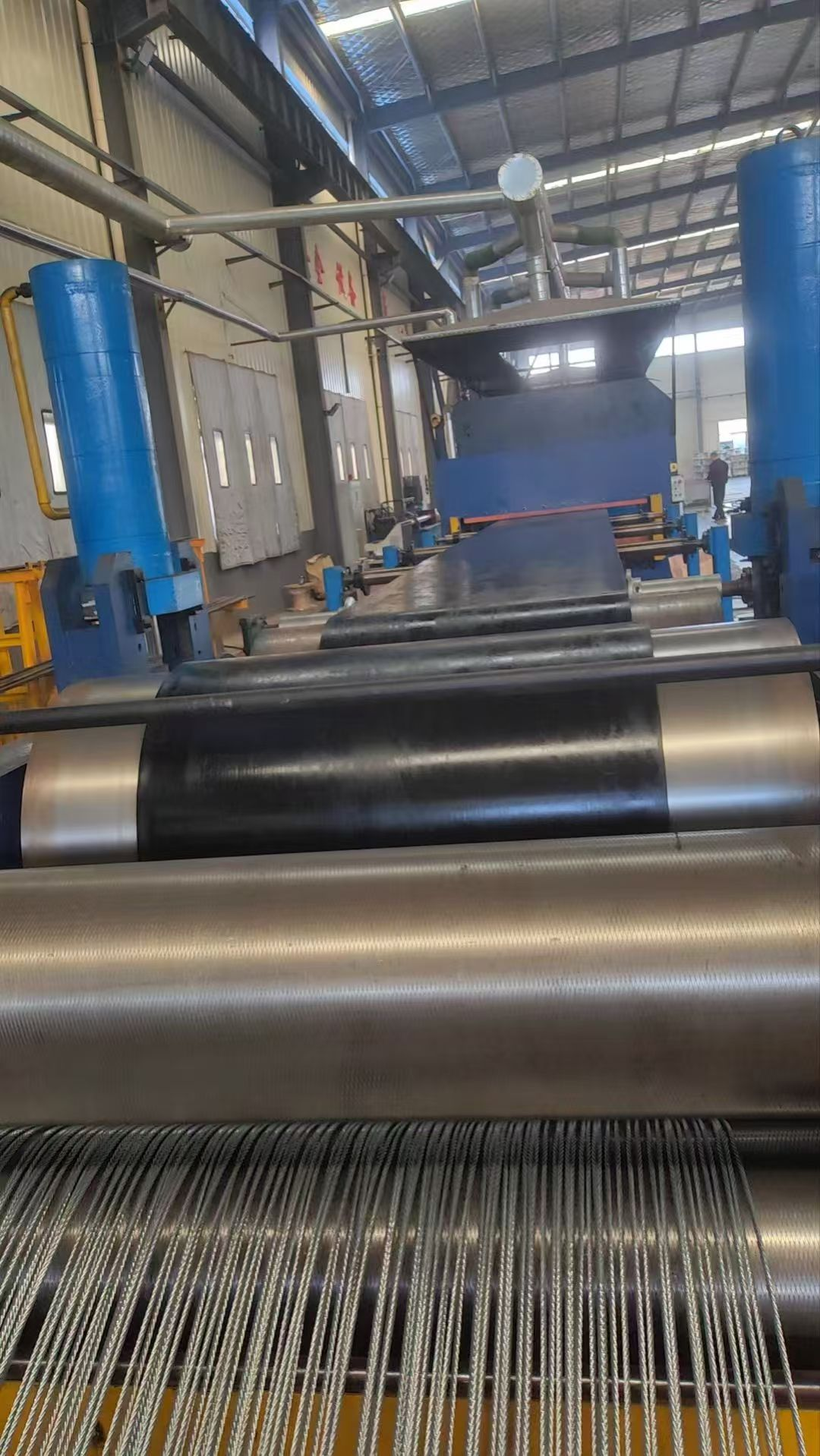
We waterjet-cut bucket bolt holes to the customer’s bucket drawing, but punching does not change the carcass, so it does not change the classification. A steel cord bucket elevator belt from Hongkun is reinforced only with metal, steel cords plus transverse steel mesh where the design calls for it, so it is declared under 4010.11; a fabric bucket elevator belt is 4010.12.
Ask any supplier to state the carcass on the drawing. One who cannot describe its own belt layer by layer is a warning sign; more supplier checks are in our guide on choosing a bucket elevator belt manufacturer.
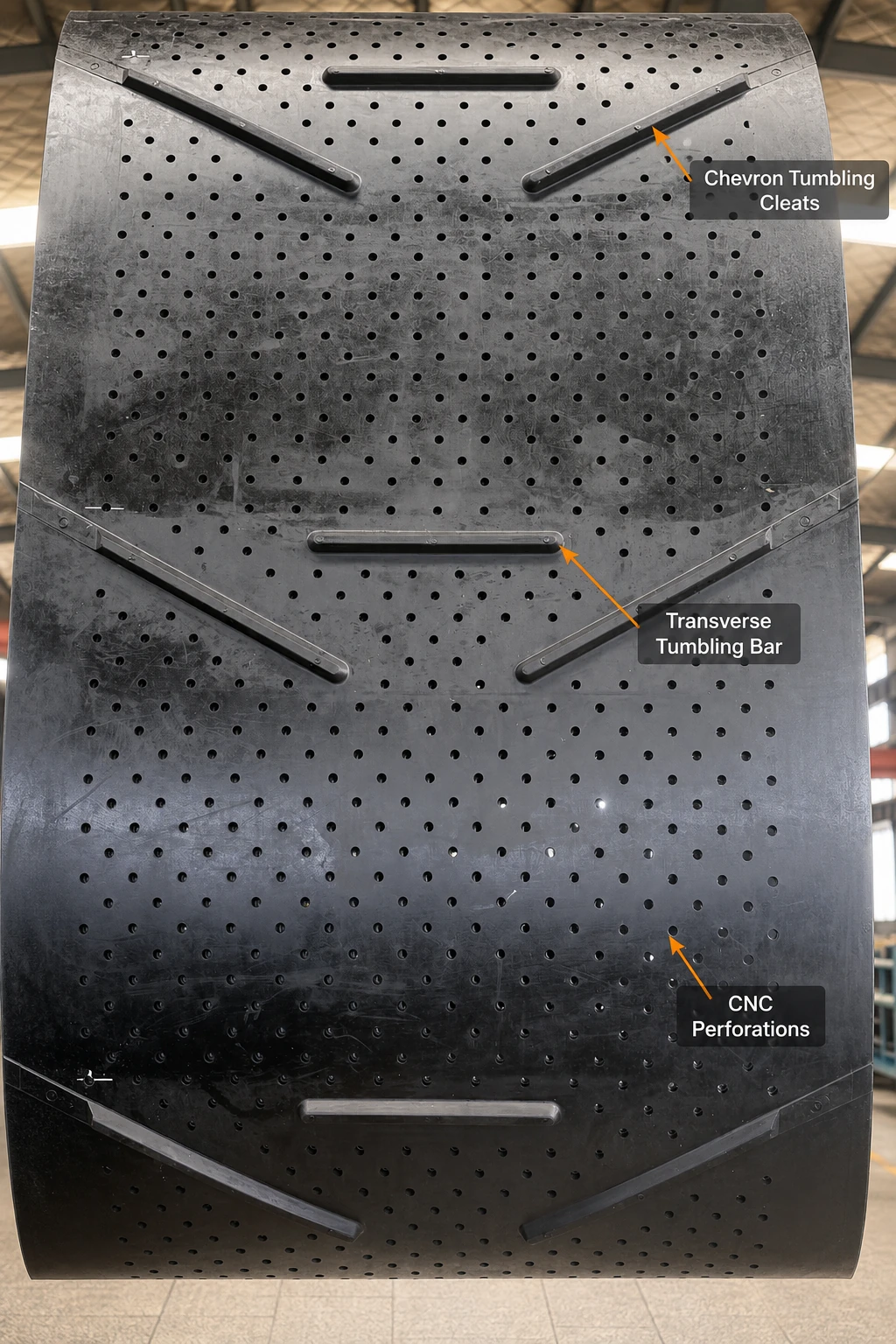
Shot blasting machine belts: why they are 4010.19
A shot blasting machine belt has a fabric carcass, but its tumbling cleats and transverse bars carry metal. A belt that combines textile and metal is not reinforced only with textile, so it leaves 4010.12 and is declared under 4010.19.
The perforations play no part in the classification. The metal in the cleats does, which is why a tumble belt and a flat EP belt from the same fabric need different codes.
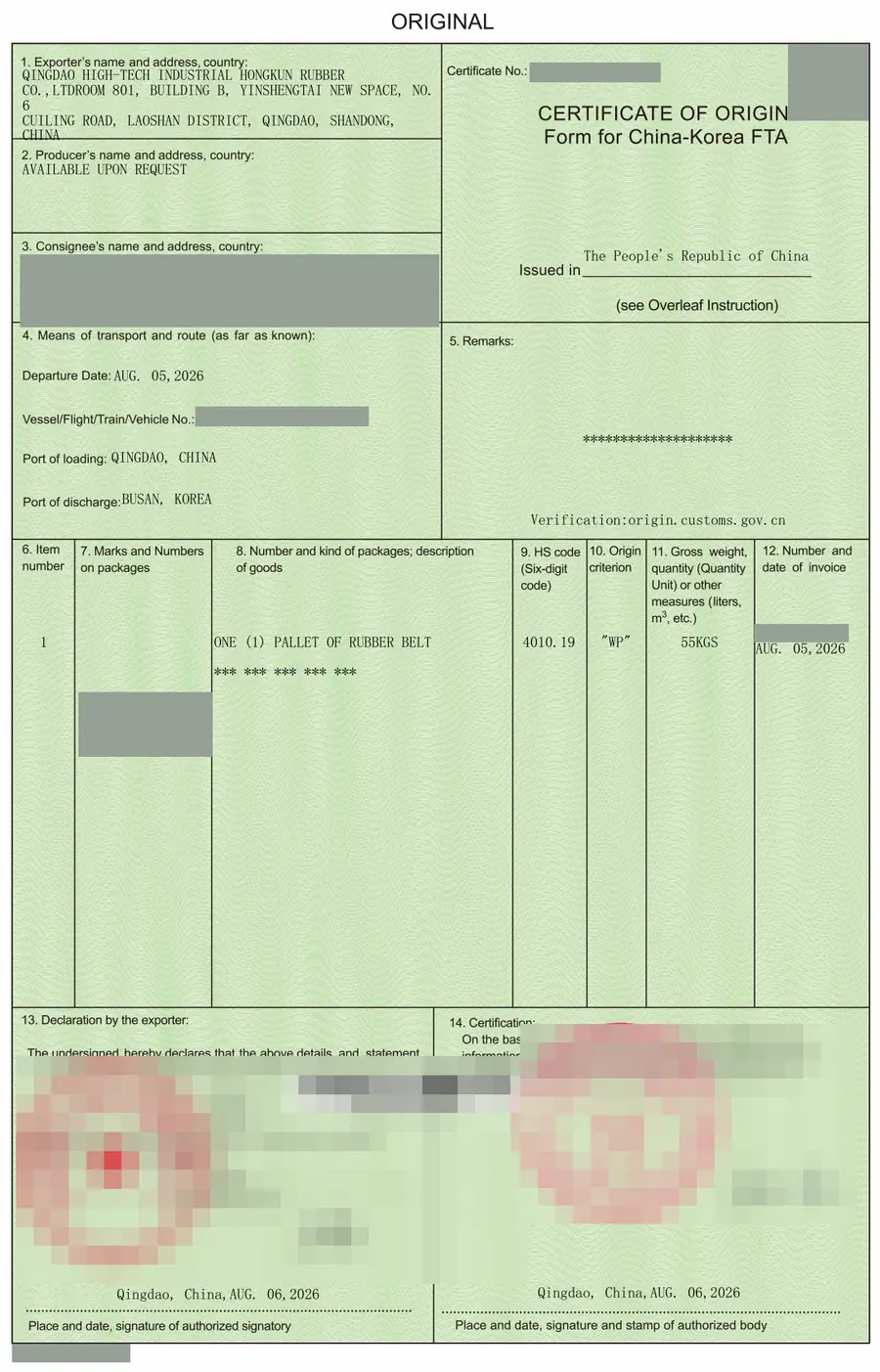
One real declaration: Qingdao to Busan
In August 2026 we shipped one pallet of shot blasting machine belts from Qingdao to Busan for the Korean machine builder in our cleat spacing case study. The export declaration used 4010.19, and the China–Korea FTA certificate of origin carried the same six-digit code in box 9, with origin criterion “WP” in box 10.
The description on the certificate, “one pallet of rubber belt”, matched the invoice and packing list. That match is what lets the importer claim the FTA rate without questions at the port.
Sidewall belt orders sometimes switch base belts during drawing review, for example from an EP base to a steel cord base when the lift height grows. The export code switches with it, from 4010.12 to 4010.11. We assign the export code from the carcass on the confirmed production drawing, not from the first quotation, so tell your broker the final construction, not the one you first asked about.
What Heading 4010 Does Not Cover
Heading 4010 covers belts of vulcanized rubber. A complete belt conveyor, conveyor parts such as idlers, plastic belts and transmission belts each have their own codes. When a shipment mixes belts with accessories, every item needs its own line on the invoice.
- Complete belt conveyors are machinery, classified under 8428.33, not 4010.
- Idlers, pulleys and other conveyor parts are usually classified as machinery parts under heading 8431.
- PVC and PU belts are plastic, generally Chapter 39; textile belting coated with plastic and at least 3 mm thick goes to 59.10. Hongkun does not make these light belts.
- V-belts and synchronous belts are transmission belts under 4010.31–4010.39.
- Splice kits, clamps and sourced accessories such as cleaners have their own codes. We can source them and pack them with the belt, but they appear as separate invoice lines.
Duty Depends on the Destination
The six-digit code is the same everywhere, but the duty rate is set by the importing country and by any trade agreement it has with China. The same belt can pay the full rate in one market and a reduced rate in another, if the right certificate of origin travels with it. Check the current rate for your country with your broker.
Each agreement has its own certificate. The Korean shipment above used a China–Korea FTA certificate; our sidewall belts to India were declared for preferential duty under the Asia-Pacific Trade Agreement (APTA). Tell the factory your destination before shipment so the right certificate is issued.
Classification itself is also published by customs authorities. A 2025 U.S. Customs ruling on a steel cord conveyor belt from China (NY N349965) confirmed 4010.11 for vulcanized rubber reinforced with carbon steel cords.
“Customs compares the documents before it looks at the belt. If the HS code and the description are the same on the invoice, packing list, bill of lading and certificate of origin, our belts clear without trouble.”
— Wang Xinxiang, Sales Manager (export), Hongkun
How to Confirm the HS Code Before Shipment
Agree the code before the factory files its export declaration. Get the carcass construction in writing, give it to your broker, match the factory’s declaration and the certificate of origin to the code the broker chooses, and request a binding ruling if you import the same belt repeatedly.
- Get the construction in writing. The drawing or quotation should state the carcass type, every reinforcing component, and the sidewall or cleat construction.
- Describe the structure, not the product name. “Fabric carcass with metal cleat bars” classifies itself; “heavy-duty tumble belt” does not.
- Match the export side. Ask the factory which China code it will declare and compare the first six digits with your import code.
- Match the certificate of origin. FTA certificates carry the six-digit code; a mismatch can cost you the preferential rate.
- Consider a binding ruling. For repeat imports, a U.S. Customs ruling or an EU Binding Tariff Information decision fixes the classification in advance.
The full order sequence, from drawing to delivery, is in our guide on how to import conveyor belts from China.
What Buyers Should Verify
- The drawing states the carcass: EP fabric, NN fabric or steel cord
- Any metal parts on a fabric belt, such as cleat bars, are listed (4010.12 or 4010.19)
- Sidewall belts: the base belt construction and whether sidewalls or cleats are reinforced
- The export code and your import code share the same first six digits
- The certificate of origin shows the same six-digit code as the invoice
- Accessories and splice kits are on separate invoice lines with their own codes
- The product description states the reinforcement in plain words
- Your broker has confirmed the national code and the current duty for your country
Classify from the Drawing
The fastest way to get a conveyor belt HS code wrong is to classify from the product name. “Sidewall belt” and “elevator belt” each cover two tariff lines, and “shot blasting belt” can land outside both of the obvious ones. The line follows the reinforcement, and a late change to the base belt changes the code with it.
Treat the confirmed production drawing as the classification document. If it lists the carcass and every reinforcing component, your broker can choose the code in minutes, the factory can declare the same code, and the certificate of origin can carry it. If it does not, ask for it before the deposit, not after the vessel sails.
Send your drawing, belt dimensions, base belt construction and destination country. Our inquiry form accepts drawing uploads.
Research This Topic with AI
Let AI verify the key technical points against independent sources, separate Hongkun’s manufacturing experience from industry standards, and turn this article into practical buying decisions.
Conveyor Belt HS Code FAQ
What is the HS code for a rubber conveyor belt?
Heading 4010. Use 4010.11 if the belt is reinforced only with metal, 4010.12 if reinforced only with textile, and 4010.19 for other constructions. National codes add more digits, so confirm the full code with your customs broker.
What is the HS code for a steel cord conveyor belt?
4010.11, conveyor belts of vulcanized rubber reinforced only with metal. Hongkun’s steel cord belts, including steel cord sidewall bases and bucket elevator belts, carry no fabric layers and are declared under this code.
What is the HS code for an EP or nylon conveyor belt?
4010.12, conveyor belts of vulcanized rubber reinforced only with textile materials. Strength and ply count do not change the six-digit code.
Does a heat-resistant or fire-resistant cover change the HS code?
No. The six-digit code follows the reinforcement in the carcass. Cover grade can matter for national lines or product regulations, but not for 4010.11, 4010.12 or 4010.19.
What HS code applies to a corrugated sidewall conveyor belt?
It follows the base belt. An EP fabric base is 4010.12 and a steel cord base is 4010.11. If the sidewalls or cleats carry their own reinforcement, describe them to your broker as well.
Is a PVC conveyor belt classified under 4010?
No. Heading 4010 covers vulcanized rubber belts. PVC and PU belts are generally classified in Chapter 39, or in heading 59.10 when they are textile belting coated with plastic and at least 3 mm thick.
Which HS code does Hongkun declare for its belts?
We declare by carcass construction: 4010120000 for EP-based belts, 4010110000 for steel cord belts, and 4010190000 for shot blasting machine belts that combine a fabric carcass with metal cleat bars.
Can Hongkun issue a certificate of origin?
Yes. We issue certificates of origin for shipments to different countries, including China–Korea FTA certificates for Korea and APTA certificates for India. The duty benefit depends on the destination country.
