
How to Choose Between the Types of Conveyor Belts Used in Mining
The types of conveyor belts used in mining are not one product. A belt under a crusher, a belt on a long overland route, and a belt in an underground coal mine each face different loads and risks.
Start with the material and route. Then check the belt tension, loading impact, and site conditions. Steel cord suits many main transport routes, fabric suits many plant transfers, and sidewall belts offer a way to lift material on steep routes. The conveyor design decides which option fits.
The rubber cover is a separate choice. Both fabric and steel cord belts can use different cover compounds—the rubber materials used on the belt surface. Wear, oil, heat, cold, and site safety requirements help define that choice.
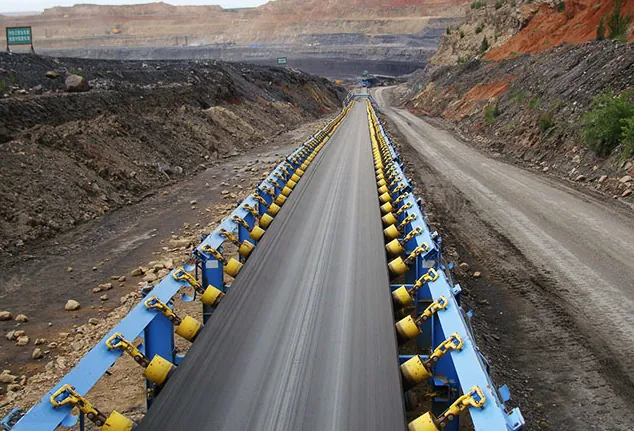
Conveyor Belts Used in Mining: Match the Belt to Each Conveyor
When choosing a conveyor belt for a mine, describe what reaches the belt and how it gets there. The name “iron ore” alone leaves out lump size, sharp edges, moisture, and the drop at the loading point.
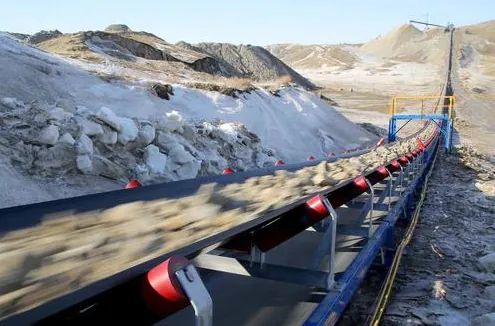
Use a separate duty record for each conveyor. A conveyor belt used in mining may work at a crusher, between process stages, or on a long route out of the plant. Those jobs need different checks.
| Conveyor duty | What to check first |
|---|---|
| Crusher feed | Largest lump, sharp edges, drop height, and support under the loading point |
| Plant transfer | Material wear, feed rate, pulley sizes, and the existing belt marking |
| Long main transport route | Calculated tension, route profile, take-up travel, and splice design |
| Steep lift | Material retention, sidewall and cleat layout, and loading and discharge points |
| Underground service | Site fire and static-electricity requirements, with the required product documents |
Swipe the table to see both columns.
For a replacement, add why the old belt is coming out. A worn cover, a deep cut, and a damaged splice call for different reviews. Keep useful details from the old specification, but record any change in material or output.
Types of conveyor belts used in mining
Belt names describe different parts of the construction. Fabric and steel cord describe the reinforcement. Sidewalls describe how the belt holds material. Oil resistance or heat resistance describes a performance requirement.
The carcass is the inner fabric layers or steel cords that give the belt strength. The covers protect that inner structure and meet the contact conditions. A sidewall belt adds raised rubber edges and cleats, which divide the carrying area into pockets.
These choices work together. A belt for mining service needs the right inner strength, a shape that suits the route, and covers that suit the material. Hongkun’s industrial conveyor belt range shows the available product routes.
Steel cord or fabric: what should the buyer compare?
Start the comparison with the conveyor calculation. Distance matters, but there is no single conveyor length that decides the belt type for every mine.
Steel cord for long routes and high tension
Consider steel cord early for a long main conveyor or a large lift. It is often considered where high working tension and low stretch under load matter.
Working tension is the pulling force on the belt during operation. The take-up keeps the belt under the needed tension as its length changes. Check how far it can move.
Send the route profile, lift, capacity, speed, calculated tension, and pulley sizes. Include the take-up arrangement and the proposed splice—the joint that connects the belt ends. Use the steel cord conveyor belts page for the construction options.
An ST marking gives the steel cord strength class. It does not define the rubber covers or the whole splice. Keep those items in the written order details.
Fabric for suitable transfers and replacement work
Fabric belts remain an option where their strength and flexibility suit the conveyor. For an existing plant transfer, check the old belt marking and pulley sizes. Note any change in how the conveyor runs.
Compare the fabric conveyor belt options, including the EP conveyor belt range. EP identifies a fabric reinforcement type; it does not tell the buyer whether the cover resists oil or heat.
The nominal tensile strength rating describes belt strength per unit of width. It is often shown in N/mm (newtons per millimeter). This is not the allowable working tension. Have the responsible conveyor designer confirm the rating and splice for the actual load. Simply buying a higher strength class can change pulley and splice needs.
When a sidewall belt fits the mine layout
Consider a sidewall belt when a steep route needs to hold material between the belt edges. Sidewall height and cleat spacing must suit the material, feed rate, and conveyor layout.
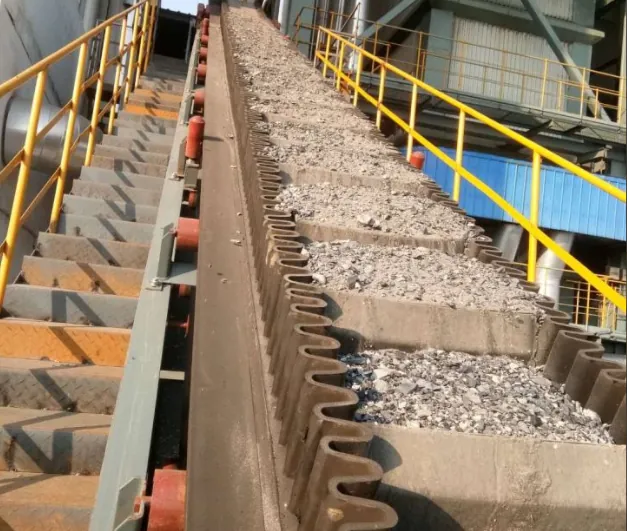
The base belt needs stiffness across its width to support the sidewalls and cleats. It must also bend along its length around the pulleys. The base belt may use fabric or steel cord. Check the choice against the design.
Start with Hongkun’s corrugated sidewall conveyor belt product page. The separate sidewall belt selection guide covers the layout and profile questions in more detail.
For this review, send a side-view drawing with the loading point, lift, bends, and discharge. Add the largest lump, bulk density, capacity, belt speed, and pulley sizes. For a replacement, include the sidewall height, cleat shape, and spacing.
Specify heat, oil, or cold exposure for the complete assembly. The base belt, sidewalls, cleats, bonds, and splice all need review together. A cover property on its own does not confirm every component.
If the machine is a bucket elevator, say so in the inquiry and attach the bucket and fastening drawings. That gives the supplier the correct equipment context.
Describe the damage before asking for a stronger belt
Tell the supplier how the belt is damaged, rather than asking only for a “heavy-duty” cover.
Abrasion resistance means resistance to surface wear from repeated material contact. Sharp rocks can also cut or gouge the rubber. Impact resistance concerns shocks such as large lumps falling onto the belt. These are related demands, but they are not the same property.
Review abrasion resistant conveyor belts alongside the actual damage pattern. A wear description alone does not explain a deep cut or a puncture.
For a useful loading-point check, collect:
- A close-up of the damage and a wider view showing its location.
- Material photos, the largest lump size, and any sharp or foreign objects.
- Drop height and the direction of material flow onto the belt.
- Chute, skirt, and belt-support details.
- Normal and peak feed rate, plus any recent change.
Ask the conveyor engineer to review the loading arrangement as well as the belt. A belt upgrade should not be used as a substitute for that equipment check.
Choose the cover for the actual exposure
List every cover requirement in the same inquiry. A mine may need wear resistance at one conveyor and oil or cold resistance at another. The inner fabric or steel cords do not decide these properties.
Hot material
Do not assume that all mined material needs a heat-resistant cover. Check the temperature at the actual loading point, especially after a heated process stage.
Material temperature and belt-surface temperature are different inputs. Send both readings if available, with normal and peak conditions. Include contact time, lump size, load depth, belt speed, and cooling when reviewing heat resistant conveyor belts.
Also say whether hot material can remain on a stopped belt. A headline temperature rating without its exposure conditions is not enough to select the construction.
Oil contact
Name the oil or oil-containing material. Say where it touches the belt, how often contact occurs, and at what temperature. Include the return side and edges if they are exposed.
Use the oil resistant conveyor belts page for the cover review. Oil-resistant covers can be specified with fabric or steel cord reinforcement. State the cover requirement separately from the carcass, and confirm the selected compound for the actual exposure.
Oil resistance does not mean resistance to every chemical.
Cold outdoor service
Send the lowest site temperature and the expected shutdown time. Say whether the conveyor restarts empty or loaded after standing in the cold.
Review cold resistant conveyor belts for the operating conditions. Cold-resistant covers can be specified with fabric or steel cord reinforcement. Include pulley sizes, the splice, and any sidewalls or cleats in the review.
A continuous running requirement and a cold-start requirement should be stated separately.
Chemical contact
Name the chemical, concentration, temperature, and contact time. Include any cleaning chemicals. The chemical resistant conveyor belt page explains the information needed for that review.
A rubber compound that suits one oil, acid, or alkali may not suit another. If the belt needs several properties, request them together. Keep the agreed limits in one specification rather than combining figures from different product pages.
Conveyor Belts in Underground Mining and Coal Mines
Underground conveyors, especially in coal mines, add risks that surface plant belts may not face. Coal dust, confined space, and limited escape routes make fire behaviour and static buildup part of the belt specification.
Heat resistance and fire resistance address different conditions. A heat-resistant belt carries hot material. A fire-resistant belt is tested for how it behaves when exposed to flame. Neither a fabric nor a steel cord carcass proves that a belt meets the mine’s fire or antistatic requirements.
Antistatic performance concerns the buildup of electrical charge on the belt. It needs its own specified requirement and evidence. Review the fire resistant conveyor belt options against the exact site requirements.
In underground coal mines, buyers usually also check:
- Space for belt reels and splicing work underground.
- Splice method and the time allowed for belt changes.
- Belt behaviour at drives and transfer points with limited headroom.
Requirements can differ by country, region, mine type, and operating environment. State the project location and applicable standards in the inquiry. Ask the responsible mine specialist to confirm the required tests and documents for the exact belt offered.
Do this for surface conveyors too when the site requires those properties. A general product description does not establish underground approval.
What to Prepare Before Requesting a Quote
Give each supplier the same material and conveyor details, so the offers can be compared on the same basis. A lower price may cover a different rubber grade or strength class. It may also leave out items you need.
You can start an inquiry before every detail is known. Separate the information needed for an initial price from the details needed before production.
What to send for a preliminary quote
For a replacement, send:
- Belt marking or model, if known.
- Width and required length, with units.
- Total thickness and top/bottom cover thickness, if known.
- Quantity and destination country.
- Material name, main operating conditions, and reason for replacement.
- Drawings or photos, if available.
Mark missing information “unknown” or “supplier to recommend.” For a new conveyor, send the available layout, material details, and capacity target. State which parts of the design are still being developed.
The steel cord belt quotation guide gives more detail for that construction.
What to settle before production
The first price does not settle every detail of the order. Confirm the strength rating, dimensions, covers, pulley needs, take-up, and splice before release. Include sidewall and cleat details where used.
Agree on the required inspection documents and any site safety requirements. Set out reel lengths, splice materials, packing, and the other items included in supply. List any open points and who must approve them.
For steel cord orders, the belt inspection guide can help define the order checks. Keep the inspection scope tied to the agreed specification.
Research This Topic with AI
Let AI verify the key technical points against independent sources, separate Hongkun’s manufacturing experience from industry standards, and turn this article into practical buying decisions.
FAQ: Conveyor Belts Used in Mining
Is steel cord always better for mining?
No. Review steel cord for high-tension main routes, but keep fabric in the comparison where it suits the equipment. Calculated tension, pulley sizes, take-up travel, and splice needs decide the fit.
Can a steel cord belt also be oil-, heat-, or cold-resistant?
Yes. Steel cord describes the reinforcement, while those properties depend on the selected rubber compounds and complete construction. Specify the required exposure and performance together in the inquiry.
Can one belt meet several cover requirements?
It may be possible, but the supplier must confirm the combined requirements. A belt offered for heat exposure is not automatically suitable for every oil, cold-start condition, or fire requirement.
What type of conveyor belt is used in underground coal mines?
Underground coal mines usually need belts that meet the site’s fire resistance and antistatic requirements. Fabric or steel cord can both be used, depending on tension and route. The exact standard depends on the country and the mine, so confirm it with the mine before ordering.
What is the difference between a mining belt and a general industrial belt?
The basic construction can be the same. A mining belt is usually specified for heavier impact, more abrasive material, longer routes, or site safety rules. These requirements change the cover grade, strength class, and documents needed.
What information should I prepare before ordering a mining belt?
Send the material, lump size, conveyor length and lift, belt width, and the reason for replacement if there is an old belt. Mark anything you don’t know as “unknown.” Ask each supplier what construction their price covers and request a written specification you can check against the conveyor and site requirements.
