
Corrugated Sidewall Conveyor Belts for Steep-Incline Conveying
Hongkun is a factory-direct manufacturer and supplier of custom corrugated sidewall conveyor belts, also known as sidewall conveyor belting, for steep-incline and vertical bulk-material conveying. Each high-angle conveyor belt combines a reinforced base belt, corrugated rubber sidewalls, and transverse cleats. Belt width, sidewall height, cleat profile and spacing, rubber compound, reinforcement, and pulley requirements are engineered to your conveyor drawing and operating conditions.
- Custom base belt width, overall length, and carrying width
- N, S, and ES sidewall profiles
- T, TS, C, TC, and TCS cleat profiles
- EP fabric, steel-mesh, or steel-cord base belt
- Heat-, oil-, and abrasion-resistant rubber compounds
- OEM replacement from drawings or samples
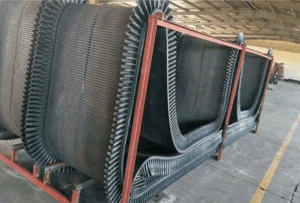 Factory Production
Custom Corrugated Sidewall Conveyor Belt Assemblies
Base belt construction, belt width, sidewall profile, cleat profile, and compound are configured for your conveyor and conveyed material.
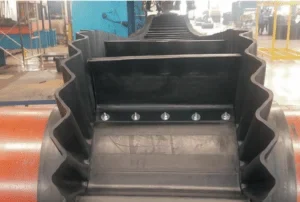 Cleat and Sidewall Detail
Cleated Sidewall Conveyor Belt Configuration
Sidewall dimensions, cleat height, profile, and spacing are selected to match the conveyor layout and bulk-material handling requirements.
Corrugated Sidewall Conveyor Belt FAQs
Selection · Replacement · Troubleshooting · Lead Time
Q
How do I select the correct sidewall height
and cleat profile?
Selection depends on the conveying angle, capacity, material density, lump size, belt width, and loading method . T or TS cleats are often used for inclined conveying, while C, TC, or TCS profiles may suit steeper angles.
Q
What information is required for selection
and quotation?
Please provide the belt width, total length, sidewall height, cleat type and pitch, conveying angle, material, capacity, lump size, temperature, and pulley diameter . Drawings or clear photos are also helpful.
Q
What causes sidewalls or cleats to separate
from the base belt?
Common causes include unsuitable bonding conditions, excessive tension, small pulley diameter, impact loading, mistracking, return-roller interference, or an incorrect rubber compound for the operating environment.
Q
What causes a corrugated sidewall conveyor belt
to mistrack?
Check pulley alignment, splice squareness, tension balance, loading position, buildup on rollers, and return support. Mistracking may come from the belt, conveyor, or both.
Q
Why do corrugated sidewalls crack at the base?
Base cracking is often linked to repeated flexing, insufficient pulley diameter, heat aging, unsuitable rubber, lateral compression, mistracking, or contact with the conveyor structure.
Q
What determines the service life of a sidewall belt?
Service life depends on material abrasion, temperature, belt speed, impact, pulley diameter, tension, alignment, splice quality, cleaning, and maintenance. There is no single fixed lifetime for every application.
Q
How should heat-, oil-, or chemical-resistant
grades be selected?
Provide the material name, continuous and peak temperature, oil or chemical type, concentration, moisture, and contact conditions. The base belt, sidewalls, cleats, and splice materials should use compatible compounds.
Q
Can you manufacture a replacement belt from
a drawing or sample?
Yes. We can review approved drawings, confirmed dimensions, machine information, photos, specifications, or an existing sample. Final dimensions and construction are confirmed before production.
Q
What is the typical production lead time?
Typical production lead time is about 15 working days after the specification, quantity, and order details are confirmed. Special compounds, tooling, or large quantities may require additional time.
Three Core Components of a Corrugated Sidewall Conveyor Belt
A sidewall conveyor belt combines the transversely rigid base belt, corrugated sidewalls, and transverse cleats into one conveying system. Each component must be coordinated with belt width, inclination angle, material characteristics, capacity, pulley diameter, working tension, and return-side design.
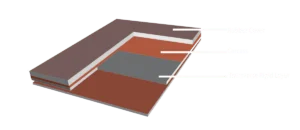 Base Belt Structure
Transversely Rigid Base Belt
The base belt requires sufficient transverse stiffness to support the sidewalls and cleats while retaining longitudinal flexibility around the conveyor pulleys. Construction options may include EP fabric carcasses, transverse fabric or steel breakers, steel mesh, or steel cord reinforcement according to working tension, belt width, load, and pulley diameter.
EP fabric, steel mesh, or steel cord options
Transverse stiffness selected for belt width
Pulley diameter and bending requirements confirmed
 Sidewall Structure
Corrugated Rubber Sidewalls
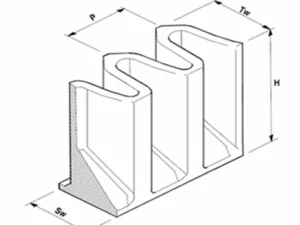
Corrugated sidewalls retain material along both edges of the belt. Sidewall height, base width, corrugation pitch, rubber compound, and reinforcement are selected according to the inclination angle, material size, capacity, temperature, and pulley arrangement. The selected profile must flex repeatedly through the pulley and return sections without interfering with the conveyor structure.
Custom sidewall height and base width
Rubber compound selected for operating conditions
Profile matched to pulley and return design
 Cleat Configuration
Transverse Cleats
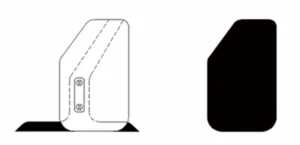
T, TS, C, TC, and TCS cleat profiles are available for different conveying angles, material characteristics, and loading conditions. Cleat height, pitch, stiffness, and reinforcement must be coordinated with the sidewall profile and effective carrying width. The base belt, sidewalls, and cleats can be assembled through controlled hot-vulcanized bonding according to the approved belt specification.
T, TS, C, TC, and TCS cleat profiles
Cleat pitch selected for material flow
Reinforcement reviewed for cleat loading
Hongkun Factory Specifications
Sidewall Belt Sizes & Profiles
- Catalog belt widths
- 300–1400 mm
- Sidewall profiles
- N / S / ES
- Cleat profiles
- T / TS / C / TC / TCS
See dimension drawings and size tables. Final dimensions and profile combinations require confirmation before production.
Recommended Applications & Industry Selection Matrix
Corrugated sidewall conveyor belts can be configured for steep-incline and vertical conveying across a wide range of bulk-material industries. Belt construction should be selected according to the conveyed material, operating conditions, and conveyor design.
| Industry / Application | Typical Conveyed Materials | Operating Challenges & Selection Focus | Recommended Belt Configuration |
|---|---|---|---|
| Cement & Lime Plants | Clinker, limestone, raw meal, gypsum, and kiln-feed materials | Elevated material temperature, abrasive wear, heavy loading, and continuous operation |
|
| Mining & Quarrying | Iron ore, coal, aggregates, crushed rock, and mineral concentrates | Lump impact, gouging, cutting, high bulk density, and continuous throughput |
|
| Steel & Metallurgy | Sinter, coke, slag, foundry sand, and metal-processing residues | Hot material contact, sharp edges, abrasive fines, and demanding operating cycles |
|
| Ports & Grain Terminals | Grain, fertilizer, pellets, feed ingredients, and bulk chemicals | High throughput, material rollback, dust, oil or chemical exposure, and product degradation |
|
| Recycling & Waste Handling | Crushed glass, RDF, compost, plastics, metal fragments, and mixed industrial waste | Puncture, cutting, tearing, oil contamination, and irregular material size |
|
| Thermal & Biomass Power Plants | Coal, bottom ash, fly-ash mixtures, wood chips, biomass, and pellets | Restricted installation space, dust, fire risk, material rollback, and continuous feeding |
|
| Chemical & Fertilizer Plants | Granular fertilizer, salts, powders, and chemical feedstocks | Chemical exposure, moisture, dust, contamination, and material spillage |
|
| Sand, Gravel & Building Materials | Sand, gravel, dry mortar, clay, crushed brick, and construction aggregates | Abrasion, heavy loading, loading-point impact, and material rollback |
|
Need Help Selecting a Sidewall Conveyor Belt?
Send Hongkun your conveyor drawing, material data, belt dimensions, and operating conditions for a project-specific review.
Request a Quote →