
How to Store Corrugated Sidewall Conveyor Belts Before Installation
Open the packaging as needed for receiving inspection. If installation is delayed, re-cover the belt promptly and store it on a stable frame in a cool, dry, ventilated area.
Quick answer
Open the packaging as needed for receiving inspection. If installation is delayed, restore the original covering or use an equivalent protective cover. Keep the roll on a stable frame or rack.
For Hongkun-packed rolls, a clearance of about 300 mm is commonly used when the frame design allows it. Use the center core and rated lifting equipment when the packing design allows that method.
These steps are especially important for a corrugated sidewall conveyor belt. Its raised profiles need more protection than a flat belt.
Why sidewall belts need special storage
A sidewall belt combines a base belt with raised corrugated sidewalls and cross cleats. Concentrated pressure can damage these profiles during storage or handling. Prolonged compression may leave deformation or place unnecessary stress on bonded areas.
Avoid concentrated pressure
- Do not rest the roll on a sidewall or cleat.
- Avoid placing another roll or pallet on top.
- Keep profiles clear of the floor and rack edges.
Avoid harmful exposure
- Keep the rubber away from direct sunlight and heat.
- Separate it from oils, acids, alkalis, and solvents.
- Avoid wet floors and busy forklift routes.
If you are still choosing the profile or construction, see our corrugated sidewall conveyor belt selection guide.
What to check when the belt arrives
Inspect the shipment before moving it into storage. Take photos while the roll is still on the truck or inside the container.
On mobile: swipe the table horizontally.
| Check | What to look for |
|---|---|
| Shipping label | Order number, specification, roll mass, and handling marks |
| Outer packaging | Tears, punctures, loose wrapping, or water entry |
| Frame and core | Cracks, distortion, or loose parts |
| Belt edges | Cuts, crushing, or abrasion |
| Sidewalls and cleats | Flattening, tears, cuts, or impact marks |
| Bonded areas | Gaps, lifting edges, cracks, or separation |
Report visible shipping damage before removing the packaging. Avoid forcing a bent cleat or sidewall back into shape without supplier guidance.
How to support the roll correctly
Use the supplied frame or a storage rack rated for the roll mass. For Hongkun-packed rolls, we recommend about 300 mm of floor clearance when the packing frame allows it.
This clearance reduces contact with floor moisture, oil, debris, forklift forks, and dirty tires. It is a Hongkun packing recommendation, not a universal height for every belt roll.
The frame or approved support should carry the load. Stack rolls only when the manufacturer has approved the packing and support arrangement.
Should you keep the original packaging?
Receiving inspection is recommended. The main risk is leaving the belt uncovered for long-term storage afterward. For this type of shipment, Hongkun uses a PP outer covering as a barrier against moisture, sunlight, dust, and accidental contact.
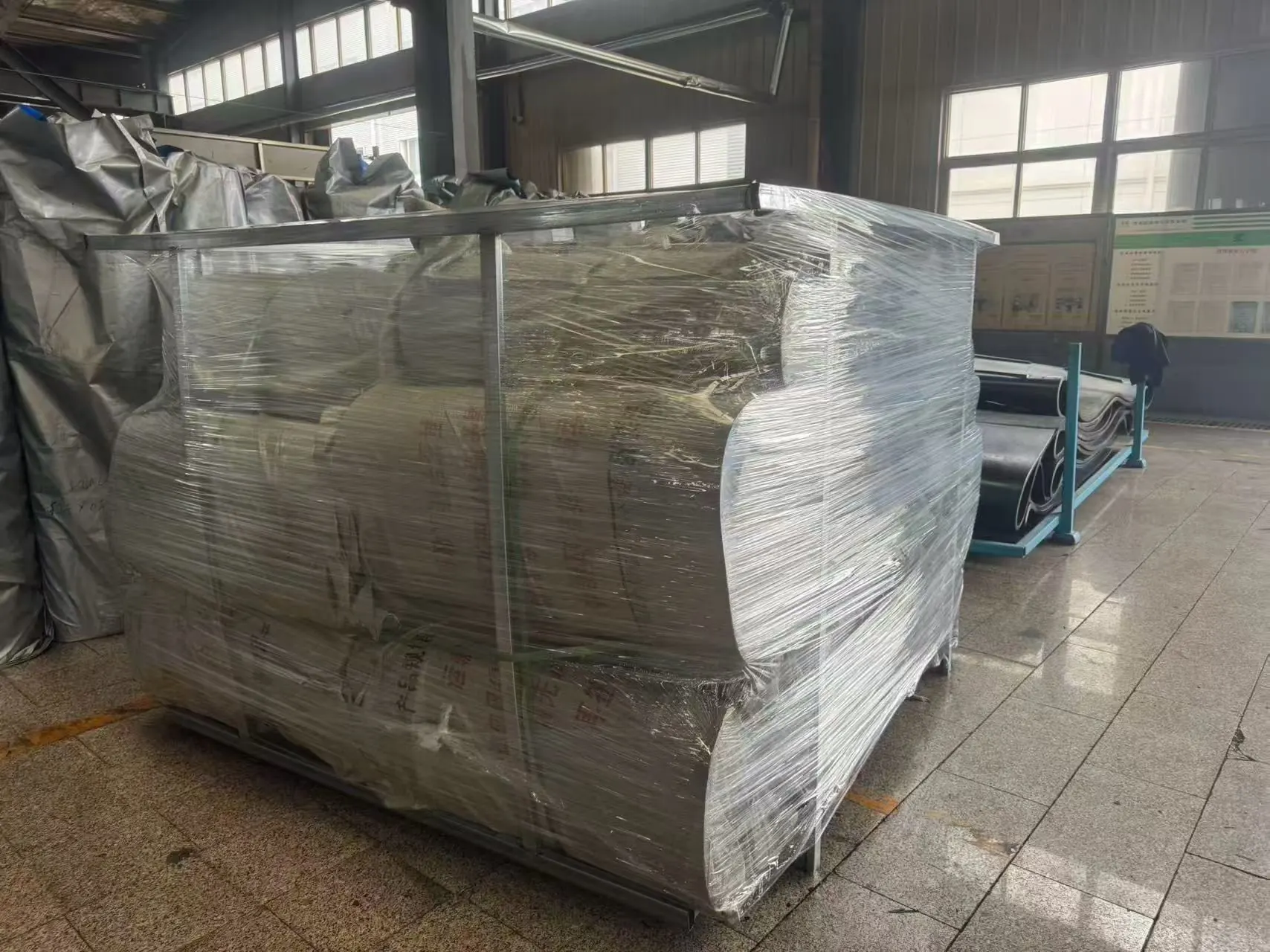
How to inspect and re-cover the belt
- Photograph the wrapping, labels, frame, and shipping condition before opening.
- Keep the original covering and fastening materials where practical.
- Open enough of the package to inspect the belt, sidewalls, cleats, and bonded areas.
- Record and report any damage before moving or installing the belt.
- If installation is delayed, restore the covering or use an equivalent protective cover.
Avoid sealing trapped moisture inside when re-covering the belt. Protected ventilation paths can help without exposing it to rain or direct sunlight.
Open or replace the packaging when:
- the cover is torn or punctured;
- water has entered;
- condensation is trapped inside; or
- an inspection is needed after a shipping incident.

Hongkun real factory video. Click the YouTube thumbnail to watch the Short.
A storage case from Indonesia
Hongkun shipped a batch of sidewall conveyor belts to a customer in Indonesia. The belts arrived with their protective packaging intact.
The customer opened the packaging to inspect the belts after delivery. However, the project was delayed. The belts then remained uncovered in a hot and humid storage area for several months.
When checked again, the rubber surface was no longer as smooth as it looked on arrival. No test showed a loss of strength. Surface appearance alone cannot determine whether mechanical strength has changed.
The issue was not the receiving inspection. The risk increased because the belts remained uncovered after the inspection.
How to lift the belt roll
Lift through the center core when the reel design allows it. Use a suitable bar, rated slings, and a spreader beam. Keep lifting points outside the belt width.
Before lifting
- Confirm the marked roll mass.
- Check the approved lifting arrangement.
- Use correctly rated equipment.
- Keep people away from the suspended load.
Protect the belt
- Keep slings and chains away from belt edges.
- Keep forks away from sidewalls and cleats.
- Never use packing straps as lifting points.
- Wrap slings around the roll only with an approved method.
Storage environment
Indoor storage is preferred. Use a cool, dry, shaded, and ventilated warehouse.
- Keep the belt away from direct sunlight, boilers, heaters, and hot walls.
- Avoid rain, standing water, and condensation.
- Separate it from oils, fuel, acids, alkalis, and solvents.
- Avoid welding areas and equipment that may generate ozone.
ISO 5285 advises avoiding temperature extremes. The suitable range can depend on the rubber compound and expected storage time.
Pre-installation inspection
Inspect the belt before moving it to the conveyor. Use good lighting and photograph any unusual area.
Base belt and edges
- Verify the specification and identification.
- Check both edges for cuts or crushing.
- Look for deep marks, bubbles, or separation.
- Inspect the belt ends and planned splice area.
Sidewalls and cleats
- Compare the left and right profiles.
- Look for creases, tears, or flattened folds.
- Check cleats for bending or impact damage.
- Inspect visible bonding areas.
For replacement orders, confirm the dimensions before installation. See how to measure a corrugated sidewall conveyor belt for a quote.
Frequently asked questions
Can a sidewall conveyor belt be stored outdoors?
Indoor storage is preferred. If outdoor storage is unavoidable, keep the roll off the ground and use an approved weather cover. Prevent rain entry and trapped condensation.
Can sidewall belt rolls be stacked?
Stack them only when the manufacturer has approved the reel and support arrangement. The design should prevent pressure on sidewalls and cleats.
Should the original packaging stay on?
Open it as needed for receiving inspection. If installation is delayed, restore the original packaging or use an equivalent protective cover that does not trap condensation.
What if a sidewall is slightly deformed?
Avoid heating, hammering, or applying adhesive unless the manufacturer provides a repair procedure. Photograph the area and ask whether the belt is suitable for installation.
Need storage advice for your shipment?
A reliable sidewall conveyor belt manufacturer should explain how its packing should be stored and lifted. Send Hongkun the order number, roll photos, storage time, and warehouse conditions.
