
Conveyor Belt Lead Time: From Drawing to Shipment
A supplier quotes 15 days, the plant books a shutdown three weeks out, and the new belt is still at sea when the old one comes off. Most delays in conveyor belt lead time do not happen on the production line. They happen before production starts and after it ends: in drawing review, payment, booking and customs.
At Hongkun, a custom rubber belt takes 15–30 working days to produce, depending on the belt type and specification. That clock starts when the drawing is confirmed and the 30% deposit arrives, not on the day you send the inquiry.
Count every stage backwards from your shutdown date, and the production days stop being the number that catches you out.
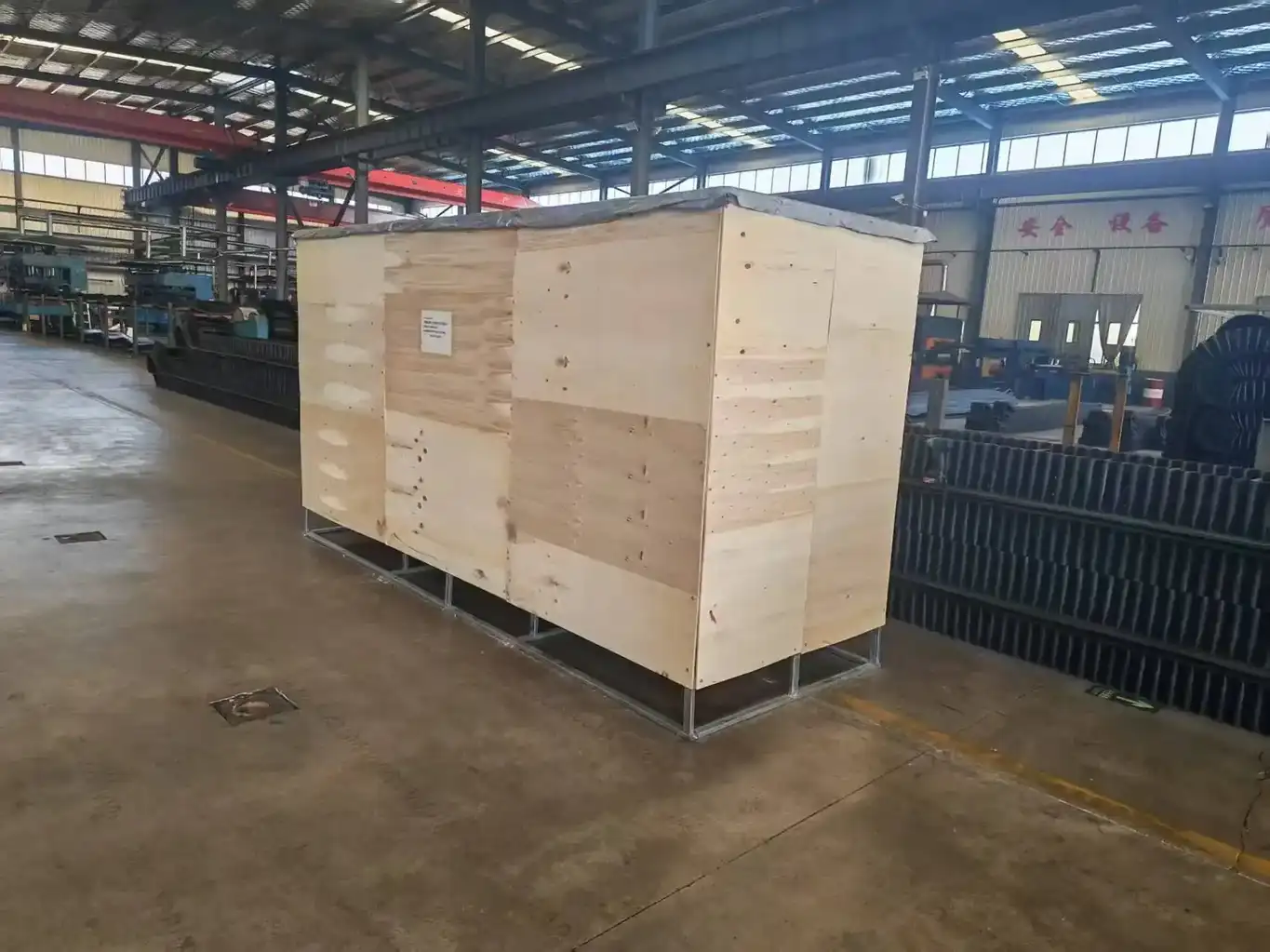
Conveyor Belt Lead Time, Stage by Stage
A custom rubber conveyor belt reaches your plant in three blocks of time. Drawing review usually takes 1–3 days when the drawing is complete. Production takes 15–30 working days at Hongkun, depending on belt type and specification. Packing, sea freight and import clearance come last, and their length depends on your route, forwarder and port.
On small screens, swipe the table sideways.
| Stage | Typical time | Who controls it | What stretches it |
|---|---|---|---|
| Quotation and drawing review | 1–3 days with a complete drawing | Buyer and factory | Missing dimensions, design changes |
| 30% deposit | Production starts on receipt | Buyer | Internal payment approval |
| Production | 15–30 working days | Factory | Sidewalls and cleats, special cover compounds |
| Pre-shipment confirmation | Photos and video once production ends; test report on request | Factory and buyer | Slow review, a report requested only at the end |
| 70% balance and packing | After you approve the finished belt | Buyer, then factory | Payment release |
| Booking and sea freight | Set by route and forwarder | Forwarder | Vessel schedule, LCL consolidation |
| Import clearance | Set by the destination | Your customs broker | Documents that do not match |
Only one row in that table is factory production. A quote that says “15 days” answers how long the belt spends on our line, not when it reaches your plant.
Ask every supplier which stages its quoted lead time covers. “Ex-works in 20 days” and “at your door in 20 days” are very different promises.
Drawing Approval Decides When Production Starts
Production cannot start until buyer and factory agree on one drawing. With a complete drawing, our review and confirmation usually takes 1–3 days. When part of the design has to change, for example because a dimension cannot be made with existing tooling, allow about a week for the discussion.
One review I handled this year was a trial order for one belt from a Korean shot blasting machine maker. The cleat layout on its drawing could not be made exactly as drawn with our existing moulds, so our technical team proposed a different cleat spacing and I explained the reasons to the customer in writing. That took about a week. Once the customer approved the revised drawing, production and the export documents went through without delay. The full story is in our cleat spacing case study.
These details slow a review most often:
- Shot blasting machine belts: one circumference with no note of inner or outer. We build to the outer circumference, and on a 15 mm belt the two differ by about 94 mm. Our guide on measuring a tumble blast belt for replacement shows where to measure.
- Bucket elevator belts: the bucket bolt-hole pattern. Holes are cut to the bucket drawing, so hole rows and spacing must be final.
- Sidewall belts: sidewall height, cleat height and cleat pitch.
- Any belt: the splice method, endless from the factory or open with a splice kit.
Most dimension errors we find, such as an inner circumference sent as the outer one, are caught when we check the drawing, before production begins. A day spent answering our drawing questions costs far less than a belt made to the wrong length.
Which Belts Take Longer to Make
In our factory, two kinds of order take the longest within the 15–30 working-day range: corrugated sidewall belts, and belts with special cover compounds such as heat-resistant, fire-resistant or chemical-resistant grades. Both add work beyond a plain belt, so plan for the longer end of the range.
Sidewall belts
A sidewall belt is two jobs. We make the base belt first, then vulcanize the sidewalls and cleats onto it and measure sidewall height, cleat height, cleat width and belt length against the drawing. See our corrugated sidewall conveyor belts for the construction.
Special cover compounds
A heat-resistant, fire-resistant or chemical-resistant cover is a different rubber compound from a general-purpose cover, so the order is scheduled around that compound. Our heat-resistant conveyor belts are a typical example.
Shot blasting machine belts: no splice time on site
Our shot blasting machine belts are made endless with Hongkun’s patented seamless joint (CN 211589771 U), and finished length stays within 1 cm of the drawing. The belt arrives ready to fit, so the maintenance crew spends no shutdown time making a splice.
That shifts the lead-time risk to the start of the order. If the circumference on the drawing is right, the belt fits the machine the first time.
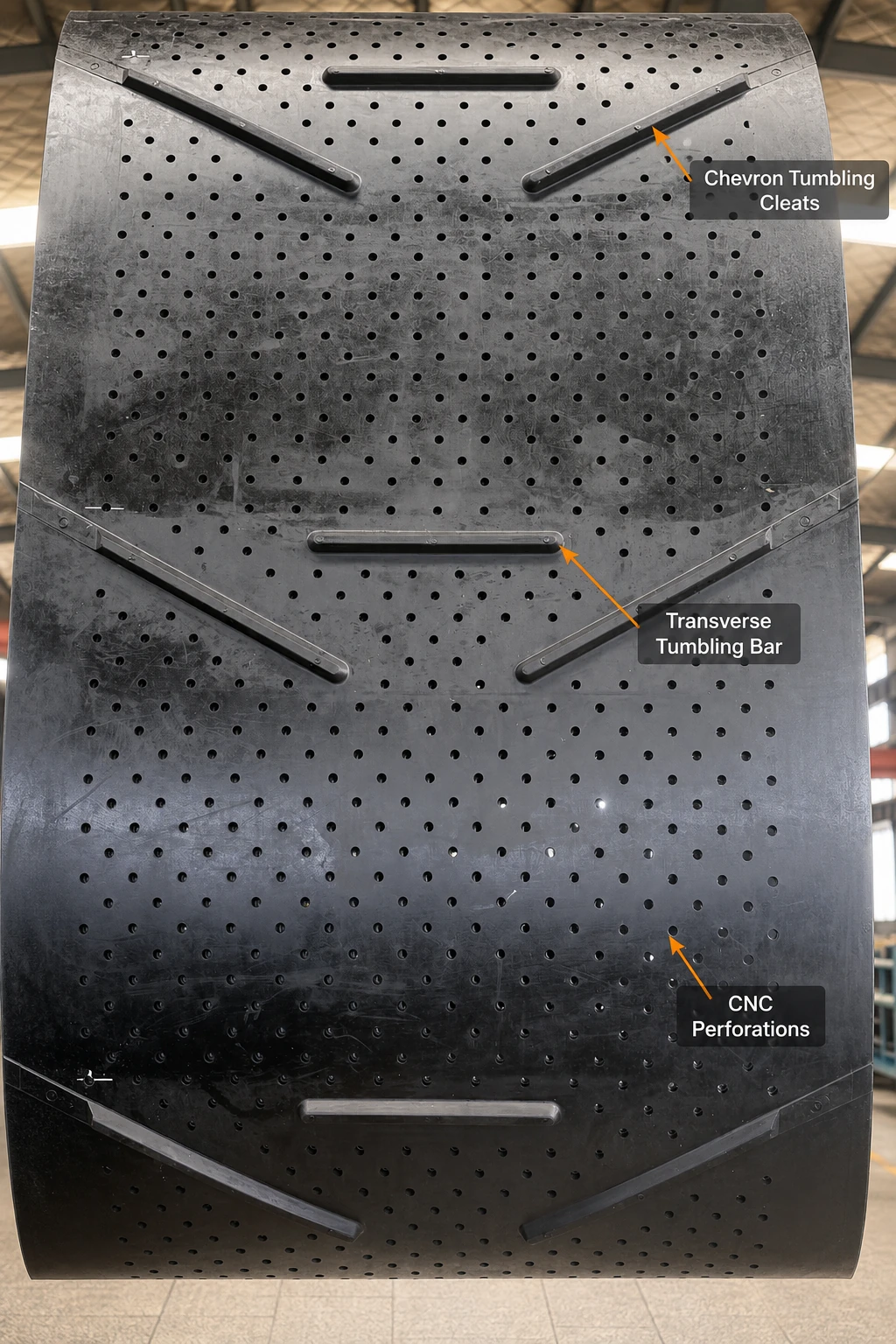
Deposit, Pre-Shipment Check and Balance
Hongkun starts production on a 30% deposit and ships after the 70% balance. Between the two, we send photos and video of the finished belt, plus a test report if you need one. A custom belt is made to one drawing and cannot be sold to anyone else, which is why production waits for the deposit.
The finished belt waits in the factory until you approve it and release the balance. If your company needs two signatures to pay, arrange them while the belt is still in production.
Ask for the test report when you place the order, not when the belt is finished. New customers usually request one; it covers your batch and your specification. Here is an example of a factory test report for a steel cord bucket elevator belt.
Packing and Shipping from Qingdao
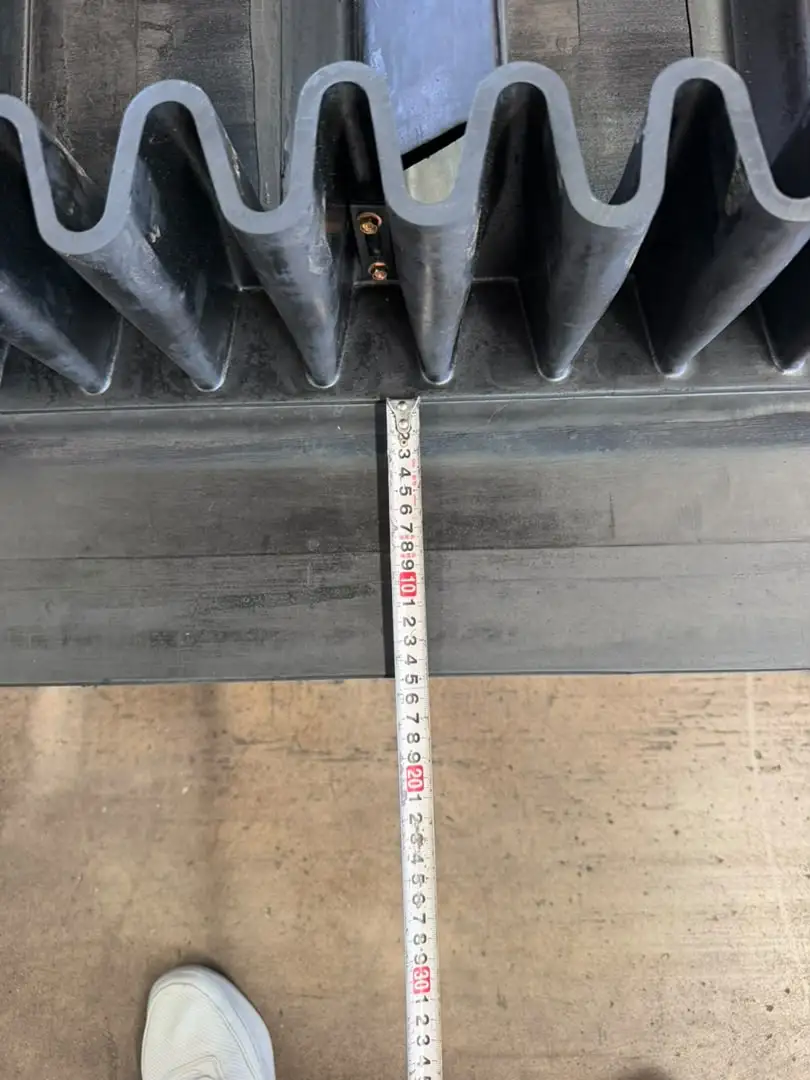
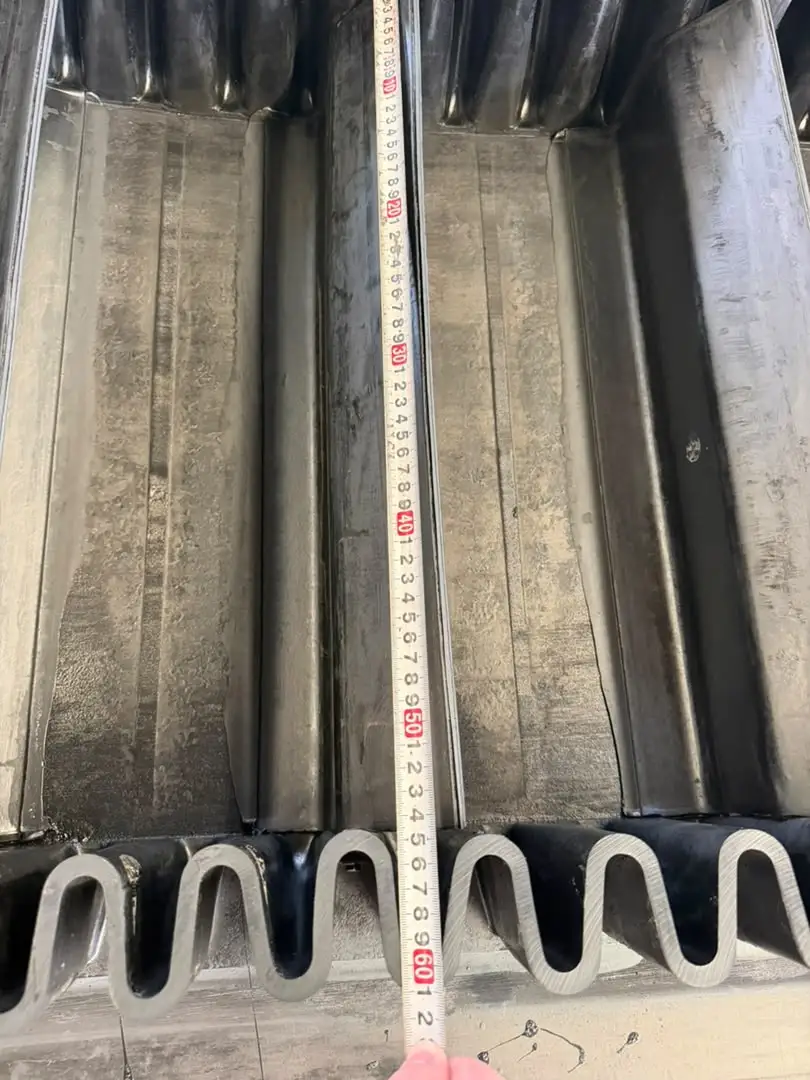
After the balance, we pack the belt and hand it to the forwarder at Qingdao port. Sidewall belts are sealed in waterproof tarpaulin and then crated; shot blasting machine belts go in a wooden crate or a waterproof bag. Sea transit and import clearance depend on your route, so get both times from your forwarder.
There is no minimum order, and a single belt can travel as less-than-container cargo (LCL). One of our 2026 shipments to Korea was one pallet, about 80 kg and 0.5 m³, from Qingdao to Busan. LCL cargo is consolidated at a container freight station before it is loaded, so ask the forwarder for the cut-off date as well as the sailing date.
Who books the freight depends on the trade term. We quote EXW, FOB, CIF or DDP. Under EXW or FOB, your forwarder should be booked before production ends; under CIF or DDP, we arrange it.
Clearance is quick when the documents agree. The invoice, packing list, bill of lading and certificate of origin should show the same description and the same 4010 subheading for your belt. For the full sequence from first inquiry to customs, see importing conveyor belts from China, step by step.
How to Plan a Replacement Around Lead Time
Work backwards from the shutdown date. Take off clearance, sea transit and booking time from your forwarder, then 15–30 working days of production, then a few days for drawing confirmation and payment. If the start date you arrive at has already passed, move the shutdown or order the next belt earlier.
- Fix the shutdown date and who will install the belt.
- Get door-to-door time from Qingdao from your forwarder, for LCL or a full container.
- Add 15–30 working days of production. Use the longer end for sidewall belts and special cover compounds.
- Add drawing review: 1–3 days for a complete drawing, about a week if the design changes.
- Add your own payment approval time for the deposit and the balance.
- Keep a margin for a missed vessel or a document correction.
Plan the replacement around the shutdown, not the other way round. For wear parts such as shot blasting machine belts, start the order when the first warning sign appears: rubber worn through to the fabric, cracks at the hole edges, or loose guide strips. Wrapped in waterproof tarpaulin and kept dry and out of sunlight, a spare belt stores well, so one belt on the shelf covers the whole lead time.
What Buyers Should Verify
- Which stages the quoted lead time covers: production only, to the port, or to your door
- The day the clock starts: drawing confirmation and deposit
- Every dimension on the drawing, including inner or outer circumference, bolt-hole pattern, sidewall and cleat sizes
- The splice method: endless from the factory, or open with a splice kit and video guidance
- A test report for your batch, requested at order stage
- Photos and video of the finished belt with measurements, before you pay the balance
- The packing method, matched to how and where you will store the belt
- The trade term, and who books the freight
- The forwarder’s cut-off and sailing dates from Qingdao
- Matching description and HS code on invoice, packing list, bill of lading and certificate of origin
The Mistake That Costs the Most Time
The mistake that costs the most time is confirming a drawing you are not sure of, just to get production started.
A custom belt is cut, vulcanized and drilled to that drawing. If a dimension changes after production begins, the 15–30 working days can start again, and the belt already made cannot be sold to anyone else. A day spent checking the circumference, the hole pattern or the cleat pitch saves weeks later.
A short lead time is mostly built by the buyer: a complete drawing, a prompt deposit, and a forwarder booked before the belt is finished.
Send your drawing, belt dimensions and planned shutdown date through our inquiry form, which accepts drawing uploads. We will reply with a production time for that specification and flag any dimension that needs confirming.
Research This Topic with AI
Let AI verify the key technical points against independent sources, separate Hongkun’s manufacturing experience from industry standards, and turn this article into practical buying decisions.
Conveyor Belt Lead Time FAQ
What is the typical lead time for a rubber conveyor belt from China?
At Hongkun, production of a custom rubber belt takes 15–30 working days, depending on belt type and specification. Add 1–3 days of drawing review before production, and packing, sea freight and import clearance after it.
When does the lead time start?
Production starts when the drawing is confirmed and the 30% deposit is received. Time spent on quotation, drawing questions and payment approval comes before that and is not part of the production days.
Why do sidewall conveyor belts take longer?
A sidewall belt needs an extra production stage. The base belt is made first, then the sidewalls and cleats are vulcanized onto it and measured against the drawing.
Does a heat-resistant or fire-resistant belt take longer to make?
Usually yes. Special cover compounds such as heat-resistant, fire-resistant or chemical-resistant grades put an order toward the longer end of the 15–30 working-day range.
Can I order a single belt?
Yes. Hongkun has no minimum order quantity. A single belt can ship as LCL cargo from Qingdao, for example one pallet of about 80 kg to Busan.
Will I see the belt before it ships?
Yes. After production we send photos and video of the finished belt, and a test report if you ask for one. You pay the 70% balance after reviewing them, and we then pack and ship.
Can I change the drawing after production starts?
Make every change before you confirm the drawing. A custom belt is made to that drawing and cannot be resold, so a change after production starts can mean making a new belt and restarting the production time.
Which port does Hongkun ship from, and on what terms?
We ship from Qingdao port, by LCL or full container, and quote EXW, FOB, CIF or DDP. Transit time depends on your route and forwarder.
