
Steel Cord Conveyor Belts for Long-Distance and High-Tension Conveying
Hongkun steel cord conveyor belts use longitudinal zinc-coated steel cord reinforcement for long-distance, high-tension, high-capacity, and heavy-duty bulk-material conveying. ST strength rating, cord pitch, cover thickness, rubber compound, transverse reinforcement, splice design, belt width, and roll length are selected according to the conveyor calculation and operating conditions.
Frequently Asked Questions
Key questions about carcass selection, ST strength rating, longitudinal tear protection, splicing, and technical quotation.
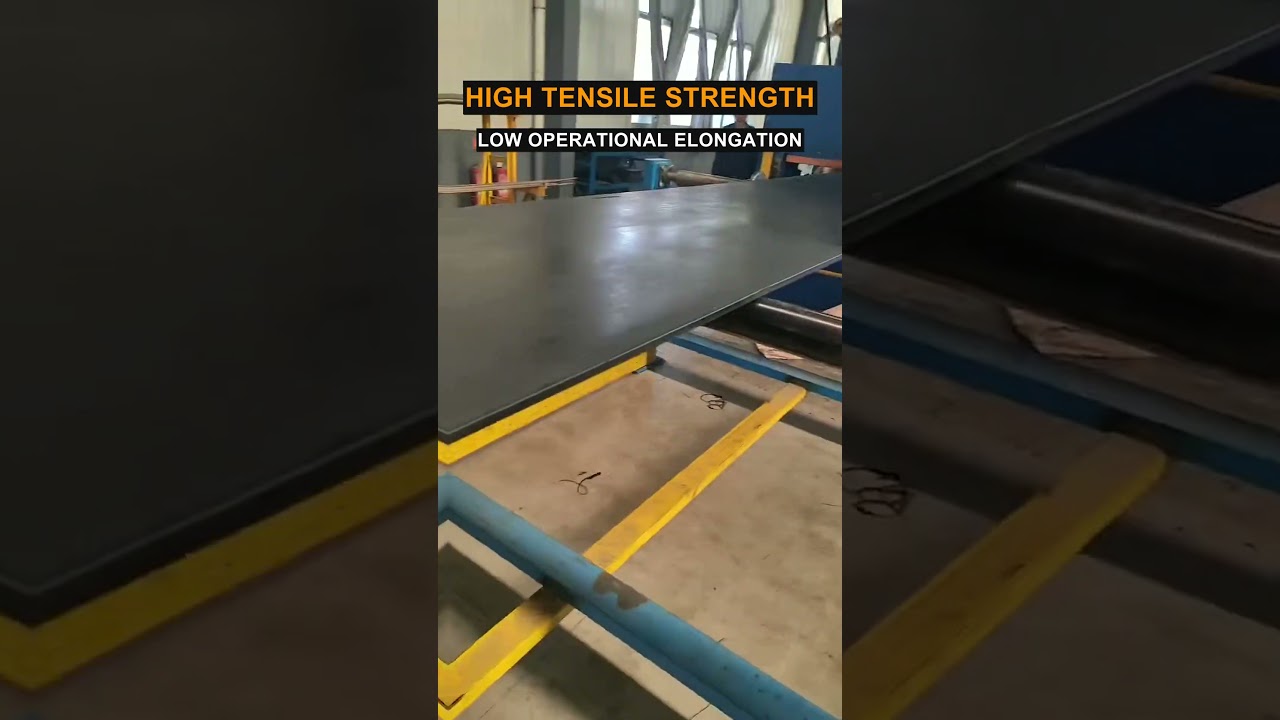
Steel cord construction is generally considered for conveyors involving high working tension, long centres, large lifts, wide belts, heavy loads, or low operational elongation requirements. EP fabric belts remain suitable for many short- and medium-distance systems. Final selection should be based on the conveyor calculation.
The ST rating should be selected from the calculated maximum belt tension, required safety factor, conveyor geometry, lift, capacity, belt width, drive arrangement, take-up system, pulley diameters, splice design, and applicable standard. Conveyor length alone is not enough to determine the belt strength.
Yes. Breaker fabric, steel mesh, transverse cords, or other reinforcement options can be reviewed for loading zones handling sharp, irregular, or high-impact material. These structures may improve puncture resistance and help slow tear propagation, but they do not replace correct loading design, maintenance, and monitoring.
Splice performance depends on the approved splice design, cord preparation, step length, rubber compatibility, vulcanization temperature and pressure, workshop conditions, alignment, curing control, pulley diameters, operating tension, installation quality, and inspection.
Please provide the conveyor centre distance, horizontal length, lift, capacity, material density and size, belt width, speed, calculated working tension, drive and take-up arrangement, pulley diameters, cover thickness, compound requirements, tear risk, splice requirement, roll length, and applicable standard.
Need a Steel Cord Conveyor Belt Recommendation?
Send the conveyor layout, working tension, belt width, speed, material conditions, existing belt specification, cover compound, and splice requirements for review.
Send Conveyor Details →Steel Cord Conveyor Belt Manufacturing Details
Longitudinal steel cord arrangement, rubber cover integration, and wide-belt production shown as factory reference images.
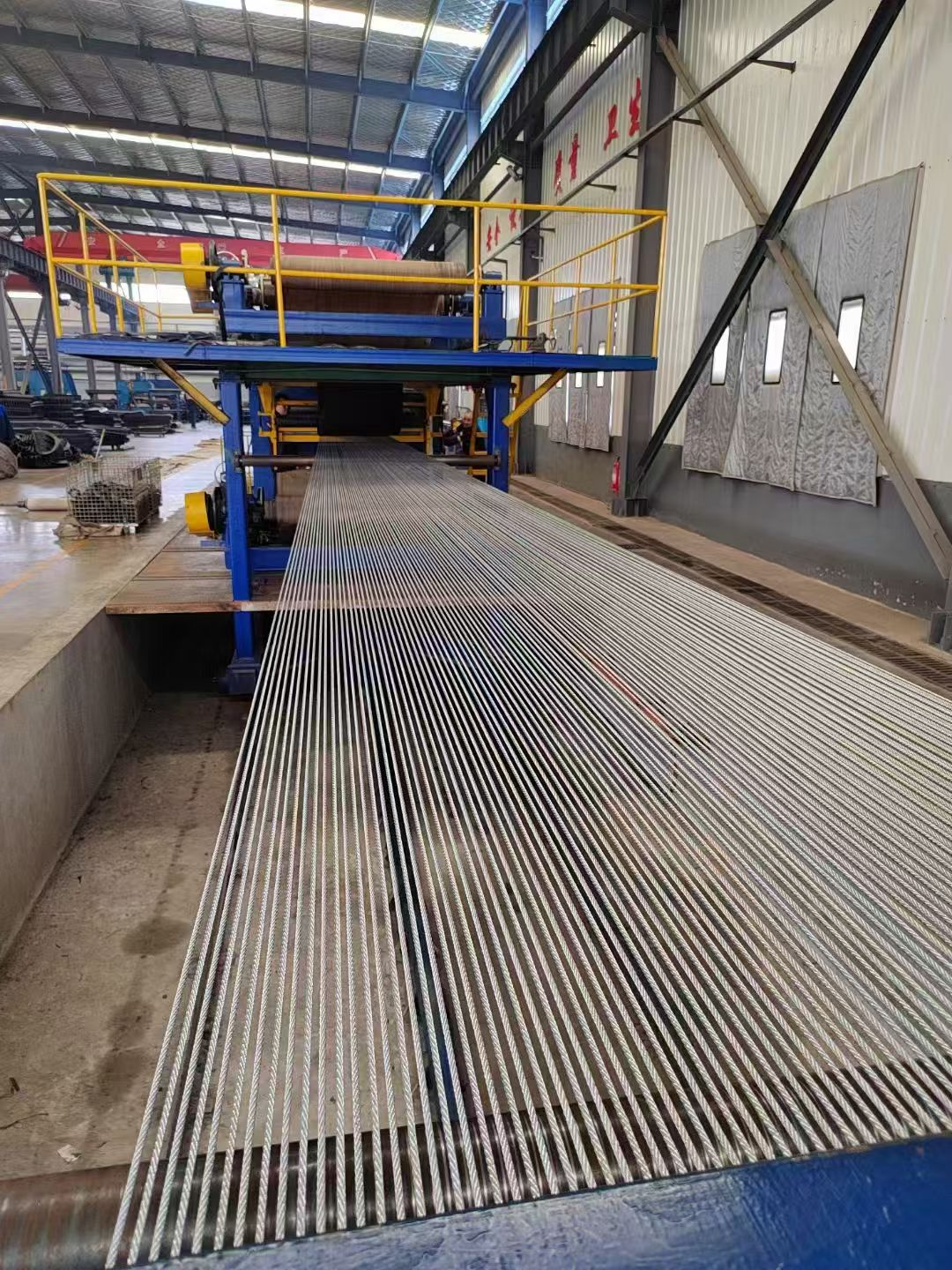 Carcass Structure
Longitudinal Steel Cord Carcass
Parallel steel cords provide the primary longitudinal tensile reinforcement for high-tension conveying.
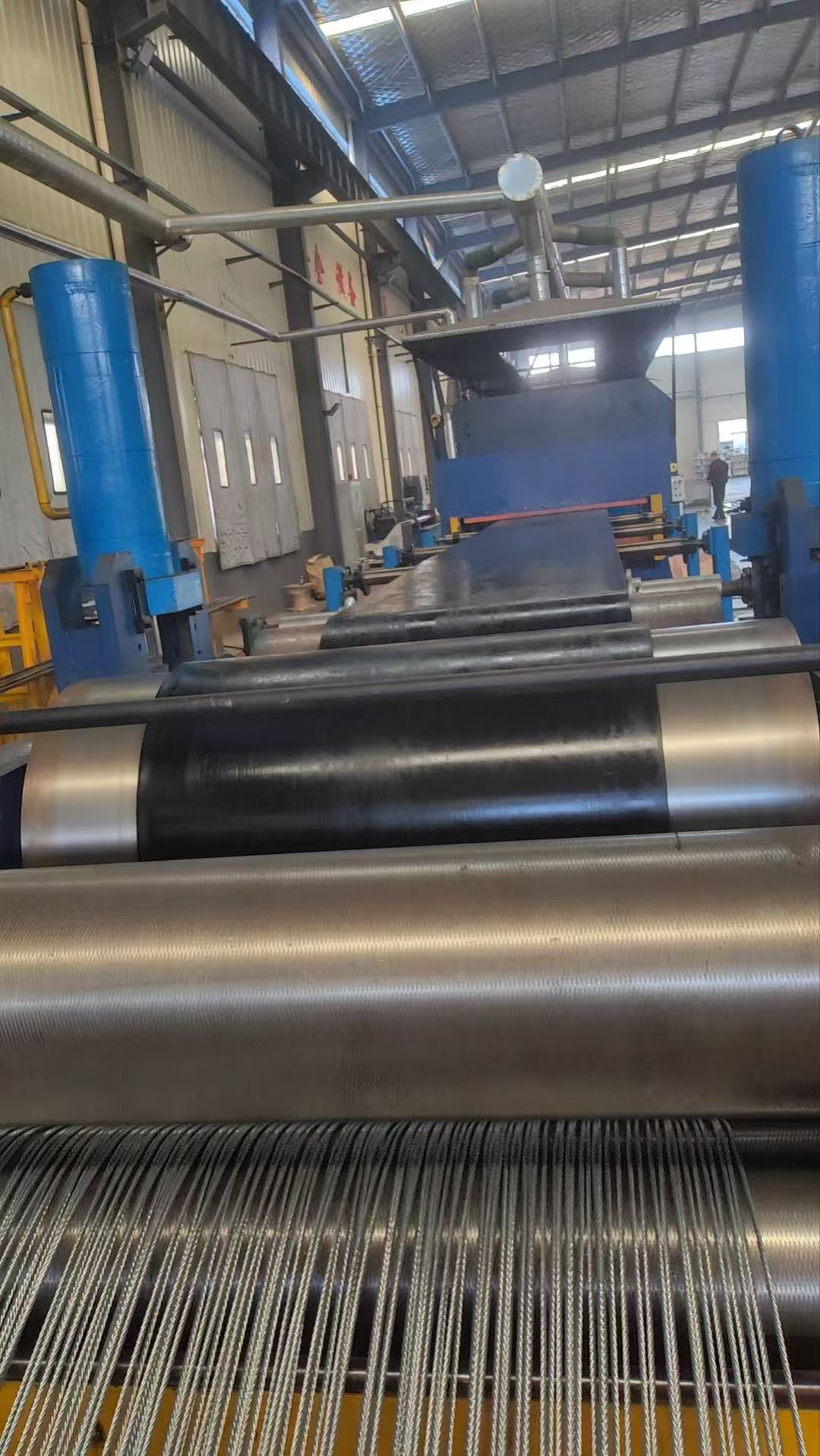 Manufacturing
Steel Cord and Rubber Integration
Steel cords are arranged and integrated with rubber cover layers during belt manufacturing.
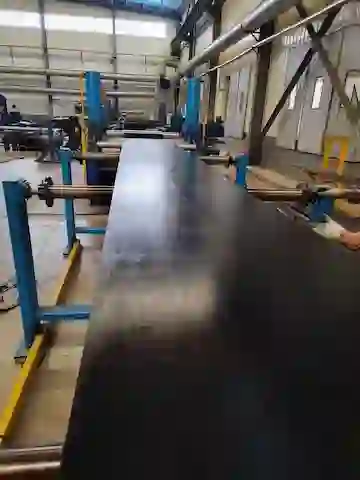 Wide Belt Production
Wide Steel Cord Belt Body
Wide belt body under factory processing before finishing, inspection, and winding.
Steel Cord Conveyor Belt Compounds and Structural Options
Hongkun steel cord conveyor belts use longitudinal zinc-coated steel cord reinforcement for long-distance, high-tension, high-capacity, and heavy-duty bulk-material conveying. Cover compound, ST strength rating, transverse reinforcement, sensor-loop configuration, cover thickness, and splice design are selected according to the conveyor calculation and operating conditions.
Available Cover Compound Options
Final compound selection depends on the conveyed material, operating environment, temperature, safety requirements, abrasion, and chemical exposure.
Standard Steel Cord Construction
Designed for long-distance and high-tension conveying where the main requirements are high longitudinal tensile strength, low operational elongation, dimensional stability, and reliable splice performance.
Transverse Reinforcement Construction
Breaker fabric, steel mesh, transverse cords, or other reinforcement layers can be reviewed to improve puncture resistance and help slow longitudinal tear propagation in high-impact loading zones.
Embedded Sensor-Loop Construction
Conductive sensor loops can be incorporated for use with a compatible longitudinal tear-detection system. If a loop is damaged, the external monitoring system can identify the event and trigger an alarm or configured conveyor response.
Main Technical Parameters of ST Series Steel Cord Conveyor Belt
Technical reference covering ST630 through ST6000, including tensile strength, steel cord diameter, cord pitch, cover thickness, belt weight, and steel cord quantity by belt width.
ST Series Technical Parameters
Values are reproduced from the supplied technical reference table.
| Parameter | ST630 | ST800 | ST1000 | ST1250 | ST1600 | ST2000 | ST2500 | ST3150 | ST3500 | ST4000 | ST4500 | ST5000 | ST5400 | ST6000 |
|---|---|---|---|---|---|---|---|---|---|---|---|---|---|---|
| Nominal Tensile Strength N/mm | 630 | 800 | 1000 | 1250 | 1600 | 2000 | 2500 | 3150 | 3500 | 4000 | 4500 | 5000 | 5400 | 6300 |
| Maximum Steel Cord Diameter mm | 3.0 | 3.5 | 4.0 | 4.5 | 5.0 | 6.0 | 7.5 | 8.1 | 8.6 | 8.9/9.1 | 9.7 | 10.9 | 11.3 | 12.3 |
| Steel Cord Pitch mm | 10 | 10 | 12 | 12 | 12 | 12 | 15 | 15 | 15 | 15/17 | 16 | 17 | 17 | 18 |
| Top Cover Thickness mm | 5 | 5 | 6 | 6 | 6 | 8 | 8 | 8 | 8 | 8/8 | 8 | 8.5 | 9 | 10 |
| Bottom Cover Thickness mm | 5 | 5 | 6 | 6 | 6 | 8 | 8 | 8 | 8 | 8/8 | 8 | 8.5 | 9 | 10 |
| Approximate Belt Weight kg/m² | 18 | 19.5 | 21.5 | 22.2 | 26.1 | 33.1 | 35.3 | 41.1 | 45 | 45/45 | 51 | 59 | 62 | 65 |
Steel Cord Quantity by Belt Width
Blank cells remain blank because no value is shown in the supplied reference table.
| Belt Width | ST630 | ST800 | ST1000 | ST1250 | ST1600 | ST2000 | ST2500 | ST3150 | ST3500 | ST4000 | ST4500 | ST5000 | ST5400 | ST6000 |
|---|---|---|---|---|---|---|---|---|---|---|---|---|---|---|
| 800 mm | 75 | 75 | 63 | 63 | 63 | 63 | 50 | 50 | 50 | |||||
| 1000 mm | 95 | 95 | 79 | 79 | 79 | 79 | 64 | 64 | 64 | 64/65 | 59 | 55 | 55 | 54 |
| 1200 mm | 113 | 113 | 94 | 94 | 94 | 94 | 76 | 76 | 77 | 77/68 | 71 | 66 | 66 | 63 |
| 1400 mm | 133 | 133 | 111 | 111 | 111 | 111 | 89 | 89 | 90 | 90/79 | 84 | 78 | 78 | 74 |
| 1600 mm | 151 | 151 | 126 | 126 | 126 | 126 | 101 | 101 | 104 | 104/91 | 96 | 90 | 90 | 85 |
| 1800 mm | 171 | 143 | 143 | 143 | 143 | 114 | 114 | 117 | 117/103 | 109 | 102 | 102 | 96 | |
| 2000 mm | 159 | 159 | 159 | 159 | 128 | 128 | 130 | 130/114 | 121 | 113 | 113 | 107 | ||
| 2200 mm | 176 | 141 | 141 | 144 | 144/125 | 134 | 125 | 125 | 118 | |||||
| 2400 mm | 193 | 155 | 155 | 157 | 157/137 | 146 | 137 | 137 | 129 | |||||
| 2600 mm | 209 | 168 | 168 | 170 | 170/148 | 159 | 149 | 149 | 140 | |||||
| 2800 mm | 184 | 184/160 | 171 | 161 | 161 | 151 |
Belt weight: Belt weight varies according to cover rubber thickness and density.
Roll length: The length of a single conveyor belt roll is 100–1500 m. It is limited by belt thickness, belt width, transportation, installation, and related conditions. The length of each roll is determined by agreement between the supplier and the buyer.
