
Bucket Elevator Belts for High-Load Vertical Conveying
Hongkun is a factory-direct bucket elevator belt manufacturer and supplier in China, producing rubber bucket elevator belts with steel cord and reinforced fabric constructions for cement, mining, grain handling, power generation, metallurgy, and other bulk-material lifting systems. Custom and replacement bucket elevator belts are engineered according to the lifting height, bucket load, material temperature, pulley diameter, belt speed, working tension, and operating conditions .
Steel Cord and Fabric Bucket Elevator Belt Construction
Steel cord bucket elevator belts are suitable for applications requiring high longitudinal strength and controlled elongation. Reinforced fabric constructions may be used for selected lower-load or shorter-lift systems. Belt width, cover grade, carcass, transverse reinforcement, and pulley requirements are confirmed according to the elevator design and operating load.
Pre-Drilled Bucket Elevator Belt Mounting Holes
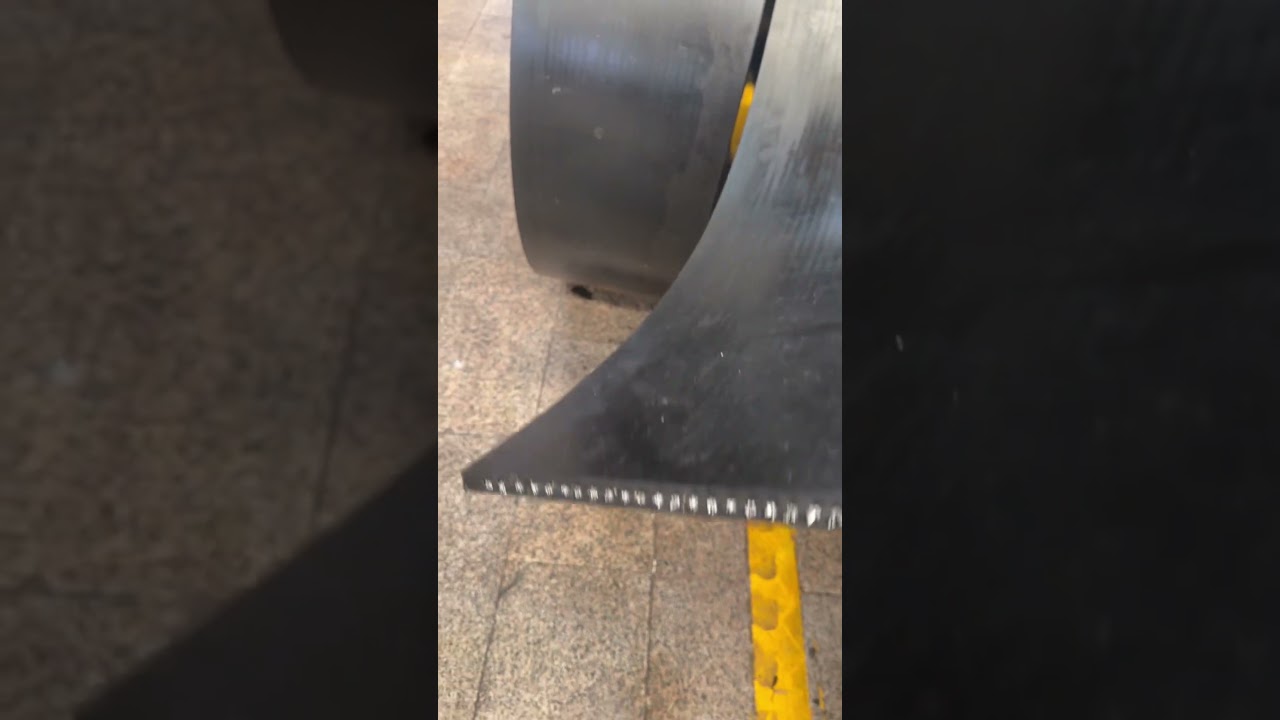
Bucket elevator belt mounting holes can be produced by waterjet cutting according to an approved drawing or confirmed hole layout. Before production, belt width, hole diameter, row spacing, edge distance, bucket pitch, reinforcement position, and mounting requirements are reviewed to reduce dimensional errors during installation.
Technical confirmation: final belt strength, carcass construction, cover thickness, pulley diameter, bucket-hole layout, reinforcement, splice design, and operating suitability must be confirmed from the elevator drawing and project data before production.
Bucket Elevator Belt FAQs
Selection · Installation · Troubleshooting
Q
Should I choose a steel cord or fabric
bucket elevator belt?
The choice depends on the lifting height, working tension, bucket load, pulley diameter, belt speed, and operating temperature . Steel cord constructions are generally selected when high longitudinal strength and low elongation are required. Reinforced fabric belts may be suitable for shorter lifts and lower working tensions. Final selection should be based on the elevator design rather than product name alone.
Q
What information is required to select or quote
a replacement bucket elevator belt?
For a quotation, please provide the elevator belt length, belt thickness, steel-cord diameter or required belt strength, hole diameter, hole pitch, and hole-row spacing . The mounting holes can be produced by waterjet or water-drilling. The manufacturer can select the steel-cord diameter or belt strength according to the application.
Q
Why does a bucket elevator belt run off-centre
or trigger the misalignment switch?
Mistracking can result from uneven tension, pulley or shaft misalignment, material build-up, an incorrectly aligned splice, unequal bucket loading, worn pulley lagging, or an elevator casing that is out of alignment . The complete system should be inspected before replacing the belt. A correctly manufactured belt helps, but it cannot compensate for major mechanical misalignment or uneven loading.
Q
Why do bucket bolts pull through or the belt
tear around the mounting holes?
Common causes include incorrect hole diameter, insufficient edge distance, excessive bolt torque, unsuitable washers, overloaded buckets, impact loading, weak transverse reinforcement, or inaccurate drilling . Hole size and layout should match the bucket and bolt system. Waterjet-cut holes and suitable transverse reinforcement can help reduce local damage, but installation torque and bucket loading must also be controlled.
Q
What causes an elevator belt splice to fail
prematurely?
Splice failure may be caused by incorrect splice design, poor belt-end alignment, unsuitable fasteners, insufficient clamping, contamination, incorrect curing conditions, excessive working tension, or a pulley diameter that is too small . The splice method must match the belt construction and operating load. Repeated failure at the same location should prompt inspection of both the splice procedure and the elevator’s mechanical alignment.
Q
How should a heat-resistant bucket elevator belt be selected for hot
clinker or other high-temperature materials?
Selection should consider the bulk material temperature, actual belt-surface temperature, exposure time, material size, loading frequency, and ventilation inside the elevator . Standard rubber can harden and crack when exposed beyond its intended temperature range. A suitable heat-resistant cover and bonding system should therefore be selected from confirmed operating data rather than from the highest occasional material temperature alone.
Q
Is a bucket conveyor belt the same as a bucket elevator belt?
Buyers sometimes use the term bucket conveyor belt for the belt used in a bucket elevator. For vertical bulk-material lifting systems, “bucket elevator belt” is the more precise industry term. Belt construction should still be selected according to lifting height, bucket load, working tension, pulley diameter, material temperature, and operating conditions.
Choose what you need next
Request a Quote or Download a Belt Record
Use the quote path when you need a new or replacement belt. Use the record when you need to organize information for a belt already in service.
I Need an Initial Quote
Send these four details. They are enough to begin an initial quotation:
- Belt length
- Belt width
- Finished belt thickness
- Cord diameter or required belt strength
If the fourth detail is unknown, write “Supplier to recommend.”
I Need a Maintenance Record
Download the Excel template to keep confirmed belt details, inspection observations, and replacement history in one place.
This record template is created by Hongkun Belting for bucket elevator belt asset, inspection and replacement information.
Before production, more information may be needed. Hole layout, bucket configuration, splice design, and application details are confirmed during the technical review.
Important: The record template does not determine whether equipment is safe to operate. Follow the equipment manufacturer’s instructions, local safety requirements, and your site procedures.
Need more detail? Choosing a manufacturer · Detailed RFQ checklist
Bucket Elevator Belt Engineering & Selection
Belt construction, reinforcement, drilling layout, and rubber cover grades are selected according to the elevator design, conveyed material, and operating conditions.
Steel cord constructions are available for high working tension and low elongation, while reinforced fabric belts may be suitable for shorter lifts and lower-load applications.
Waterjet-cut bucket mounting holes can be produced according to an approved drawing or confirmed drilling dimensions.
Abrasion-resistant, heat-resistant, oil-resistant, and application-specific cover grades are selected from confirmed material and temperature data.
Typical Bucket Elevator Belt Applications
Bucket elevator belt construction and cover grade should be selected according to the conveyed material, lifting height, operating tension, belt speed, material temperature, and abrasion level.
Bucket Elevator Belts for Cement and Clinker Handling
Vertical conveying of raw meal, clinker, and crushed limestone between crushers, mills, kilns, coolers, and storage silos. Belt construction should be selected according to material temperature, lump size, abrasion, bucket load, and lifting height. Hot clinker applications may require a heat-resistant cover and bonding system based on confirmed belt-surface temperature.
Cement and Slag Grinding Circuits
Bucket elevator belts are used in circulation systems connected to vertical roller mills and ball mills for cement, slag, and mineral grinding. Steel cord constructions may be selected where high working tension and low elongation are required, while hole reinforcement and bucket attachment design should match the circulating load and operating speed.
Silo Feeding, Storage, and Packing Systems
Vertical lifting of finished cement, fly ash, alumina powder, mineral powder, and compound fertilizer into storage silos, loading systems, and packaging lines. Belt width, bucket spacing, hole layout, cover grade, and reinforcement should be confirmed from the required capacity, material characteristics, elevator height, and machine design.
Bucket Elevator Belt Specifications & Model Matrix
Standard specifications for bucket width, volume, dynamic conveying capacity, and max lifting height
| Specification & Parameters | 250 | 315 | 400 | 500 | 630 | 800 | 1000 | 1250 | 1400 | 1600 |
|---|---|---|---|---|---|---|---|---|---|---|
| Bucket Width (mm) | 250 | 315 | 400 | 500 | 630 | 800 | 1000 | 1250 | 1400 | 1600 |
| Bucket Volume (L) | 5 | 6.5 | 14.6 | 18 | 29 | 37 | 58 | 73 | 99 | 114 |
| Conveying Capacity (m³/h) Φ 100% | 85 | 117 | 225 | 280 | 450 | 570 | 950 | 1255 | 1547 | 1780 |
| Φ 75% | 63 | 88 | 168 | 210 | 338 | 428 | 712 | 941 | 1160 | 1335 |
| Max. Lifting Height (m) | > 100 | > 100 | > 100 | > 120 | > 120 | > 120 | > 130 | > 130 | > 130 | > 130 |
※ Engineering & Design Notes:
- 1. Bucket Capacity Definition: The listed bucket volume indicates the water-level holding capacity. The symbol Φ represents the specific material filling efficiency ratio based on material granularity and flow characteristics.
- 2. Height Calculation Criteria: The maximum lifting height refers to the precise center-to-center distance (C) calculated between the centerline of the head drive shaft and the tail take-up shaft.
