
How to Choose a Bucket Elevator Belt: 7 Key Selection Factors
To choose a bucket elevator belt, confirm the elevator geometry, calculated load, material, temperature, take-up range, pulley requirements, and bucket attachment. Do not select the belt from a generic catalogue description alone.
The seven factors below turn the selection process into a practical specification checklist. Each factor must work with the complete elevator system.
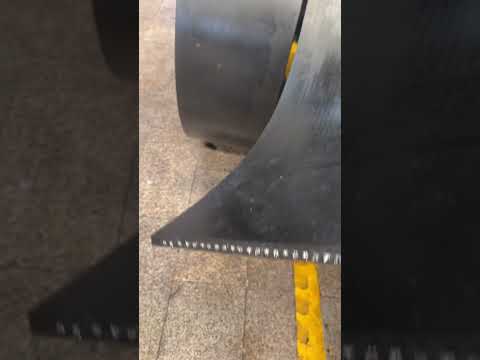
What belt width, thickness, and hole pattern do I need?
Belt width
Base it on bucket width plus the required side clearance for the specific elevator.
Belt thickness
Match it to calculated tension, pulley geometry, carcass construction, and bucket attachment.
Hole pattern
Use a confirmed drawing. Factory punching helps keep rows aligned and repeatable.
Steel cord, EP fabric, or PVC/PVG solid woven—which carcass is right?
| Carcass construction | General characteristics | Verify before ordering |
|---|---|---|
| EP multi-ply fabric | Flexible, widely used, and compatible with project-specific mechanical or vulcanized splice designs. | Required belt rating, working tension, elongation basis, ply construction, pulley diameters, take-up range, cover grade, and bucket-bolt support. |
| Steel-cord reinforced | Selected when high tensile capacity and low operating elongation are important. | Cord construction, belt rating, maximum working tension, minimum pulley diameters, transverse reinforcement, take-up travel, and the approved splice system. |
| PVC/PVG solid woven | Compact solid-woven construction. Selected products may be offered with documented flame-resistant or antistatic properties. | Working-load definition, elongation test basis, pulley requirements, cover type, and any required flame, electrical, food-contact, or other compliance documents. |
Why does my current belt keep failing at the splice?
Match the splice to the belt construction
EP fabric elevator belts may use an engineered mechanical clamping splice or an approved vulcanized splice, depending on belt tension, pulley arrangement, available take-up, and supplier instructions. Steel-cord elevator belts require a splice system specifically designed and approved for the offered cord construction. Do not substitute an ordinary field overlap or an unspecified general-purpose fastener without engineering verification.
- Compare the installed joint with the belt supplier’s approved splice drawing and procedure.
- Confirm splice hardware, plate orientation, fastener pattern, tightening procedure, and reinspection interval.
- Check pulley alignment and whether the belt enters the splice squarely.
- Look for moisture, chemicals, trapped material, heat damage, corrosion, or fastener movement.
- Confirm that working tension and take-up travel match the selected carcass and splice.
How do I stop the belt from stretching and going slack?
If the take-up reaches the end of its travel, the belt can lose traction, run inconsistently, and increase wear. The solution is not simply to add more tension.
Measure available take-up travel and compare it with the supplier’s expected installed and operating elongation.
Check for slip, overload, misalignment, and material buildup before changing the tension setting.
Select a carcass with suitable elongation behavior when the existing take-up range cannot accommodate the proposed belt.
Can the belt truly handle my material temperature?
Heat can harden or crack a cover compound and reduce adhesion or bolt-holding performance. ISO 4195 provides a laboratory method for evaluating changes in rubber-cover properties after heat exposure. It does not, by itself, establish the allowable operating temperature of a complete bucket elevator belt.
- Record normal material temperature and worst-case peaks in °C.
- Describe the hot material, particle size, loading rate, and whether it remains in direct contact with the belt.
- Verify the compound designation, applicable test method, continuous operating limit, short-duration peak limit, and any operating restrictions for the offered belt.
- Do not assign a DIN or ISO heat grade unless the supplier can identify the exact standard, grade definition, and supporting product documentation.
How do I prevent bucket bolts from tearing through the belt?
Bolt pull-through concentrates load around the hole. Prevention depends on the belt’s transverse support, the verified hole pattern, correct bucket hardware, installation torque, and ongoing inspection.
Support the hole zone
Confirm that the proposed carcass and any transverse reinforcement are designed for the bucket attachment load.
Distribute the load
Use the bucket bolts and elevator washers specified by the equipment or bucket supplier.
Control installation
Align the hole rows, follow the approved tightening procedure, and recheck hardware after commissioning.
What is a realistic service life, and how do I extend it?
Avoid unverified tension adjustments. Set and maintain tension according to the elevator and belt supplier’s procedure.
Inspect tracking and alignment regularly. Investigate edge wear or off-center running promptly.
Keep the boot section clean. Prevent accumulated material from forcing the belt and buckets through unnecessary drag.
Keep records. Log tension adjustments, tracking changes, hardware checks, damage, operating hours, and material changes.
Measure Your Replacement Belt
Follow the measurement guide to prepare your belt dimensions and quotation request.
