
Shot Blasting Belts and Replacement Rubber Tracks for Tumble Blast Machines
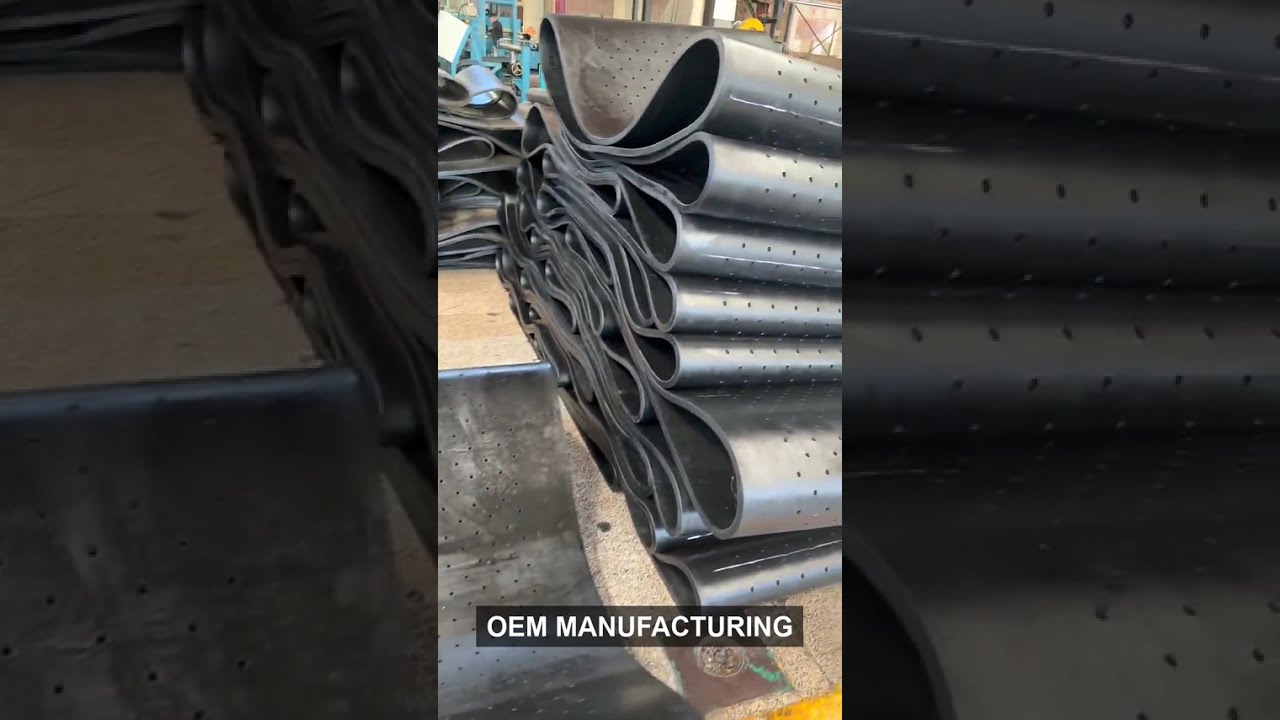
Hongkun manufactures custom shot blasting belts and rubber tracks for tumble blast machines. These products are also called tumblast belts, rubber apron belts, or perforated replacement tracks. Final construction is confirmed from the machine, old belt, drawing, photos, or sample.
Replacement Belts by Machine Series
Select a series to view reference models. Final specifications require old-belt or machine data.
Q32 Replacement Belts
Reference sizes for selected Chinese Q32 tumble blast machines.
Sinto Replacement Belts
Selected SNB references and custom belts for other Sinto models.
Custom Belts for Other Machine Brands Send the local model name, old-belt data, drawing, photos, or sample.
Brand names identify existing equipment only. Hongkun is an independent replacement-belt manufacturer; final specifications require confirmation.
Shot Blasting Machine Belt and Rubber Track Structures
Structure, thickness, holes, cleats, and reinforcement are selected for the machine, workpieces, batch load, and operating conditions.
 01
01
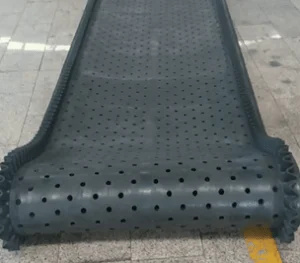
S-Sidewall Rubber Tracks
Formed sidewalls contain workpieces while perforations release blasting media and debris. The profile must match the rollers, chamber clearance, and return path.
Sidewall · Perforated · Custom Dimensions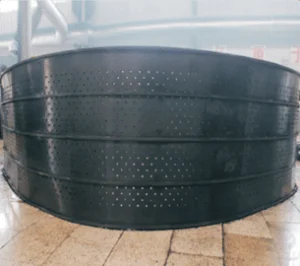 02
02
Heavy-Duty Tumble Blast Tracks
Reinforced tracks are available for larger widths, demanding loads, and frequent cycles. Construction is reviewed against batch load, workpiece shape, and impact.
Heavy-Duty · Reinforced Carcass · Custom Width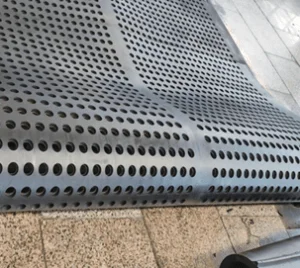 03
03
Perforated Rubber Tracks
Perforated tracks support media and debris drainage. Hole size, pitch, thickness, and edge distance must match the shot and minimum workpiece size.
Perforated · Drainage Holes · Custom Layout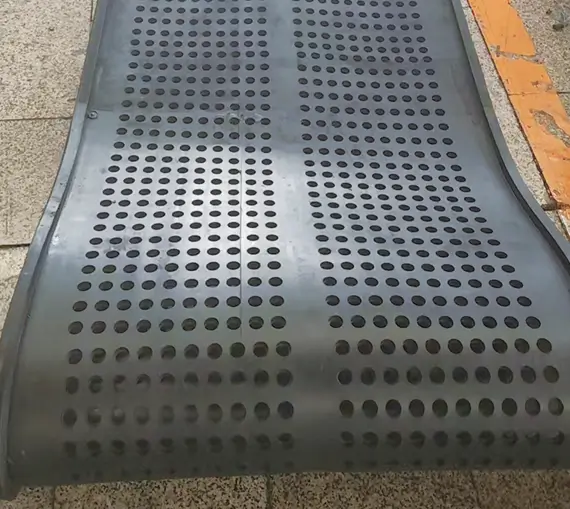 04
04
Straight-Cleat Rubber Tracks
Straight cleats lift and tumble metal parts during blasting. Height, pitch, direction, and bonding must match the workpieces, batch load, and machine layout.
Straight Cleats · Perforated · Workpiece TumblingConfiguration note: images are representative. Confirm all dimensions, holes, cleats, guides, reinforcement, and joint requirements before production.
Experiencing Premature Wear, Cuts, or Torn Holes?
For sharp-edged workpieces, heavy batch loads, multiple-shift production, or tracks requiring frequent replacement, review our high-wear shot blasting rubber track solutions with application-specific compounds, reinforcement, and failure-based construction adjustments.
Shot Blasting Belt and Rubber Track FAQs
Selection · Replacement · Installation · Troubleshooting
QAre shot blasting belts and rubber tracks interchangeable across different brands or models?
Interchangeability of a shot blasting belt or rubber track cannot be determined from width, machine appearance, or a similar model alone. Total length, thickness, hole diameter, hole pitch, perforation layout, cleat position, back-side center guide, joint structure, and running direction may differ between machines. Even the same brand or model may vary by production year and equipment configuration. We recommend customizing the replacement rubber track from the old track, machine information, and the final approved drawing.
QCan you customize a track if I only have the machine model and no original drawing?
Yes. The machine model can support an initial match, but it cannot be the only production reference. We also need old track photos, key dimensions, perforation and cleat details, and the back-side structure. When needed, a physical sample can be used for confirmation.
QCan Hongkun tracks replace original equipment manufacturer tracks?
Hongkun can customize replacement rubber belts and tracks for OEM replacement and non-standard machines. Final dimensions, perforation layout, cleats, guide structure, joint, and running direction must be confirmed before production.
QWhat information is required to quote a shot blasting belt or rubber track?
Send the machine brand and model, belt or track width, inner circumference or endless length, thickness, hole diameter and pitch, required quantity, and destination. If some specifications are unavailable, send photos, a drawing, or an existing belt sample.
Not sure how to measure? View the complete shot blasting rubber track measurement guide →
QWhat is the difference between a shot blasting belt and a rubber track?
“Shot blasting belt” is a general industry term for the rubber conveying surface used in tumble blast machines. Depending on the machine design, the same product may also be called a rubber track, tumble blast belt, tumble blasting belt, tumblasting belt, rubber apron belt, or perforated replacement rubber belt. The correct construction is confirmed from the machine model, dimensions, hole layout, cleats, and back-side guide structure.
QHow do I choose a reliable shot blasting belt or rubber track?
Do not judge a shot blasting belt or rubber track only by rubber thickness or appearance. Check the abrasion-resistant rubber compound and wear resistance, fabric carcass reinforcement, vulcanized joint, abrasive media drainage hole layout, cleats, back-side guide structure, and dimensional consistency. These factors must also match the machine model, workpiece weight, batch load, and operating frequency.
View 5 key quality factors for shot blasting machine rubber tracks →
QAre larger abrasive media drainage holes always better for a shot blasting machine track?
No. Hole design must consider the shot specification, minimum workpiece size, batch load, hole pitch, perforation layout, and strength around each hole. Holes that are too small may restrict shot recovery and shot evacuation. Holes that are too large may trap small workpieces and reduce local strength around the perforations. Hole diameter and layout should match the machine structure and actual operating conditions rather than simply being made larger.
View 5 key quality factors for shot blasting machine rubber tracks →
QHow are the track dimensions and structure checked before production?
Before production, we collect the machine model, old track dimensions, photos, or a physical sample. We check the track width, length, thickness, abrasive media drainage holes, cleats, back-side guide, and joint structure, then prepare a technical confirmation drawing. Production starts only after the customer approves the final drawing. More complete customer information supports more reliable dimensional confirmation.
Not sure how to measure? View the complete shot blasting rubber track measurement guide →
QWhat factors determine the service life of a shot blasting rubber track?
Service life is affected by workpiece weight and sharpness, batch load, shot wear, operating frequency, track tension, mistracking, debris buildup, machine clearances, and maintenance. Machines and working conditions vary, so there is no universal fixed service life.
View the key factors that affect shot blasting rubber track service life →
QHow should I store, clean, and install a new shot blasting belt or rubber track?
Protect the shot blasting belt, replacement rubber belt, or rubber track from sunlight, heat, ozone, oil, solvents, and improper folding. Before installation, confirm the running direction, back-side guide, tension, roller alignment, and machine clearances.
View the complete storage, cleaning, and installation guide →
QCan I order one track for a trial?
Yes. You can start with a single-track trial order to inspect and evaluate our product quality before ordering a larger quantity. Because each track is customized for the machine and working conditions, the complete technical drawing must still be confirmed before production.
QWhat is the typical production lead time, and what support is available after delivery?
The typical production lead time is 7–15 working days after the technical drawing and order details are confirmed. The exact schedule depends on the track size, structure, quantity, and tooling requirements, so it will be confirmed with each quotation. After delivery, support can include the approved drawing, running-direction confirmation, and necessary technical instructions.
Shot Blasting Belt and Rubber Track Guides
Explore practical guides covering replacement shot blasting belts and rubber tracks, tumble blasting belt measurement, quality evaluation, storage and installation, and rubber track service life.
How to Measure a Replacement Shot Blasting Belt or Rubber Track
Learn how to measure belt length, width, thickness, abrasive media drainage holes, cleats, and the back-side guide structure.
View the Shot Blasting Belt Measurement Guide →How to Choose a Reliable Shot Blasting Machine Rubber Track
Evaluate the abrasion-resistant rubber compound, fabric carcass, vulcanized joint, perforation layout, and finished product quality.
View 5 Quality Factors →Shot Blasting Belt Storage, Cleaning & Installation
Review pre-installation storage, routine cleaning, running direction, guide structure, tensioning, and initial checks for replacement rubber belts.
View the Shot Blasting Belt Installation Guide →Shot Blasting Rubber Track Service Life Guide
See how workpieces, batch load, abrasive media, tension, mistracking, and maintenance affect wear and replacement timing.
View the Service Life Guide →Is Your Track Tearing, Mistracking, or Wearing Abnormally?
Use the damage location, recurring pattern, and operating conditions to investigate possible causes and decide whether to repair or replace the shot blasting rubber track.
View the Shot Blasting Rubber Track Troubleshooting Guide →Select the Shot Blasting Belt or Rubber Track for Your Workpiece
Different workpieces place different demands on rubber tracks and belts used in tumble blasting machines. Track width, perimeter, thickness, hole pattern, cleat layout, carcass construction, rubber compound, and edge structure should be confirmed from the machine model, existing track, workpiece dimensions, batch weight, and operating conditions. Depending on the application, the suitable solution may be a perforated rubber track, rubber apron belt, or custom replacement shot blasting belt.
| Application / Industry | Typical Workpieces | Operating Challenges & Selection Focus | Recommended Belt & Track Configuration |
|---|---|---|---|
| Foundry and Casting Shot Blasting | Iron and steel castings, engine blocks, pump housings, and cast components | Residual molding sand, sharp flash, heavy batch impact, repeated tumbling, and continuous abrasion |
|
| Forging and Heat Treatment | Hot forgings, heat-treated gears, shafts, connecting rods, and forged components | High impact from dense parts, abrasive oxide scale, elevated workpiece temperature, and repeated flexing |
|
| Fasteners and Small Hardware | Bolts, nuts, screws, rivets, washers, and small stampings | Small parts may enter abrasive media drainage holes, become trapped, obstruct the track, or damage hole edges |
|
| Aluminum and Zinc Die Casting | Automotive brackets, housings, thin-wall parts, and precision die-cast components | Surface denting, edge damage, part impingement, and excessive drop height during tumbling |
|
| Automotive and Machined Parts | Gears, transmission components, stamped brackets, and machined metal parts | Oily residues, strict cycle times, consistent deburring, and dimensional stability |
|
| High-Volume Deburring and Surface Cleaning | High-volume stampings, metal fittings, tool blanks, and mixed production parts | Heat buildup, high flexing cycles, continuous abrasion, and limited maintenance windows |
|
Small Fasteners and Screws
Hole diameter, pitch, open area, and edge distance must be checked against the smallest workpiece and abrasive media size to reduce trapping or fall-through risk.
Heavy Castings and Forgings
Prioritize verified batch weight, single-piece impact, track thickness, carcass strength, cleat geometry, and cover resistance to gouging and cutting.
Aluminum Die-Cast Parts
Match cleat height, spacing, pocket depth, and tumbling path to the workpiece geometry to reduce excessive drop impact and edge damage.
Oily or Lubricated Workpieces
Provide the fluid type, concentration, temperature, and contact conditions so a compatible rubber compound can be reviewed.
Need a Replacement Shot Blasting Belt or Rubber Track?
Send the machine model, track dimensions, workpiece size and weight, batch weight, blasting media, operating temperature, hole pattern, and photos or drawings of the existing track.
Request a Custom Shot Blasting Belt Selection and Quote →